
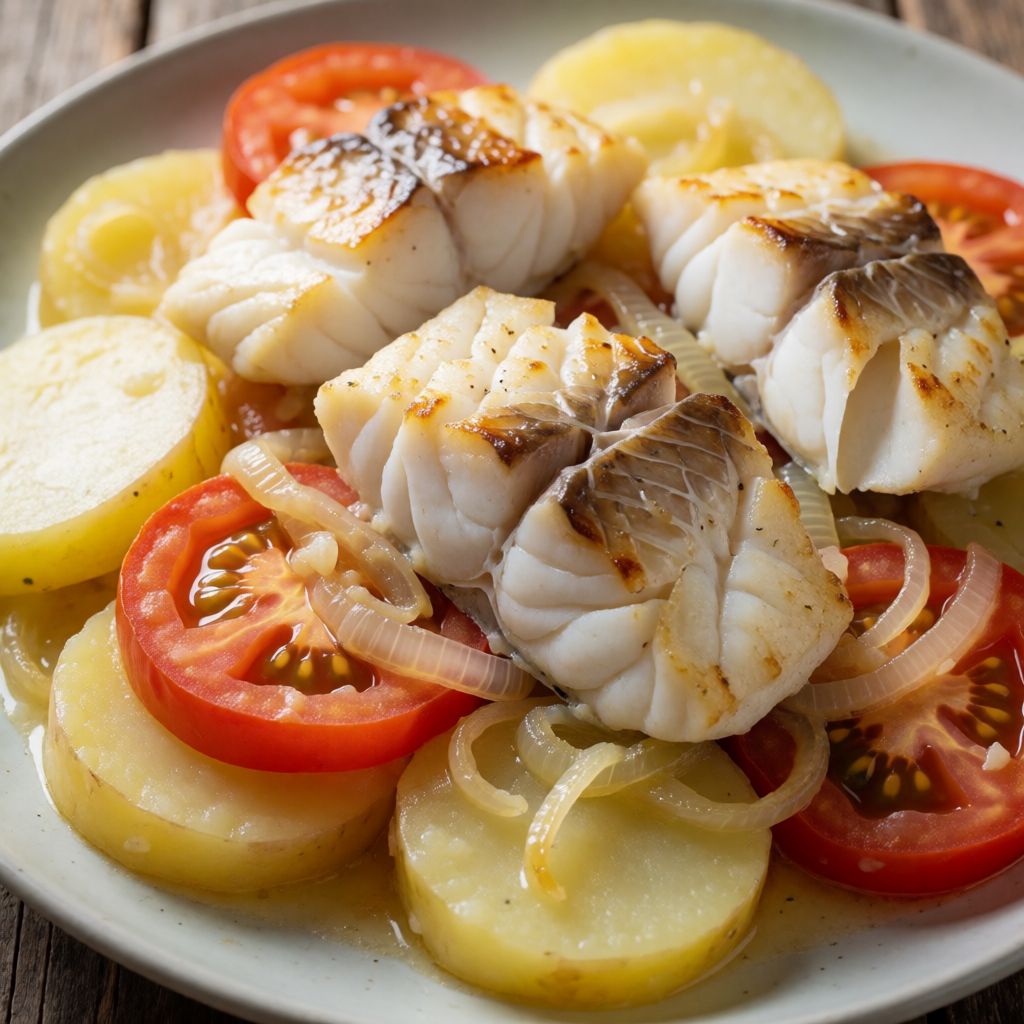
 AI photo
Baked Salt Cod
A hearty baked salt cod with potatoes in a tomato sauce, a simple home-style Mediterranean dish.
Labels are worked out automatically from the ingredients and can be wrong. Check the packaging if it matters to you.
Ingredients
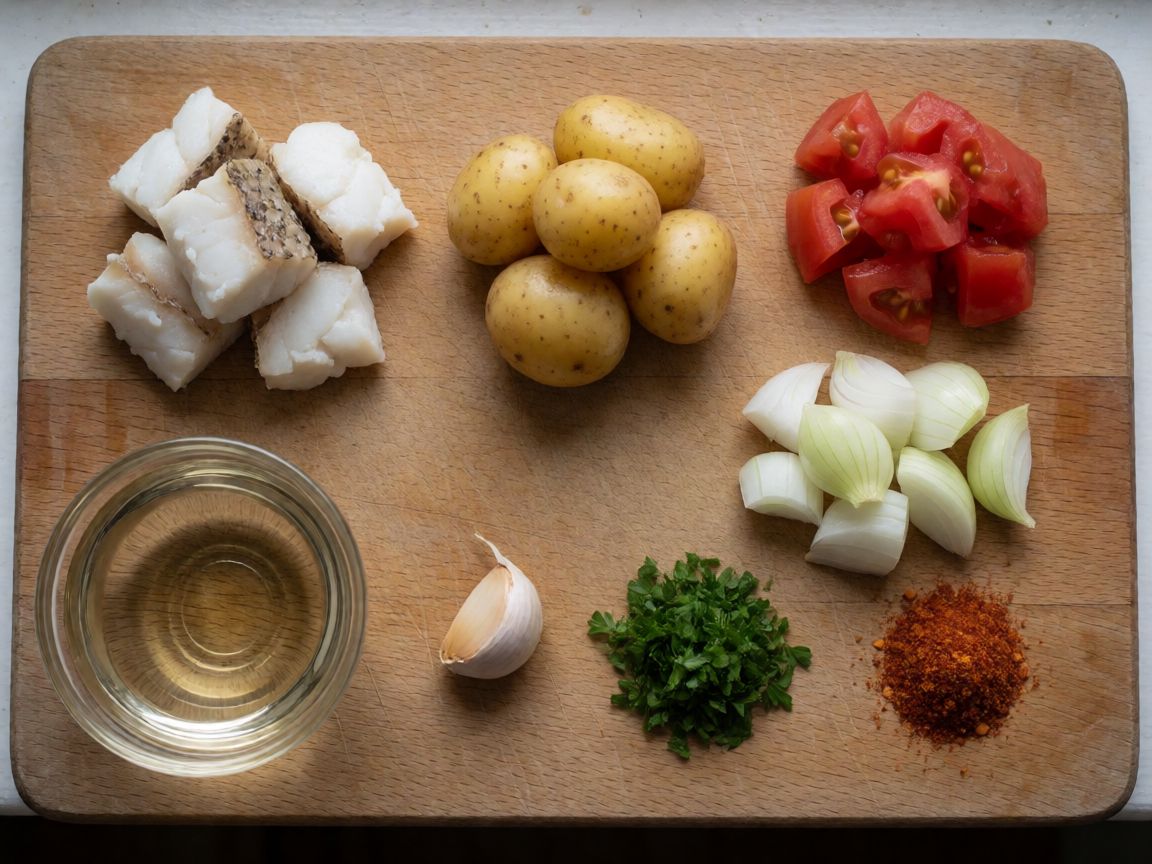
- 1.2 kg Salt cod
- 400 g Potato
- 300 g Tomato
- 200 g Onion
- 250 ml White wine
- 1 clove Garlic
- 1 bunch Parsley
- 1 pinch Chilli powder to taste
- 1 tbsp Olive oil to taste
- 1 pinch Salt to taste










Steps
Cut the salt cod into small cubes and set aside.
Peel the onion and finely chop it with a knife.
Pour olive oil into a pan, add the onion and fry over high heat.
5 minPour in the white wine, let it evaporate, then add the diced tomatoes.
Flavour the sauce with the garlic clove, chilli powder and parsley.
Cook the sauce, stirring occasionally; remove from heat and take out the garlic clove.
5 minPeel the potatoes and cut them into thin rounds.
Fry the potatoes in a pan with olive oil.
5 minToss the potatoes in the tomato sauce and arrange in a baking dish.
Add the cubed salt cod and bake at 200°C.
20 minServe the baked salt cod hot with fresh bread.
Salt cod baked with potatoes in a tomato-wine sauce — this is poor man's food that became Sunday food, and the whole dish is built around one fact: the fish is already cooked before it ever sees the oven. Salting cod was never about flavour, it was about a boat that stayed at sea for weeks with no fridge. Salt pulls water out, water is where bacteria live, no water means no spoilage. What you buy today, dried stiff or already soaked, is a preserved product doing a performance of fresh fish — and your job in the kitchen is mostly to undo the preservation, not to cook the protein.
That means the real work happens before step one on your list: soaking. Skip it or rush it and the dish is inedible, not just salty — it's briny in a way that numbs your tongue. Properly soaked, the cod should taste of the sea, not of a cellar. Twenty minutes in a 200°C oven afterwards isn't cooking the fish, it's warming it through and letting the tomato-wine sauce around the potatoes thicken and catch slightly at the edges. That's the real sign of done: not a timer, but the sauce visibly reducing and the potato edges going a shade darker where they meet the dish.
Start with the cod itself, because everything downstream depends on getting this right. Dried salt cod, the stiff plank kind, needs 24–48 hours of soaking in cold water in the fridge, with the water changed two or three times — that's not a tradition, that's osmosis working slowly, salt moving out of the flesh and into the water until the concentration evens out. Change the water less and you're just diluting brine, not removing it. If what you bought is the pre-soaked, vacuum-packed "salt cod" sold at most UK fishmongers and some supermarkets, taste a corner raw before you commit — some of it is only lightly salted and barely needs rinsing. No salt cod at all, use a firm white fish like unsmoked haddock or cod loin and salt it yourself for an hour with coarse salt before rinsing — you won't get the exact texture, which is slightly firmer and flakier than fresh fish, but you'll get the right idea.
Potatoes here are structural, not incidental — they're cut into thin rounds and fried first because a raw potato dropped straight into a wet tomato sauce and baked for twenty minutes would still be half-raw in the middle while the top turns to mush. Frying first sets the outside, starts the starch cooking, and gives you a potato that only needs finishing, not starting, in the oven. Any waxy or all-rounder potato works — Maris Piper, King Edward — avoid anything that collapses into flour when boiled, you want rounds that hold their shape under sauce.
Onion and garlic are the backbone of the sauce, and the order matters: onion goes in first and gets real colour, because a raw onion flavour sitting in a baked dish tastes sharp and unfinished, while a browned onion tastes sweet and settled. The garlic clove goes in whole and gets fished back out before baking — that's not fussiness, it's controlling intensity. A whole clove perfumes the sauce gently over five minutes of simmering; a crushed clove left in would dominate everything else, including the fish, which has its own quiet flavour worth protecting.
The white wine does a specific job: it deglazes the pan, lifting the caramelised bits stuck from frying the onion, and the alcohol cooks off while you watch it reduce — that's the visual cue, not a clock. Any dry white you'd actually drink works; if you've none open, a splash of water with a squeeze of lemon approximates the acidity without the complexity, it's a fallback, not an improvement.
Tomatoes should be ripe enough to break down on their own heat — tinned chopped tomatoes are a completely honest substitute here and arguably more reliable than a British supermarket tomato in February, which is often picked under-ripe and never quite catches up.
Chilli powder and parsley are seasoning, not structure — add them to taste, and remember the chilli is there to lift the dish, not to announce itself; salt cod's quiet saltiness and faint sea taste should still be the thing you notice first.
One honest note on your kitchen: a standard UK oven dish and a domestic oven at 200°C will do this fine, but ovens vary by 10–15 degrees easily, so trust the sauce bubbling and the potato edges colouring over trusting the dial. And give the soaking its due time — this dish has almost no cooking skill in it, but it has no patience for being rushed at the start.