
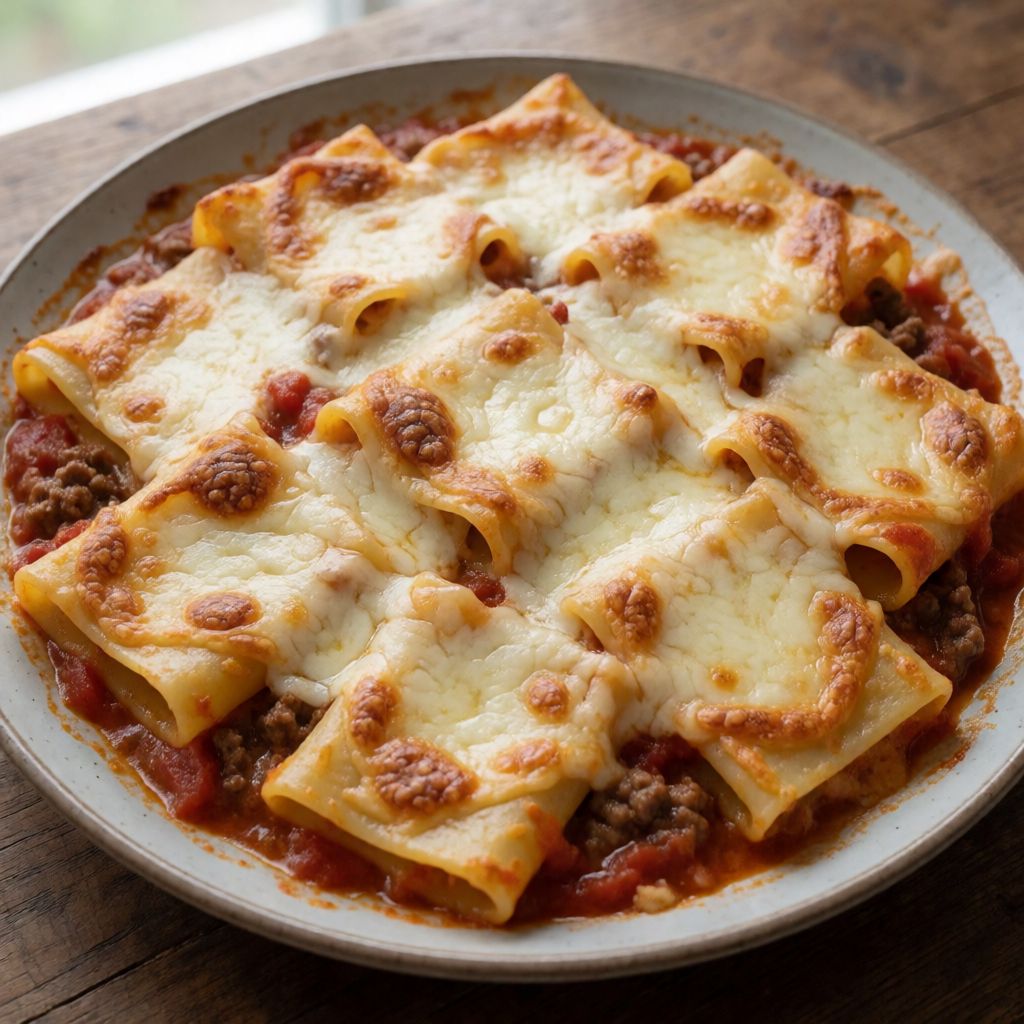
 AI photo
Baked Paccheri
A hearty baked pasta: paccheri tossed with a meaty tomato sauce, layered with mozzarella and béchamel, then baked until golden.
Labels are worked out automatically from the ingredients and can be wrong. Check the packaging if it matters to you.
Ingredients
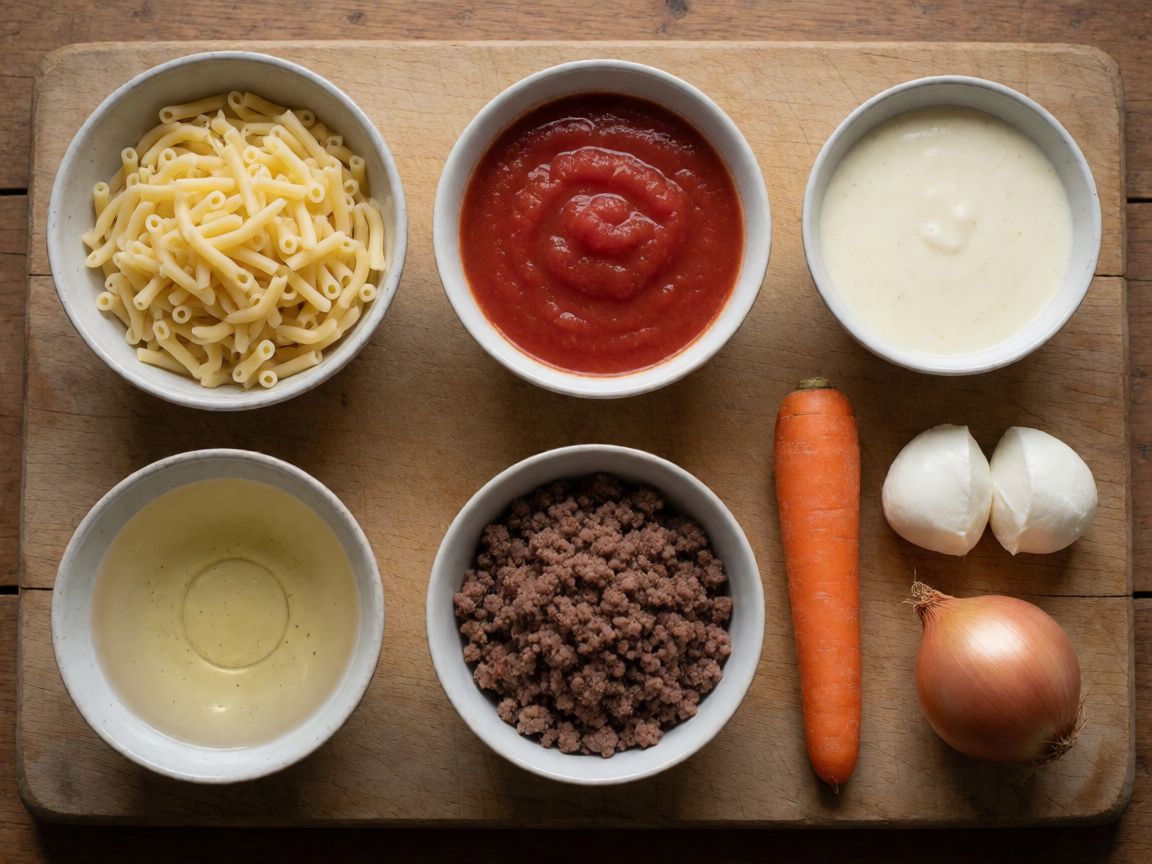
- 350 g Paccheri
- 500 ml Tomato Passata
- 250 ml Béchamel Sauce
- 500 g Minced Beef
- 2 pcs Mozzarella
- 250 ml White Wine
- 2 tbsp Olive Oil
- pcs Carrot to taste
- pcs Onion to taste
- bunch Celery to taste
- g Parmesan to taste
- g Butter to taste
- pinch Salt to taste
- pinch Black Pepper to taste














Steps
Finely dice the carrot, celery and onion and fry them in olive oil in a pan.
10 minAdd the minced beef, pour in the white wine and let it evaporate.
10 minLower the heat, add the tomato passata, season with salt and black pepper to taste and let the sauce simmer. Doneness: 71°C inside.
30 minBring a large pot of water to the boil, add salt and cook the paccheri.
12 minDrain the pasta well, transfer it to a large bowl, and mix it with the sauce and Parmesan.
2 minPlace the dressed paccheri into a baking dish greased with butter.
5 minAdd sliced mozzarella and cover the dish with béchamel.
5 minBake in an oven preheated to 180°C until a golden crust forms on top.
25 minServe the paccheri hot.
Baked paccheri is a ragù dish wearing a casserole's coat. Those big ridged tubes get filled and dressed with a slow meat sauce, then buried under mozzarella and béchamel and sent into the oven until the top goes gold. It's lasagne's cousin who skipped the layering and went straight for the tube pasta — same logic, less assembly.
What decides whether it works is the ragù, not the oven. A proper ragù is built in stages: the soffritto (carrot, celery, onion) goes soft and sweet first, because raw onion thrown straight into tomato stays sharp and bitter all the way through cooking — heat alone won't fix that, time will. Then the meat browns before the wine goes in, because wine added to raw meat just stews it grey; browning first means you're building flavour, not washing it away. The wine itself isn't for taste so much as for lifting the fond off the pan — let it bubble down properly, don't rush it, or you'll taste raw alcohol in the final dish instead of depth.
Some say ragù is "just bolognese." No — bolognese is one regional answer to a much older question: what do you do with tough, cheap cuts and a whole afternoon? The answer is always the same shape — fat, aromatics, meat, liquid, time — but the proportions and the region change the name. Here it's simmered until it reaches a proper internal heat, not just "bubbling," because a sauce that looks done on the surface can still be thin and raw-tasting at the centre if you pull it early.
Paccheri themselves are chosen for their width, not their flavour — they're a vessel. The wide tube traps sauce inside and out, so every forkful carries ragù rather than just wearing it. If you can't find paccheri, any large smooth tube that holds sauce on the inside works — rigatoni at a push, though you lose some of that "sauce inside the tube" effect. Cook them shy of fully tender in boiling salted water; they finish softening in the oven, and starting them too soft means a collapsed, gluey bake by the time it's out.
The soffritto — carrot, celery, onion — is Italian cooking's answer to a British habit you already know: using up the aromatics you have on hand to build a backbone of flavour before anything else goes in the pan. Dice them finely and fry gently until the onion loses its raw white-gold colour and turns a soft amber, and the carrot bends rather than snaps when you press it. That's the real doneness cue — not a clock.
Minced beef carries the sauce's body. Buy something with a bit of fat in it — pure lean mince fries dry and ends up sawdusty in a long simmer; fat is what keeps a slow-cooked sauce rich rather than tired. White wine deglazes the pan and should be allowed to properly reduce — "evaporate" means you can't smell raw alcohol anymore, not a fixed ten minutes. If you don't drink wine or don't have any, a splash of water with a spoon of vinegar does the acid-lift job, just without the depth wine gives.
Tomato passata is the base because it's already smooth and cooked down — using fresh tomatoes here would mean doing that reduction work yourself, adding time you don't have in a flat kitchen on a weeknight. Simmer the sauce low and slow rather than letting it catch and bubble hard; a fierce boil cooks the top layer and scorches the bottom before the middle's had a chance to come together.
Béchamel on top is doing the job your oven otherwise couldn't — without it, the top of the pasta dries out under dry heat before the inside's hot. The sauce bastes it from above as it bakes, and sets into that pale, slightly set skin rather than staying liquid. Any white sauce made from butter, flour and milk will do the same work; it doesn't need to be fancy, just thick enough to sit on top rather than run straight through.
Mozzarella's job is purely textural — stretch and pull once it melts. Use the fresh, wet kind if you can; the drier block mozzarella sold for pizza toppings melts flatter and doesn't give you that string. Parmesan mixed into the pasta before baking adds salt and savoury depth throughout, not just on the surface — that's why it goes in with the sauce, not sprinkled on top as an afterthought.
Patience is the real ingredient in this one. The ragù wants its full hour because that's how long it takes collagen in the meat and bitterness in the onion to break down — rushing the simmer just gives you a sauce that tastes like its separate parts instead of one thing. A domestic hob can't replicate a kazan's steady, all-round heat, so keep the flame low and stir occasionally rather than trusting the pan to behave on its own — thin domestic pans scorch at the base faster than you'd think.