
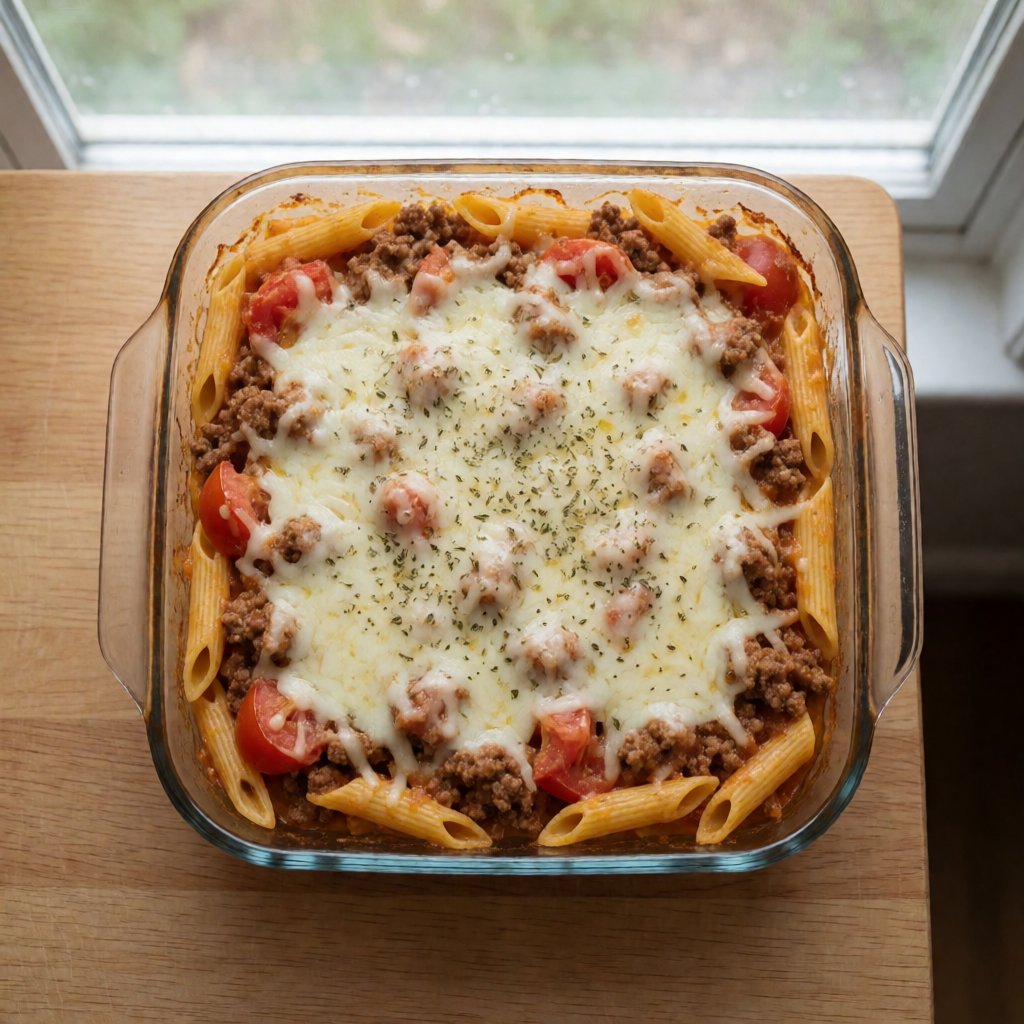
 AI photo
Baked Pasta with Minced Beef and Tomatoes
A comforting baked pasta with minced beef, tomatoes and melted mozzarella.
Labels are worked out automatically from the ingredients and can be wrong. Check the packaging if it matters to you.
Ingredients
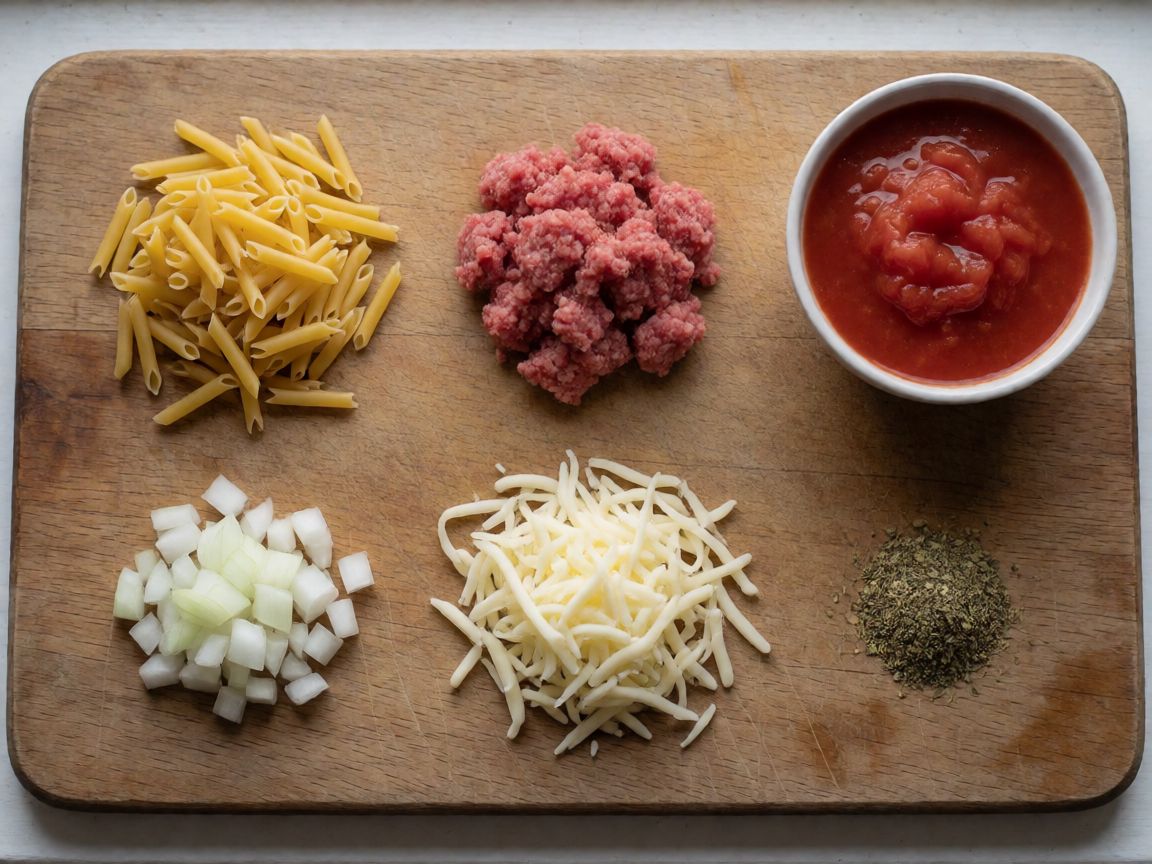
- 150 g penne pasta cook 3 minutes less than the pack instructions
- 250 g minced beef
- 0.5 pcs onion finely chopped
- 300 g chopped tomatoes in their own juice
- 80 g mozzarella
- 1 pinch salt to taste
- 1 pinch oregano to taste




Steps
Cook the pasta for 3 minutes less than stated on the pack.
Mix the minced beef with the onion, tomatoes, salt and oregano.
Add the pasta, transfer to a baking dish and scatter the mozzarella on top.
Cover the dish with foil and bake for 25 minutes.
25 minRemove the foil and bake for a further 5 minutes, until 71°C inside.
5 minTake the dish out of the oven.
This is lasagne without the layering and without the béchamel — call it its lazy, honest cousin. Everything raw goes into one dish: pasta that isn't quite cooked, meat that isn't browned, tomato straight from the tin. The oven does the work a hob and three pans would otherwise do, which is the whole point of it.
What decides whether it works is timing two unfinished things so they finish together. The pasta is pulled three minutes short of done on purpose — it still has starch on its surface and a dry centre, and it spends the next half hour in the oven drinking up tomato liquid. Cook it fully on the hob first and there's nothing left for it to absorb; it just sits in sauce going softer and softer until it's porridge. The underdone pasta isn't a mistake you're tolerating, it's a tank being filled.
The meat is the other half of the clock. It goes in raw, mixed straight through the tomato and onion, and it has to get properly hot all the way to the middle — not seared outside, cooked through. Mince isn't a steak: grinding it drags whatever was on the meat's surface into the whole mass, so a pink core isn't rare, it's unsafe. That's why the recipe ends on a number, 71°C, not a guess — foil comes off for the last five minutes precisely so that heat can finish the middle and the top can brown and the cheese can do its cheese thing, all in the same short stretch.
The foil is doing the job your kazan lid would do, and it's not a makeshift — it's the right tool for a flat dish that has no lid of its own. For the first 25 minutes it traps the steam coming off the tomatoes and the meat, so the dish braises instead of drying out on top before the inside's done. Take the foil off at the start and you'll get a leathery, split surface over a cold centre. Leave it on the whole time and the cheese never gets its crust. Two jobs, two stages — that's why it comes off only at the end.
Minced beef: look for something with a bit of fat in it, not the leanest pack on the shelf. Fat is what keeps mince juicy through forty-plus minutes of baking — strip it out and you're reheating dry crumbs under melted cheese. Pork mince works the same way, so does lamb if you want it heavier, so does turkey if you add a spoon of oil to replace what it's missing. The onion goes in raw and chopped fine because it isn't meant to fry — it softens slowly in the moisture coming off the tomatoes, which is also why fine chopping matters here more than it would in a pan: there's no sizzle to help it along, only time.
Tomatoes in their own juice, tinned, are doing two things: acid to cut the fat of the mince, and liquid for the pasta to finish cooking in. If you've only got whole plum tomatoes, crush them by hand — the juice matters as much as the flesh. Fresh tomatoes out of season are mostly water with no acid to speak of; skip them here, this isn't their dish.
Mozzarella: the point is stretch and melt without the thing splitting into a puddle of oil and rubber. The wet, ball-in-brine mozzarella sold for salads carries too much water for a bake — it'll weep into the dish and you'll wait forever for it to brown. Use the drier, blocked mozzarella sold for pizza if you can find it; it was made for exactly this heat. In a pinch, a mild cheddar will melt fine and brown faster, but it'll pull the whole dish toward a different country — sharper, greasier, less Italian, still good.
Penne earns its place by its ridges and its hollow centre — both grip sauce rather than let it slide off. Any short pasta with a rough surface does the same job; smooth, thin shapes like spaghetti won't hold the tomato the way this wants.
Some say you can skip the three-minutes-short trick and just use any leftover cooked pasta you have in the fridge. No — because that pasta is already full of water and done to its own timetable, and it'll overcook again in the oven while the meat is still catching up. The short-cooked pasta isn't fussiness, it's the clock that makes meat and starch finish in step. And don't rush the last uncovered five minutes just because the top looks ready — ready is what the probe says in the middle, not what the cheese looks like on top. Patience here is short, five minutes, but it's the only thing standing between you and pink mince under a nicely browned crust.
·