
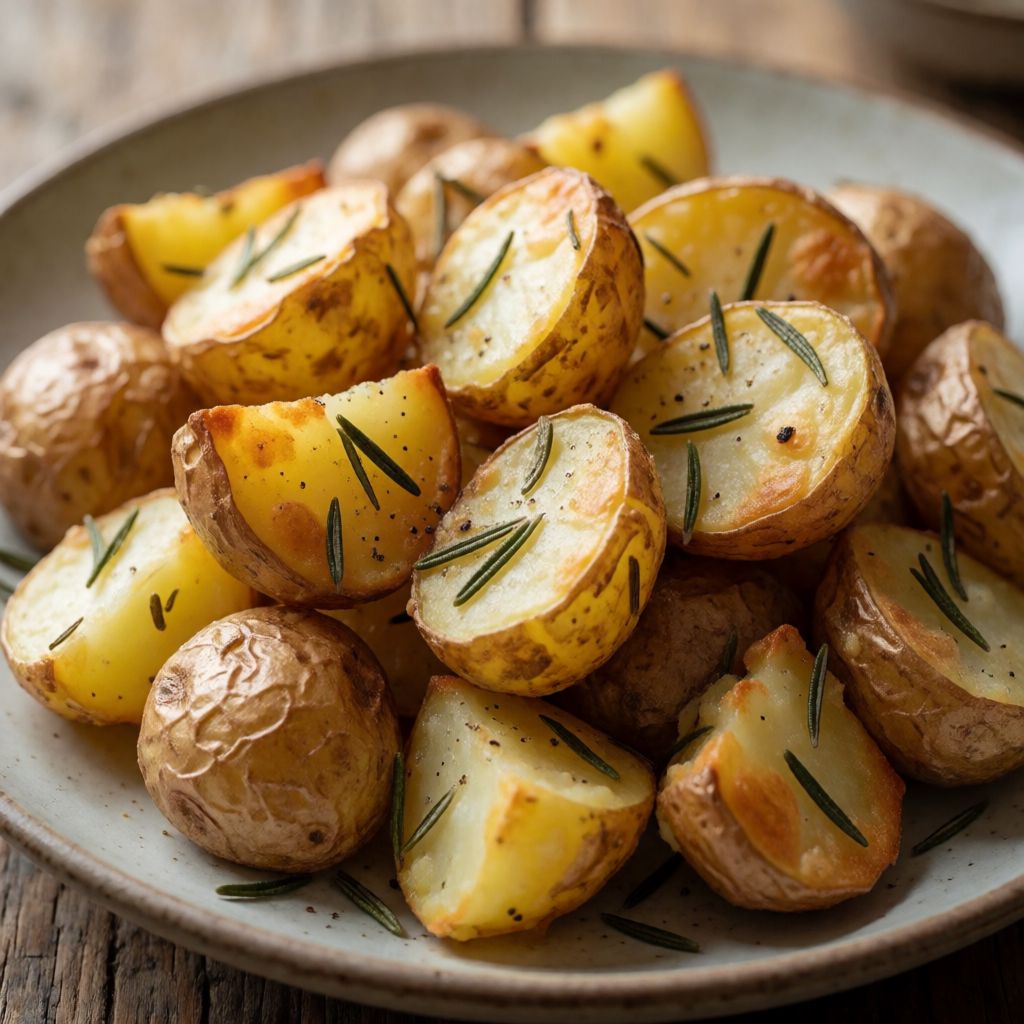
 AI photo
Roast Potatoes
Crispy oven-roasted potatoes with rosemary, olive oil, salt and pepper.
Labels are worked out automatically from the ingredients and can be wrong. Check the packaging if it matters to you.
Ingredients
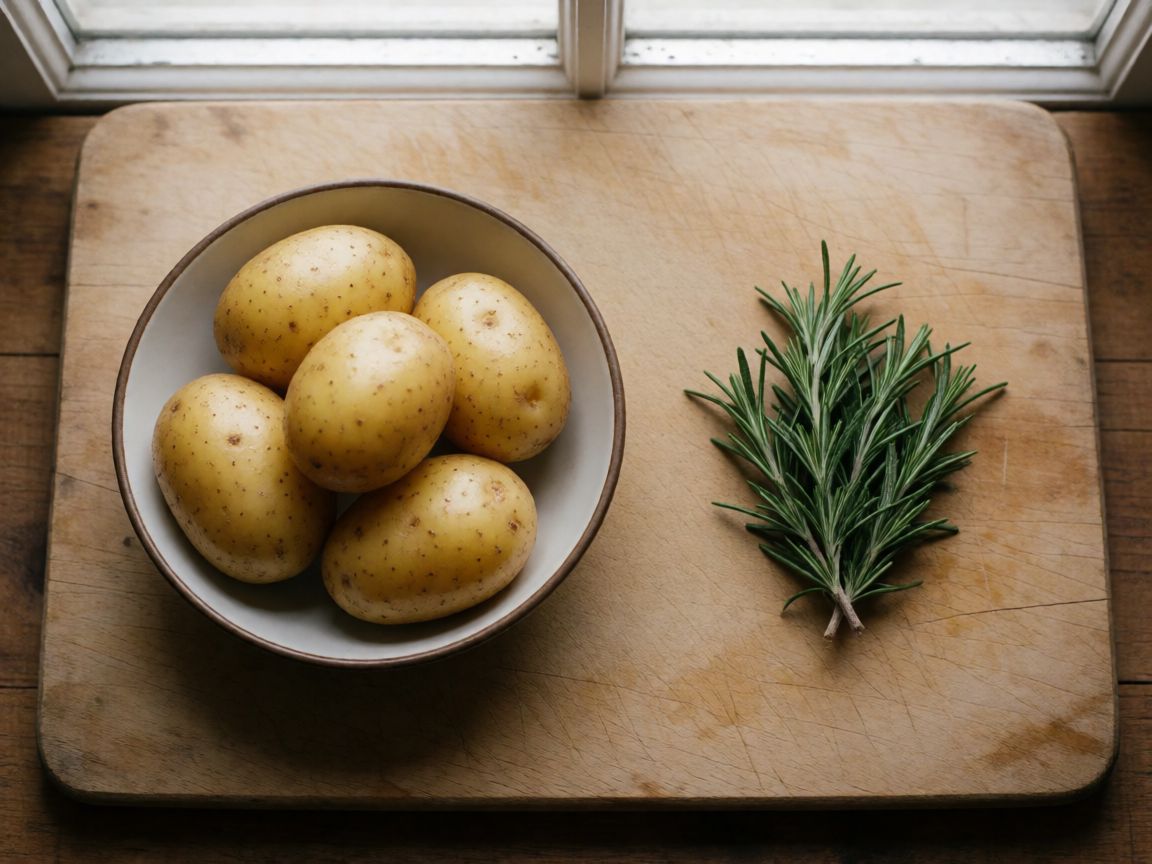
- 1 kg Potatoes
- Rosemary to taste
- Olive oil to taste
- Salt to taste
- Black pepper to taste





Steps
Wash and peel the potatoes, removing any green or mouldy spots. Cut into evenly sized pieces.
Place the potatoes in an ovenproof dish, drizzle with olive oil, add the rosemary, salt and pepper. Mix well.
Roast in an oven preheated to 200°C until golden and crisp, turning once or twice.
30 minRemove the dish from the oven and transfer the potatoes to a serving plate.
Roast potatoes are not about the oven being hot. They're about water leaving the surface faster than it leaves the middle. Inside, the potato gelatinises — starch swells with the water already in it and goes soft and floury. Outside, in dry heat and a film of oil, that same starch loses its water, collapses, and browns. Two different things happening at once in one chunk of potato. That's the whole trick, and everything in the method exists to let both happen without one ruining the other.
What decides whether it works is space, not heat and not oil quantity. Give each piece room on the tray and the steam it throws off escapes into the oven air. Crowd the dish and that steam has nowhere to go — it sits around the potatoes, keeps their surface wet, and wet surface cannot crust, no matter how long you leave it or how much oil you pour on. Some say more oil makes them crispier — no, because oil on a wet surface just fries damp potato, it doesn't dry it. The fix for pale, soft-shouldered potatoes is a wider tray, not a fuller bottle.
Potatoes: 1kg for four people, as written, works out to two to three medium potatoes each — a reasonable Sunday-roast portion alongside meat and greens, not a meal on its own. Reach for a floury variety — Maris Piper or King Edward if you're shopping in a British supermarket — because it's the starch content that gives you the crust in the first place. A waxy potato, the kind sold as 'salad' or 'new', holds its structure and its water more stubbornly; it'll cook through fine, but it won't shatter and brown the same way, because there's less starch at the surface to dry out and collapse. Cut into pieces roughly the size of a small egg — big enough to keep a soft centre, small enough that the surface-to-middle ratio still favours crisping within half an hour.
Oil's job is simple: it conducts heat into the potato faster than air alone, and it carries the aromatics — rosemary, pepper — into contact with the surface instead of letting them just sit there and scorch. The criterion for which oil to use is heat tolerance and a lack of its own strong smell fighting the potato: any oil that can sit at 200°C without smoking. Light olive oil does this well; butter does not, because it starts burning well below that temperature and leaves bitter, black flecks. Some reach for their best extra virgin here — no, because its flavour is mostly volatile oils that cook off long before the potato browns, so you've spent good oil for nothing. Rapeseed oil, common and cheap in Britain, does the same conducting job perfectly well and was in fact the practical choice long before olive oil became a store-cupboard staple here.
Which brings up the older British habit worth knowing: dripping, the fat left in the tin from the joint. Families didn't choose it for flavour mysticism — they chose it because it was already there, already paid for, and roasting potatoes alongside the meat used one oven, one tray's worth of fat, and no extra expense. That's the real reason 'proper' roast potatoes in this country are sometimes about dripping or goose fat at Christmas — economy and shared heat, not tradition for tradition's sake. Olive oil does the identical physical job; you're not missing anything by using it, just skipping a bit of kitchen history.
Rosemary, fresh or dried, releases its oils when warmed rather than when raw — that's why tossing it in before roasting, not after, actually matters; sprinkled on at the end it just sits there tasting of nothing much. If you've no rosemary, thyme does the same thing by the same mechanism — a hardy, oil-rich herb that survives dry heat without burning to ash the way soft herbs like parsley would.
Salt drawn onto the surface before cooking pulls a little moisture out with it — in most dishes a problem, but here, with the oil already coating the surface and the oven already pulling water out anyway, it's not enough to matter. Season generously and don't worry about it.
One more domestic honesty: a kazan doesn't fit your kitchen, and it shouldn't have to. Use the widest ovenproof tray or dish you own, even if that means two trays rather than one crowded one — that single choice does more for the result than any change to time or temperature. An ordinary oven, a flat tray, and patience to leave the potatoes alone between turns — that's the whole secret, and it was never really a secret, just a piece of physics nobody bothered to explain.