
 AI photo
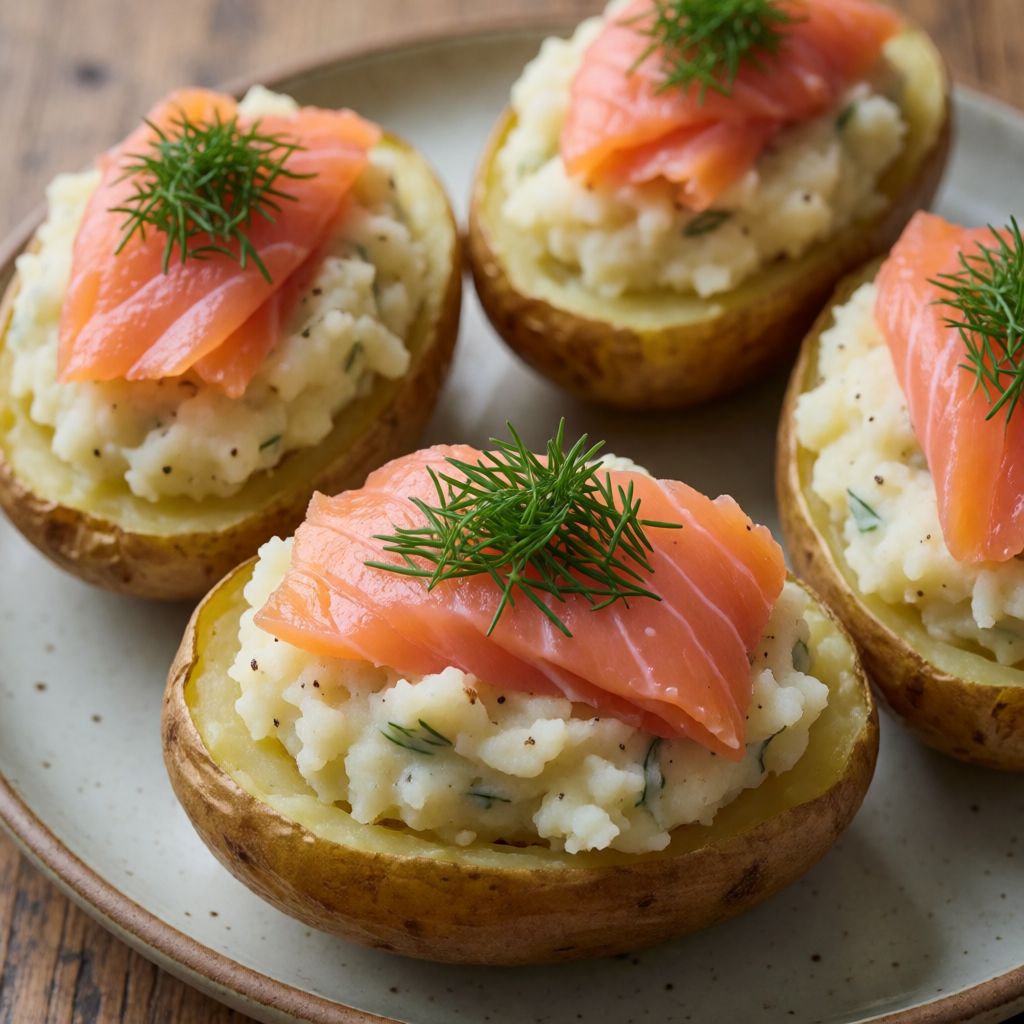
Stuffed Jacket Potatoes with Smoked Salmon and Dill
Jacket potatoes filled with cream cheese, smoked salmon and dill – a simple, flavourful side or light meal.
Labels are worked out automatically from the ingredients and can be wrong. Check the packaging if it matters to you.
Ingredients
- 4 pcs Potato
- 4 tbsp Cream cheese
- 1 pcs Smoked salmon
- 1 bunch Dill fresh
- Salt to taste
- Black pepper freshly ground, to taste






Steps
Prick the potatoes all over with a fork.
2 minBake for 1 hour at 200°C fan.
60 minCheck they're cooked through by piercing with a fork.
1 minHalve the baked potatoes and scoop the flesh into a bowl.
3 minRoughly mash the flesh with a fork, stir in the cream cheese, then add the smoked salmon pieces, salt, pepper and dill.
3 minSpoon the filling back into the potato skins, garnish with dill and serve.
2 min
This is not really a side — it's a baked potato that has been turned inside out and handed back its own stuffing, improved. A whole potato roasted until the inside turns to dry, fluffy flesh and the skin turns to a tough, slightly leathery shell — then you scoop the inside out, work in fat and smoke, and put it back. The dish lives or dies on two mechanics: whether the skin actually became a shell (dry heat, not steam), and whether the inside stayed rough and fluffy rather than turning to paste.
The oven is doing a slow, one-way job. A whole raw potato is dense — heat has to crawl in from the surface to the centre by conduction, through starch and water, and that's slow no matter how hot you set the oven. Turn the heat up to rush it and you'll burn the skin black before the middle softens. So 200°C with a fan isn't a target to hit — it's the ceiling that lets the skin dry and brown at roughly the same rate the centre cooks through. The fan just means hot air keeps moving round all four potatoes evenly, so they finish together instead of the one nearest the fan element finishing first.
The fork test at the end is the only honest clock. An hour is where to start checking, not where to stop — potatoes vary in size and in how much water they've drunk up from the soil, and a 2cm difference in diameter changes the cooking time more than ten minutes on the oven dial. You want the fork to go in the way it goes into softened butter, no push needed. If it still meets resistance halfway, give it more time; the oven won't lie to you the way a clock will.
Potato: you want a floury one, not a waxy one — the difference is starch content, and it decides whether the inside bakes into something light and crumbly or stays dense and wet. In a British kitchen this means Maris Piper or King Edward, the varieties sold specifically as "baking potatoes"; a waxy salad potato like Charlotte will bake fine on the outside but the inside stays gluey and heavy, no matter how long it's in the oven. Size matters more than the recipe lets on — one potato per person only works if they're roughly fist-sized; smaller ones finish faster and dry out before the next step.
Pricking the skin isn't ritual, it's pressure relief. A whole potato is mostly water sealed inside a fairly tight skin; as that water turns to steam in a hot oven it needs somewhere to go. A few fork holes let it escape steadily instead of building up and occasionally splitting the skin open with a bang — rare, but it happens, usually with a watery, young potato. Some people wrap the potato in foil before baking, thinking it keeps things moist. It does — it traps the steam against the skin, so instead of drying and crisping, the skin stays damp and goes rubbery, closer to boiled than baked. That defeats the entire point of calling it a "jacket" — the jacket is supposed to go tough and dry, that's what makes it a shell you can fill and hold in your hand.
Cream cheese is the binder and the fat here, nothing more exotic. The criterion for substitution: something soft, mild, slightly sour, with enough moisture to loosen dry mashed potato without turning it to soup. Crème fraîche or soured cream both do the job, butter with a splash of milk works in a pinch, though it skews richer and less tangy. Don't reach for something strongly flavoured like a blue cheese unless you want it to fight the smoked salmon rather than carry it.
Smoked salmon goes in off the heat, into warm mashed potato, not into the oven. Cold-smoked salmon is cured, not cooked, and its texture is the whole point — silky, almost raw. Put it back in a hot oven and the proteins tighten and dry out the way any fish does when overcooked, going from silky to rubbery in a couple of minutes you won't notice until it's done. Stir it through warm filling and it just softens slightly and releases its smoke into the potato — that's the correct amount of cooking it should ever get. If you've no smoked salmon, any smoked fish that flakes — trout, mackerel — does the same job; it changes the flavour but not the mechanism.
Dill brings a grassy, faintly aniseed lift that cuts through the fat of the cream cheese and the oiliness of the salmon — without it the filling is pleasant but flat, all richness and no edge. Chives will substitute for green freshness but won't give you that same cut; dried dill is a shadow of fresh, use more of it and expect less. Salt needs a careful hand here, because smoked salmon already carries plenty — season the potato flesh before you add the fish, taste after, and don't assume the dish needs what the recipe says on paper.
The patience this dish asks for is almost all front-loaded into that hour of baking, where there's nothing to do but wait and resist the urge to turn the oven up. Everything after — scooping, mashing, stuffing — takes minutes. It's listed as a side because in a British kitchen a jacket potato historically was the cheap, filling anchor of a meal, going back to street vendors selling them hot from a tin stove to people with cold hands and not much money; stuff it with smoked salmon and cream cheese and it quietly becomes substantial enough to be the meal itself, whatever the menu calls it.