
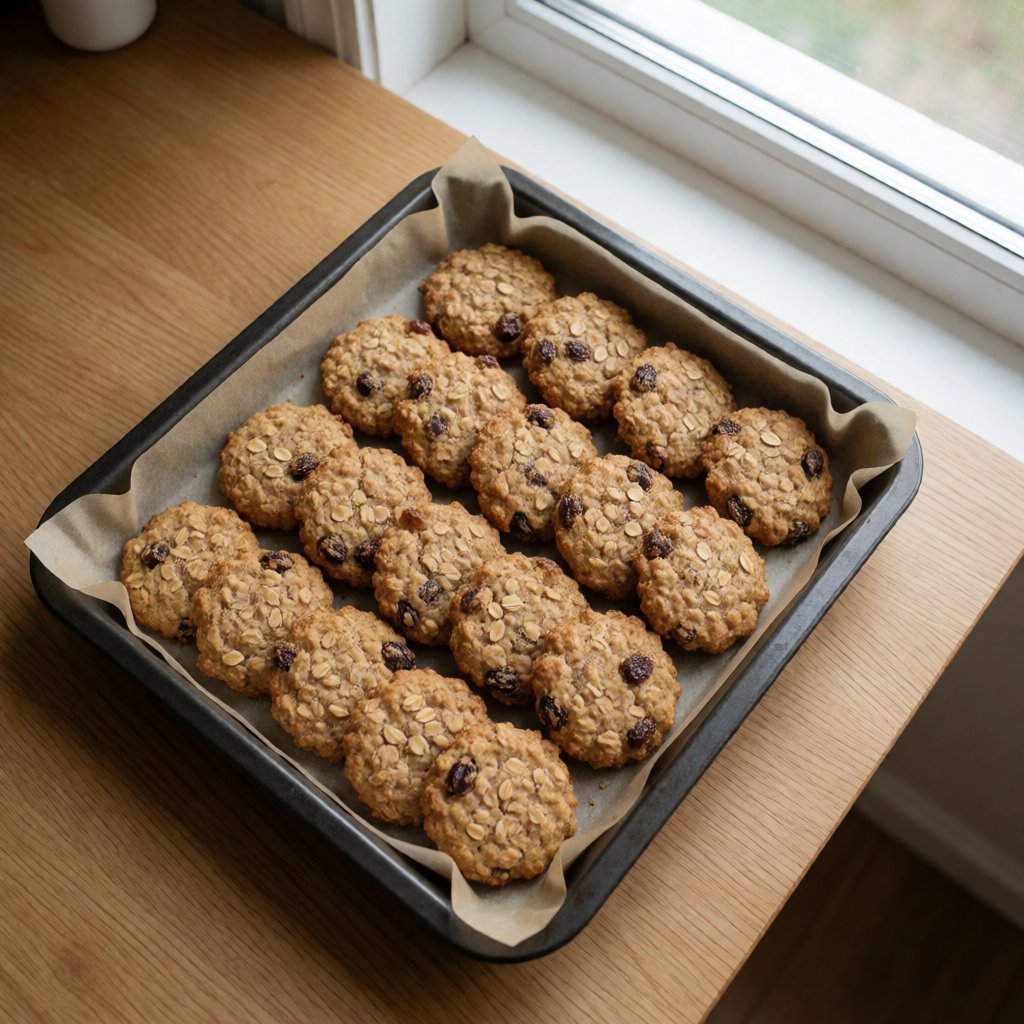
 AI photo
Oat and Banana Biscuits
Simple oat biscuits with banana, raisins and cinnamon, ready in minutes.
Labels are worked out automatically from the ingredients and can be wrong. Check the packaging if it matters to you.
Ingredients

Steps
Mash the banana, then mix with the oats, raisins and cinnamon.
Spoon small rounds onto a baking tray, pressing down gently.
Place the tray in the oven for 15 minutes until golden, checking after 12 minutes.
15 minRemove the tray from the oven.
This is about as honest a biscuit as you'll make: no flour, no egg, no butter. Oats, one tired banana, a handful of something sweet and crunchy, a pinch of cinnamon. What decides whether it holds together on the tray or falls apart into porridge is one thing only — how ripe that banana is.
Some say you can't bake a biscuit without egg to bind it. No — because a ripe banana has done the chemistry for you already. As it ripens, its starch turns to sugar and its pectin breaks down, which is why a ripe banana goes soft and sticky in your hand instead of staying firm. Mash it well and you get a glue that's sweet, holds moisture, and sets when it meets heat. An unripe banana won't do this job — it's still starchy and stiff, and your mixture will crumble on the tray instead of pressing into a round.
Doneness here is not a number on a clock, it's a colour and a feel. You're watching for the edges to turn from pale oat-beige to a proper gold, and for the top to firm up so it doesn't dent under a finger. The 15 minutes in the recipe is a floor, not a verdict — ovens in an ordinary flat vary more than people admit, so the check at 12 minutes isn't fussiness, it's insurance against the banana's sugar going from caramel to burnt in the last couple of minutes, which happens fast and without warning.
Don't expect a snap when you bite it. This isn't that kind of biscuit — no flour structure, no fat to crisp it. It's soft, a little chewy, closer to a flapjack's quieter cousin. That's not a fault, that's just what the ingredients can give you.
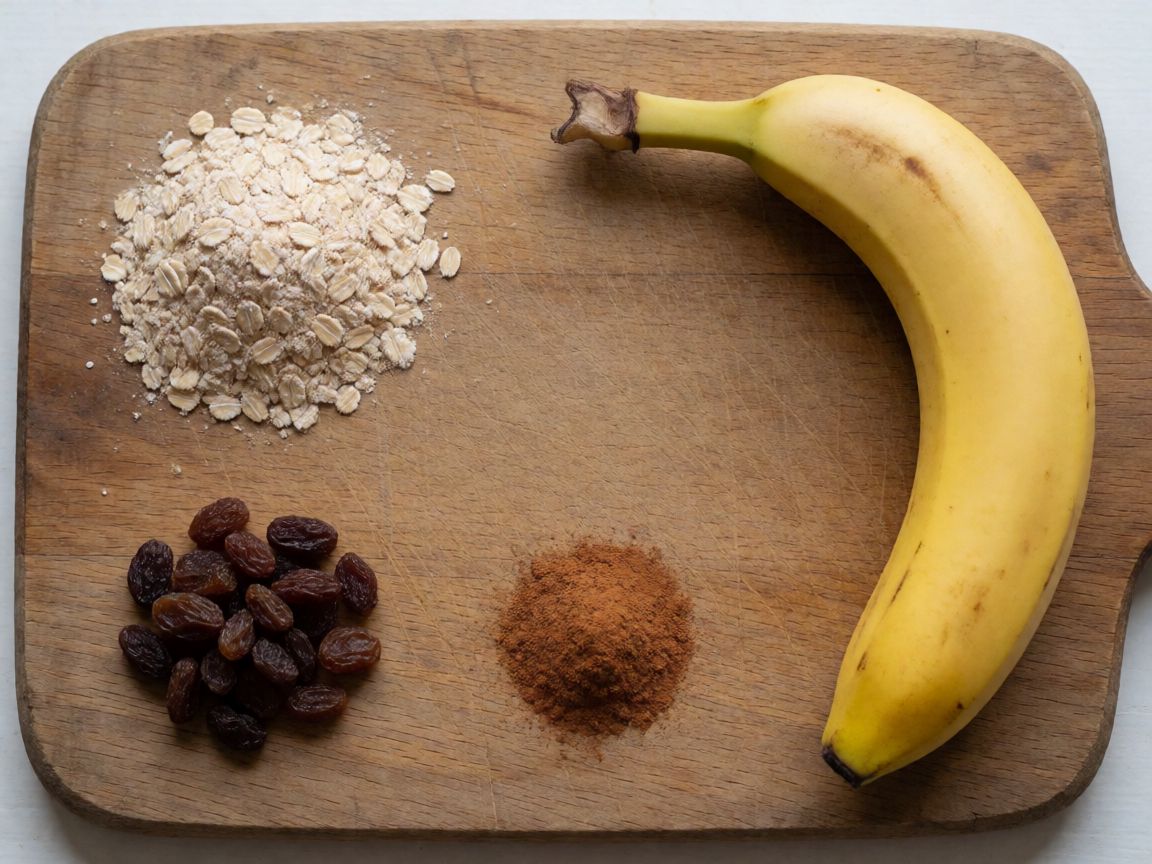
Oats: use rolled oats, not the quick-cook kind. Rolled oats keep some shape and soak up the banana's moisture slowly, which is what gives the biscuit body instead of mush. Quick oats are already half-broken and will turn the whole mixture to paste the moment it meets wet banana — you'll get something closer to a pancake than a biscuit. If all you have is porridge oats labelled 'quick', add a spoon less banana to compensate for the extra absorption, or you'll be fighting a wet mix all the way to the tray.
Banana: ripeness is the whole recipe, so judge it by feel, not by colour alone. Press it gently — it should give under your thumb, and a few brown flecks on the skin are a good sign, not a defect. A banana that's still firm and pale inside hasn't made enough sugar or softened its pectin yet, and no amount of mashing will turn it into glue. There's no honest substitute for this — a banana is doing a specific job of binding and sweetening at once, and nothing else in a British kitchen does both.
Raisins or nuts: this is where you choose texture, not flavour. The mixture itself is soft and uniform, so you need something that bites back — a raisin bursts with its own concentrated sweetness, a nut gives crunch and a little fat, which rounds out the dryness of the oats. The criterion for substitution is simple: anything dried, small, and with a texture of its own works — chopped dates, dried cranberries, roughly broken walnuts or almonds. What doesn't work is anything that turns soft in the oven, like fresh fruit, because then you've lost the contrast entirely.
Cinnamon: one pinch, because its job is small. It's there to lift the banana's sweetness without masking it, the same reason it turns up in cheap porridge and stewed fruit across half of Europe — a spice that was once precious enough to be a show of wealth, now cheap enough to sit in every cupboard, used generously on humble ingredients precisely because it once couldn't be. If you haven't got it, nutmeg or a little ground ginger does a similar lifting job, in a smaller pinch, since both are sharper.
On pressing the rounds down: this isn't decoration. A domestic oven, especially the kind set into an ordinary flat kitchen, rarely heats evenly — you'll get a hot back corner and a cooler front. A flattened round gives more surface in contact with the tray, which means more even, faster heat transfer and a better chance the centre cooks through before the edges burn. Leave them mounded and thick, and you risk a gold crust around a banana-raw middle.
This is a two-person, ten-minute-of-your-attention recipe, and most of that ten minutes is just mashing and waiting for a ripe banana to agree to become glue — which is really the only patience this dish asks of you. Good with tea, the way most oat things are in this country, and a sensible way to use up the banana that's gone past eating on its own, which is really where half of this recipe's economy lies.
·