
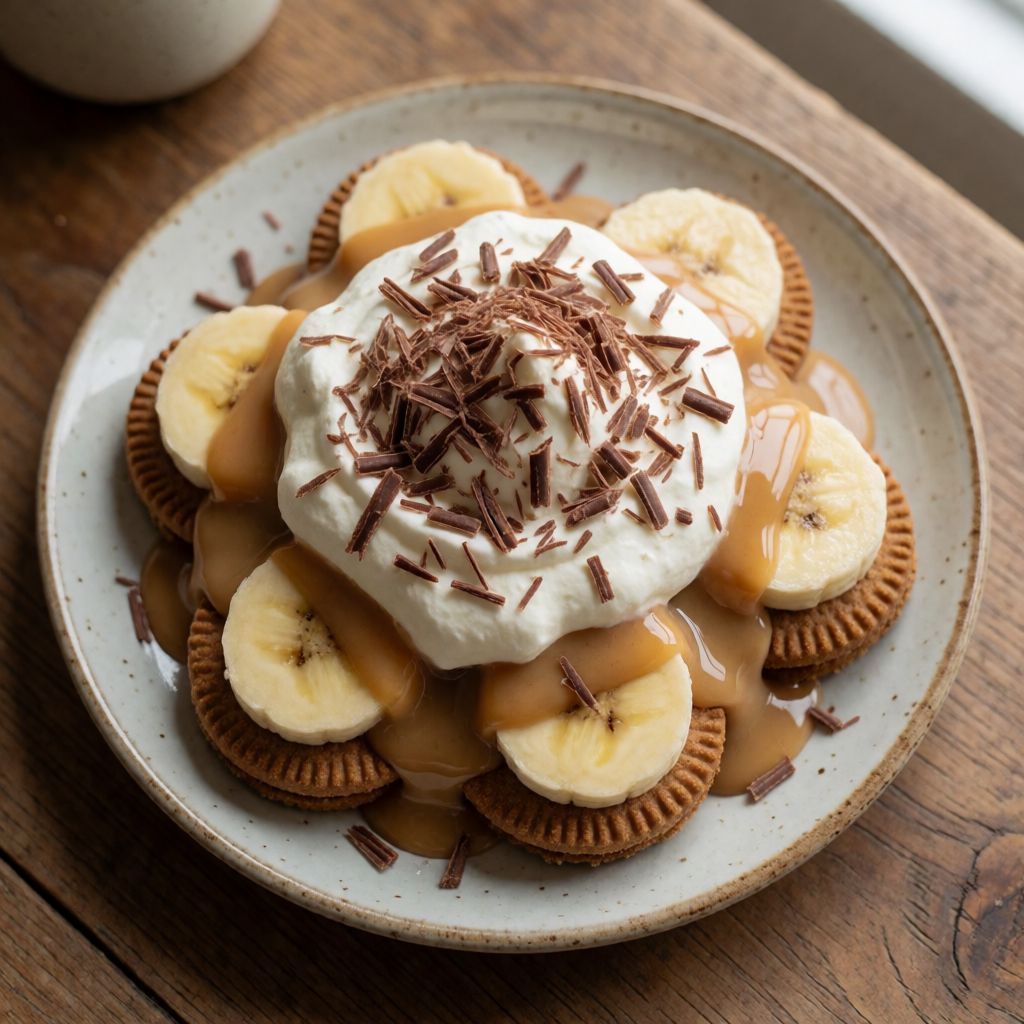
 AI photo
Banoffee Pie
A classic no-bake banoffee pie with a buttery biscuit base, toffee, banana and whipped cream.
Labels are worked out automatically from the ingredients and can be wrong. Check the packaging if it matters to you.
Ingredients
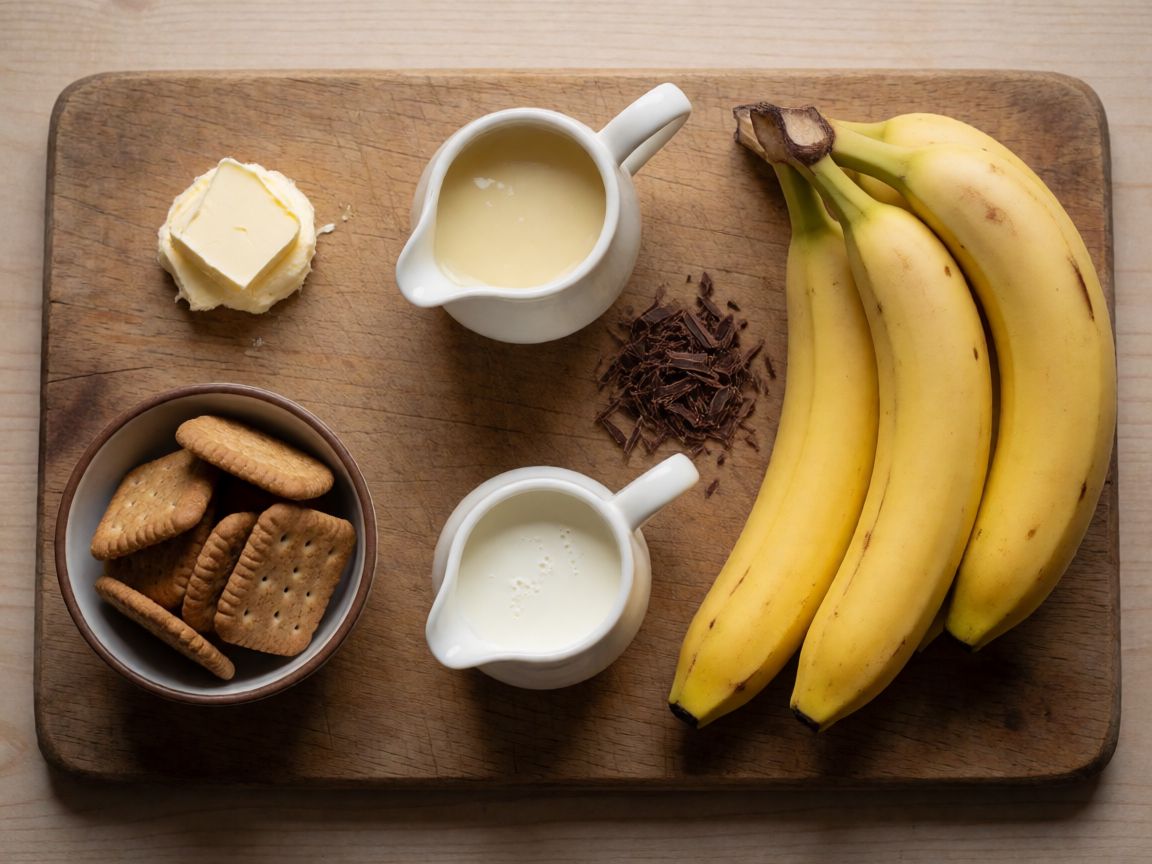
- 120 g Butter
- 350 g Digestive biscuits
- 350 ml Condensed milk
- 3 pcs Banana
- 350 ml Whipping cream
- Chocolate shavings to taste






Steps
Finely crush the biscuits and mix them with the melted butter until smooth.
Press the mixture into the base of a 26 cm cake tin.
Put the base in the fridge.
30 minPlace the tin of condensed milk in a pan of water and boil.
Take the base out of the fridge, open the condensed milk and spread it over the base, levelling it out.
Slice the bananas and arrange them on top of the pie.
Whip the cream and cover the whole pie with it.
Let the pie rest in the fridge before serving.
120 min
Banoffee pie is three textures stacked and made to hold still: a crisp biscuit base, a layer of toffee that was condensed milk an hour ago, raw banana for freshness against all that sugar, and whipped cream on top to cut it with air and cold. What decides whether it works isn't skill, it's whether you respect two separate kinds of heat and one kind of cold — and whether you let each one finish its job before starting the next.
The base is the easiest part and the one most people rush. Butter, melted, mixed into crushed biscuit, isn't "glue" in some vague sense — it's fat that's liquid now and will go solid again in the fridge, and it's that solidifying that holds the crumb together. If the base won't hold a slice, the butter was too little, or the fridge time was skipped. There's no trick beyond cold and enough fat.
The filling is the part that actually needs watching, even though nothing about it looks like cooking. You're boiling a sealed tin of condensed milk in water for the better part of three hours, and what's happening inside is the sugar in the milk slowly browning — the same reaction that turns bread crust dark, just much slower because the tin is a shield against direct heat. That shield is also the danger: if the water level drops and the tin isn't covered anymore, it's heating dry metal with pressure building inside, and that can split. So the water in the pan matters more than the clock does — top it up, don't leave it and come back in two hours assuming it's fine.
Biscuits: digestives are the British default because they're not too sweet and have enough fat baked into them already to crisp nicely when you add more. Any plain, neutral biscuit with a bit of its own fat will do the same job — graham crackers if that's what's in the cupboard, shortbread if you don't mind it richer. What you're avoiding is a biscuit so sweet or so strongly flavoured it fights the caramel instead of sitting under it.
Butter: pick something with no strong smell of its own working against the biscuit — unsalted is safest, salted works if you like the contrast against all that sugar. Margarine will bind the base the same way but tastes thinner; you'll notice it mostly in how little flavour the base has left.
Condensed milk: this is the pie's whole structure, really — the biscuit and cream are just there to hold it and lighten it. Full-fat tins caramelise better than low-fat ones because there's more to brown; don't reach for "light" condensed milk here, you'll get a paler, thinner result and wonder what went wrong.
Bananas: pick them ripe enough to taste sweet but still firm enough to hold a clean slice — not the spotted, soft ones you'd use for banana bread. Some say overripe is always better for banana desserts — no, because here the banana has one job, to stay in neat rounds under the cream, and a soft banana collapses into the caramel instead of sitting on it. Cut them close to assembly; banana browns fast once sliced, and sitting exposed on the counter while you whip cream is exactly how it goes grey before serving.
Cream: whipping cream in the UK is usually around 35% fat, which is the minimum you need for it to hold its own weight once whipped — double cream, with more fat, is more forgiving and whips stiffer even faster, useful if your kitchen is warm. Whip it cold, straight from the fridge; warm cream takes longer to thicken and tips into butter before you notice, because the fat's already starting to clump rather than trap air cleanly.
The two long waits — the hours the tin sits in boiling water, and the two hours the finished pie sits in the fridge before you cut it — aren't dead time to rush past. The first is what turns sugar into flavour instead of just sweetness. The second is what lets the caramel firm up enough to slice instead of oozing, and lets the cream settle against it. Patience here isn't virtue for its own sake, it's the only ingredient that can't be substituted.