
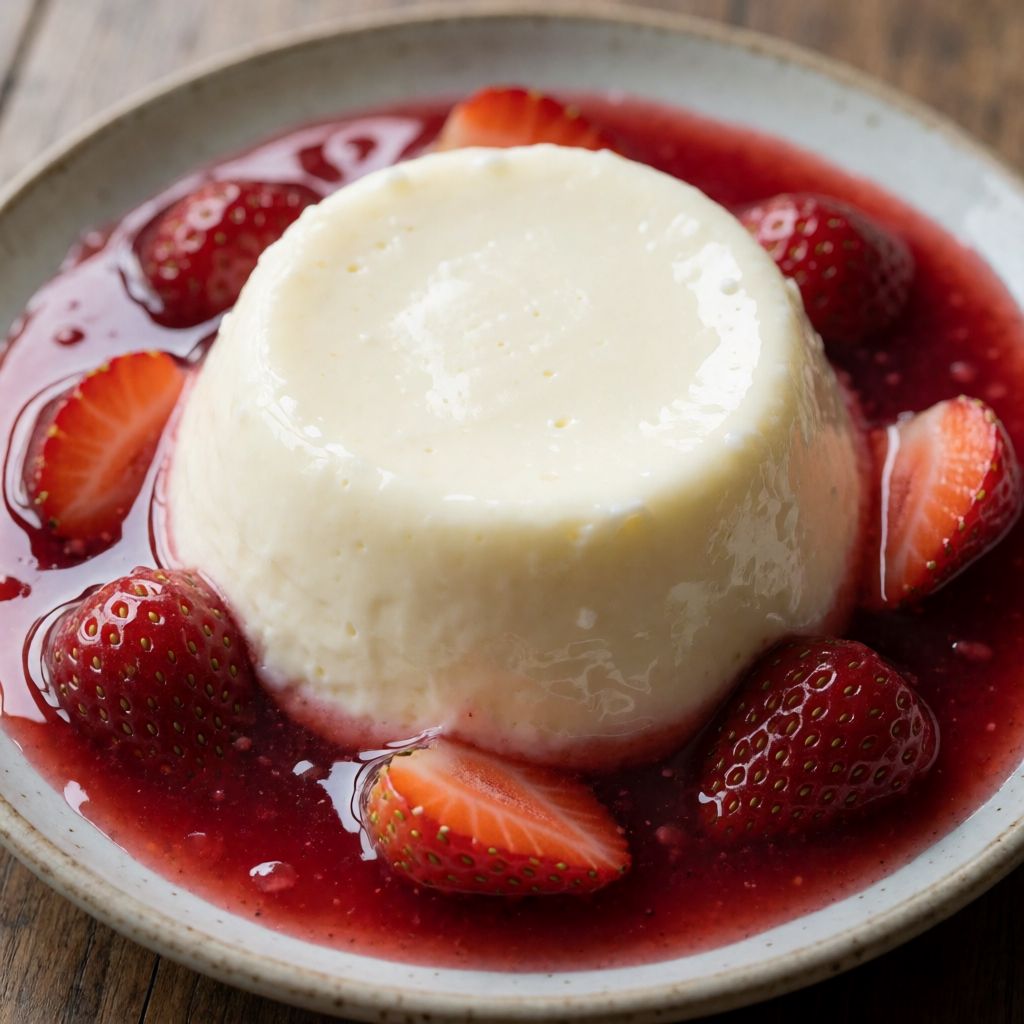
 AI photo
Bavarian Cream with Strawberries
A chilled Bavarian cream dessert flavoured with fresh strawberries.
Labels are worked out automatically from the ingredients and can be wrong. Check the packaging if it matters to you.
Ingredients
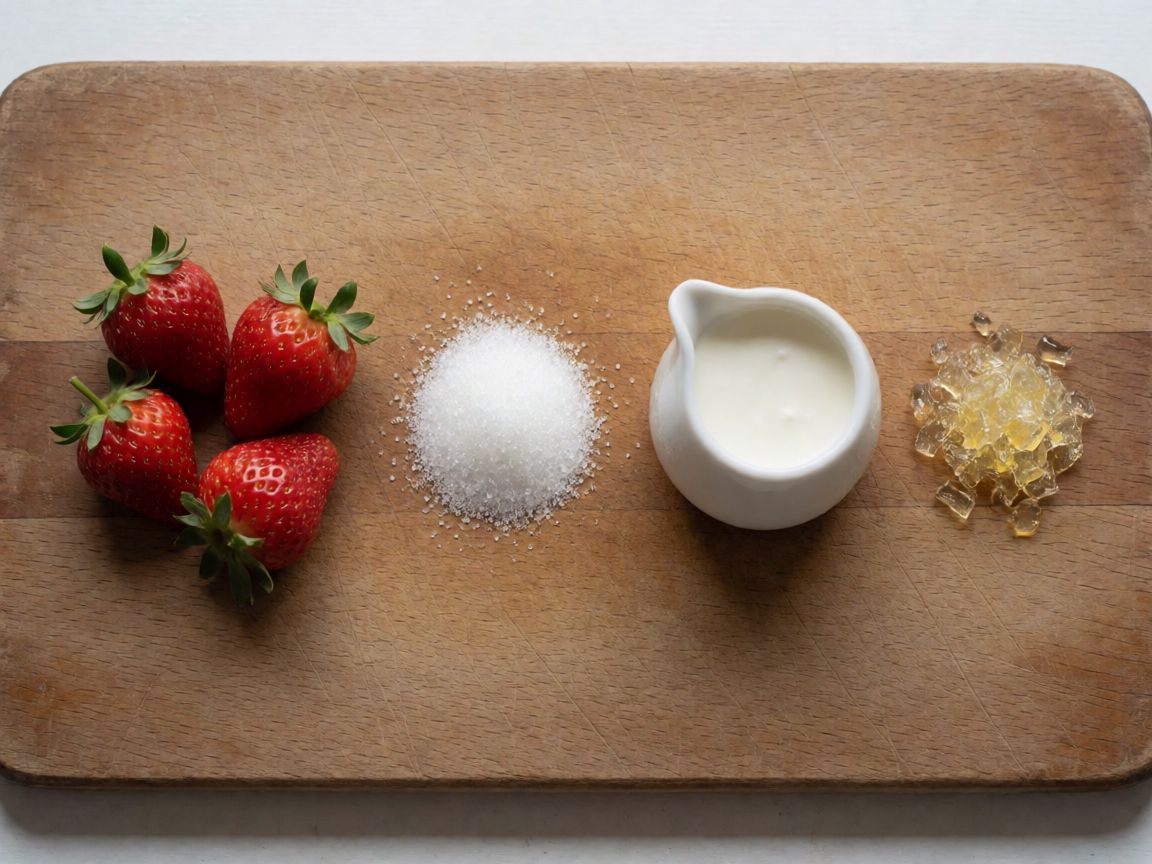
- 400 g Strawberries
- 100 g Caster Sugar
- 500 ml Double Cream
- 15 g Gelatine
- 75 ml Water cold





Steps
Break the gelatine into pieces, cover with cold water and leave to soften.
Rinse and hull the strawberries, then blend them with the sugar until you get a thin purée.
Set aside a small amount of the purée and warm it gently in a small saucepan for a couple of minutes.
Add the softened gelatine to the hot purée and stir until completely dissolved.
Pour the warm mixture into the rest of the strawberry purée, stir well and chill in the fridge for 30 minutes.
30 minWhip the cream with an electric mixer, add the chilled strawberry mixture and fold in gently with a spatula.
Pour the mixture into individual moulds and chill in the fridge for at least 4 hours.
240 minTurn the Bavarian creams out of their moulds and serve, garnished with fresh strawberries.
Bavarian cream is not a custard and not a mousse, though it gets lumped in with both. What you're building is a cold-set suspension: fruit purée held together by gelatine, then lightened with whipped cream folded in so the whole thing stays airy instead of turning to jelly with cream on top. Whether it works comes down to one handshake — the temperature of the gelatine mixture when it meets the whipped cream. Too hot, and it melts the air out of the cream, you get a flat, weepy pudding. Too cold, and the gelatine has already started to set in strands before it's distributed, you get flecks instead of a smooth body.
Some say Bavarian cream comes from Bavaria. No — it's a French invention, crème bavaroise, named as a compliment to Bavarian nobility visiting the French court in the 19th century, the way we still name dishes after people who never cooked them. The French kitchen just liked the sound of it. The dish itself owes nothing to German cooking; it owes everything to French pastry logic — base, setting agent, aeration — and this home version strips out the usual egg custard base and replaces it with fruit purée, which is honestly the smarter move for a domestic kitchen. No tempering yolks, no risk of scrambling them over heat.
Strawberries give you both the flavour and roughly half the moisture of the whole dish, so their ripeness matters more than their size. Overripe, almost collapsing fruit purées better and tastes rounder; hard, pale ones will need more sugar to fake the sweetness and still taste thin. Out of season, frozen strawberries defrosted and drained work fine for the purée — you're blending them anyway, texture doesn't matter, only flavour and how much water they carry, which is why you'd reduce it slightly if it looks watery rather than thick.
Caster sugar dissolves into the purée without the grainy drag coarser sugar leaves, and it's doing two jobs: sweetening against the fruit's acidity, and subtly firming the set, since sugar ties up some of the water that would otherwise compete with the gelatine. Any fine, unflavoured sugar works the same way — the only wrong choice here is something with its own strong taste, like dark brown sugar, which would fight the strawberry rather than support it.
Double cream is the structural half of this dish, and the fat content is the whole point — you need enough fat (double cream sits around 48%) to whip into a stable foam that still holds once folded with a liquid gelatine mixture. Single cream or anything under about 35% fat won't whip to a shape that survives folding; it'll just thin out the purée instead of lightening it. Whip it to soft, floppy peaks, not stiff — stiff cream folds badly and leaves streaks, because it's already lost the elasticity that lets it merge smoothly with the purée.
Gelatine is doing the one job cream and sugar can't: giving the dessert a shape that holds without a mould once turned out. Leaf gelatine, if that's what's in your cupboard instead of granules, works the same way — soak the leaves flat in cold water until floppy, squeeze out the excess, then melt them the same gentle way into the warm purée. Vegetarian setting agents like agar don't behave the same under refrigeration — they set at warmer temperatures and give a firmer, less creamy texture — so they're not a straight swap here without expecting a different result.
The 75 ml of cold water is simply there to give the gelatine something to swell in before it meets heat — not a flavour ingredient, just a vehicle. Any more and you're diluting your purée when you add it back in; any less and the gelatine won't fully hydrate, leaving hard bits that never melt properly even in the warm portion.
For moulds, an ordinary flat doesn't need special kit — ramekins, teacups, even small yoghurt pots do the job, anything with a slight taper helps the cream release cleanly later. To turn them out: run a knife around the inner edge first, that breaks the seal the gelatine's made with the mould wall, then a few seconds in warm (not hot) water on the outside melts just the thinnest surface layer of gelatine, enough for it to drop free without melting the whole shape. Patience here is not optional — pull it early, before it's properly set, and it won't hold its edge when it comes out; rush the unmoulding, and you tear what the fridge spent four hours building.