
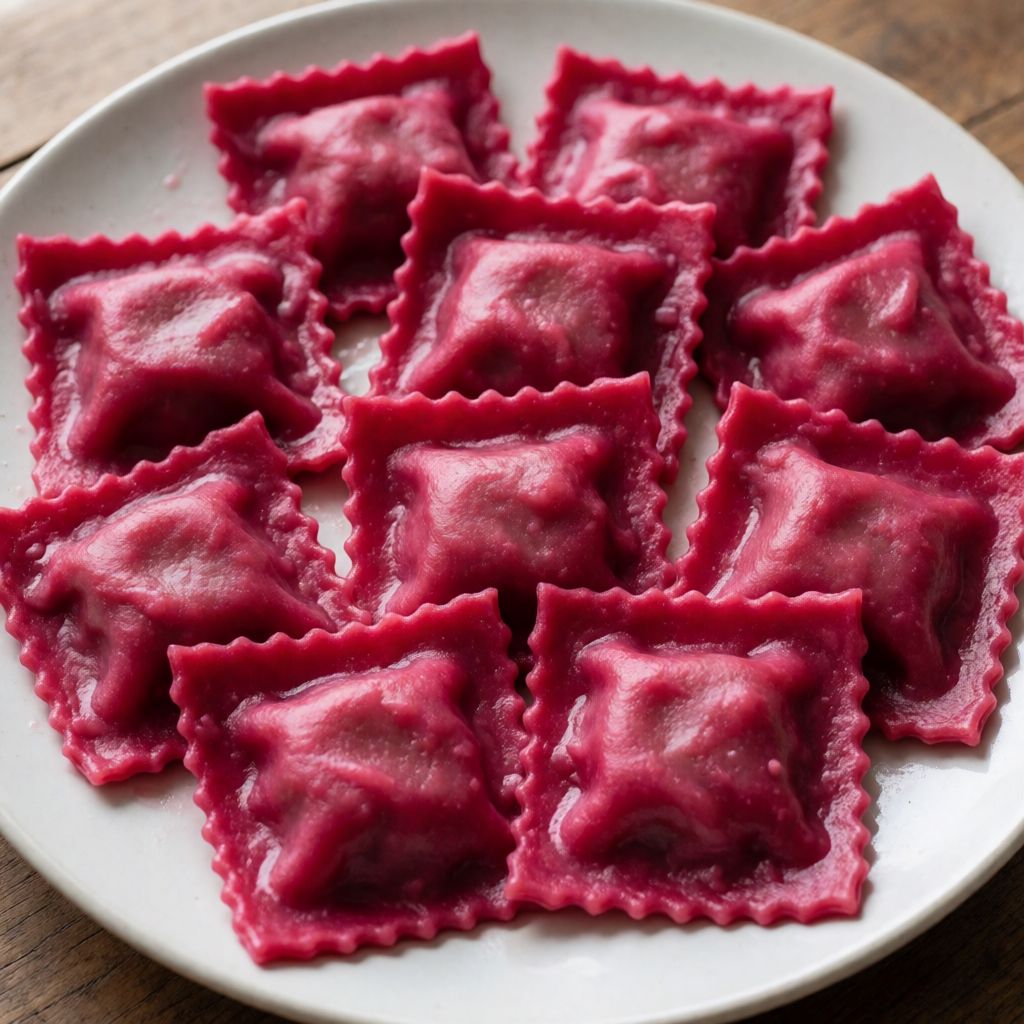
 AI photo
Beetroot Ravioli
Fresh pasta parcels filled with beetroot and potato, finished with Parmesan and olive oil.
Labels are worked out automatically from the ingredients and can be wrong. Check the packaging if it matters to you.
Ingredients
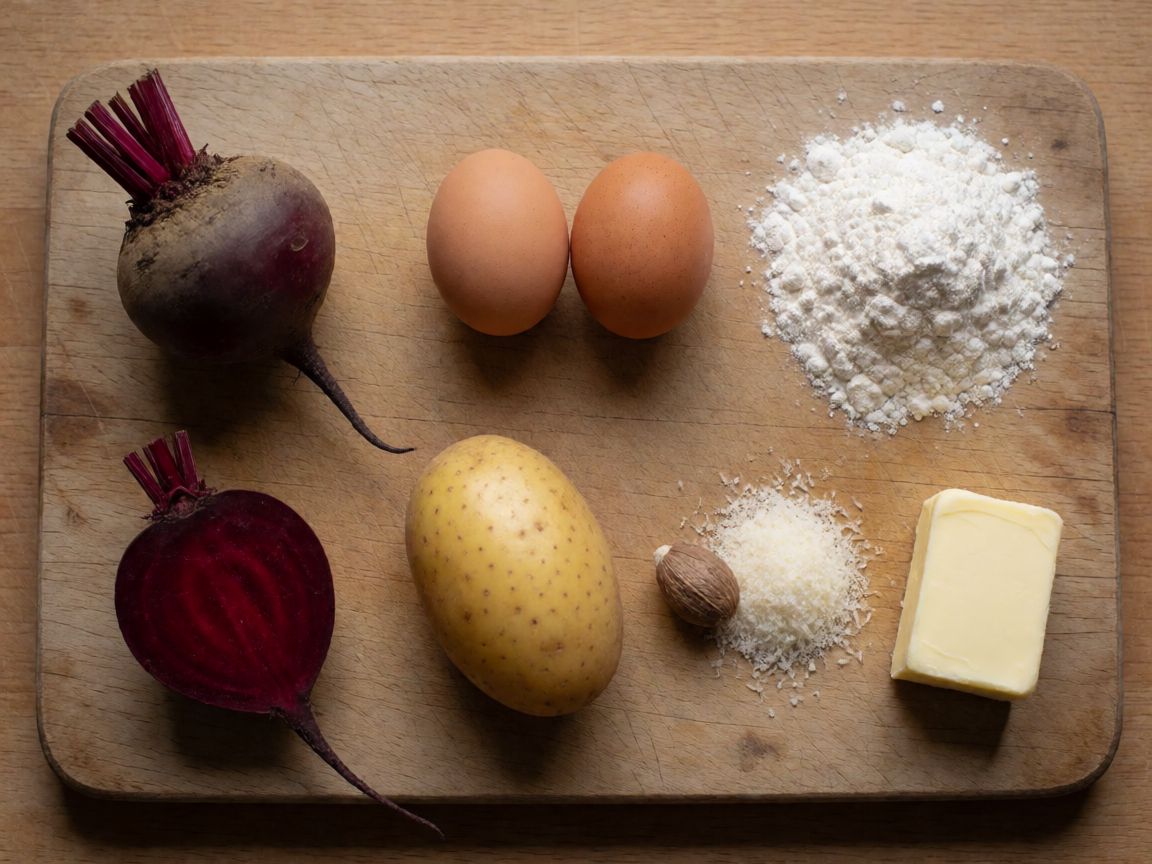









Steps
Drain the cooked beetroot well and blend to a smooth, creamy paste. Tip onto a work surface, add the flour, a pinch of salt and the egg, and knead to a soft but not sticky dough.
Wrap the dough in cling film and leave to rest.
25 minPeel the beetroot and potato, boil them, then put into a blender with the nutmeg, grated Parmesan and salt; blend until smooth.
Roll out the dough thinly, cut into rectangles, place filling on each and pinch the edges to seal.
Bring water to the boil, salt it, drop in the ravioli and cook for a few minutes until they float.
Dress the ravioli with a little of the cooking water and olive oil, or with butter.
Scatter Parmesan shavings over each portion and serve.
Beetroot ravioli is pasta dough with beetroot blended straight into it, filled with a mash of beetroot, potato and Parmesan. Not beetroot as a garnish on the side — beetroot as the structure of the dough itself. That's the whole idea, and it's also where most people trip: they boil the beetroot, drain it, and still wonder why the dough won't come together. Beetroot is mostly water. If you don't drain it properly — really press it, not just tip the colander — that water goes into the flour and you've made glue, not dough.
What decides whether this works is moisture, twice over. Once in the dough, once in the filling. The dough needs to be soft but not sticky — soft enough to roll thin without tearing, not so wet it welds itself to the worktop. The filling needs to be dry and smooth, almost like a thick purée, because a wet filling leaks through the seal the moment the ravioli hits boiling water and you end up with pink soup instead of parcels.
Some say you can't make proper ravioli without a pasta machine. No — a wide rolling pin and patience do the job; a machine just saves your arms. What you can't skip is the rest. Twenty-five minutes isn't decoration, it's the gluten relaxing after you've bullied it with kneading — skip it and the dough fights you when you roll it, springs back, tears.
The dish feeds two generously as a starter, less as a main — it's rich with egg yolk and cheese, and beetroot has a sweetness that fills you up faster than its weight suggests.
The beetroot in the dough and the beetroot in the filling are doing different jobs, so treat them differently. For the dough, boil it (or use ready-cooked vacuum-packed beetroot — nothing wrong with that, it saves you an hour and a stained hob), then drain it properly: let it sit in a sieve, press it with the back of a spoon, don't rush this. Any residual water you leave in there is water your flour has to absorb instead of egg, and that's what makes dough that never quite dries out on the surface, stays tacky, picks up too much extra flour as you try to fix it, and ends up tough once cooked. Blend it smooth — no chunks, or you'll get little knots in the dough that tear when you roll it thin.
Flour: plain flour, not strong bread flour. You want enough gluten to hold the sheet together but not so much elasticity that it refuses to roll out thin and keeps springing back — that's for bread, not for pasta you want almost translucent. If you only have self-raising, it'll still work, just don't expect the same bite; the raising agent isn't doing you any favours here but it won't ruin the dish either.
The egg binds the dough and adds richness — standard medium egg, nothing fancy. If the dough feels dry after kneading, don't add water: add a few drops more beaten egg, because water dilutes the gluten's grip while egg reinforces it.
For the filling: potato alongside the beetroot isn't there for flavour, it's there for texture. Potato, mashed smooth, gives you a dry, cohesive paste that beetroot alone can't — beetroot on its own stays slightly wet and grainy even blended, and a wet filling is your enemy here, it's what makes ravioli split open in the pot. Boil the potato whole or in large pieces so it doesn't drink up extra water; drain and mash while hot, beetroot can go in after.
Nutmeg is the traditional partner to anything potato-and-cream-adjacent — think of it as cutting the earthiness of the beetroot, not covering it. A pinch, grated fresh if you can, because pre-ground nutmeg loses its punch within weeks of opening the jar.
Parmesan in the filling and on top does two jobs: salt and savoury depth that beetroot, being naturally sweet, needs to balance it. Any hard, well-aged grating cheese with no sweetness of its own will do if Parmesan isn't to hand — a mature Cheddar won't give you the same nuttiness but it won't betray the dish either.
To seal the edges, use a little water or egg wash on your finger, not a heavy smear — too much liquid there and the seam goes soggy and opens exactly where you need it closed. When you drop them into boiling salted water, they float when they're done because the air trapped inside the parcel expands and the dough has cooked through enough to let it lift — that's your cue, not a stopwatch, though a few minutes is your lower bound so you don't fish them out raw.
Dress with a splash of the starchy cooking water and olive oil, or butter if you want richness over lightness — either works, it's a matter of what else is on the table that day, not a rule carved in stone.