
 AI photo
Befanini (Tuscan Epiphany Biscuits)
Tuscan Epiphany biscuits, cut into fun shapes and decorated with sprinkles.
Labels are worked out automatically from the ingredients and can be wrong. Check the packaging if it matters to you.
Ingredients
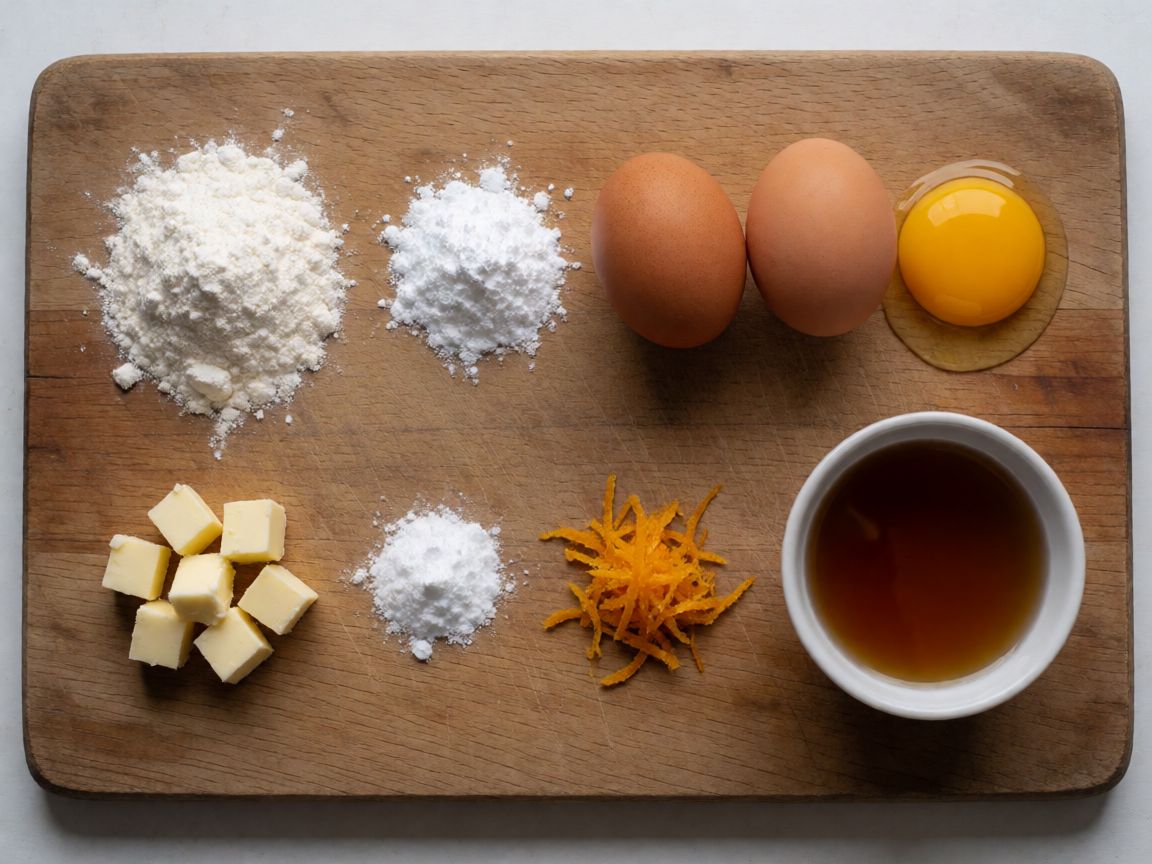
- 250 g Plain flour
- 120 g Icing sugar
- 2 pcs Eggs
- 1 pcs Egg yolk
- 75 g Butter cut into pieces
- 8 g Baking powder
- 1 pinch Salt
- 20 ml Anise liqueur
- 1 pcs Orange zest unwaxed
- Sugar sprinkles to taste








Steps
Put the flour, icing sugar, baking powder and salt into the mixer bowl. Add the orange zest.
Add the butter, anise liqueur and the egg with the yolk. Beat on low speed until smooth.
Tip the dough onto a work surface and quickly knead by hand until smooth.
Wrap the dough in cling film and chill in the fridge.
30 minRoll out the dough on a floured surface to about 3 mm thick.
Cut out shapes with your chosen cutters. Gather the trimmings, re-roll and cut again.
Place the biscuits on a baking tray lined with parchment paper, leaving a few centimetres between them.
Brush the biscuits with beaten egg. Decorate with sugar sprinkles if you like.
Bake at 180°C.
15 minTake the biscuits out of the oven and let them cool completely before serving or storing.
Befanini are Tuscany's answer to the question of what to do with children on the sixth of January, when Befana the good witch comes down chimneys to fill stockings, and somebody has to be baking something while the grown-ups argue about whether she's more generous than Father Christmas. These are cut-out biscuits — stars, little witches on broomsticks, bells — crisp at the edge, short and sandy in the middle, carrying orange and a whisper of anise. They are not meant to be subtle. They are meant to survive being handled by small hands, hung on a tree, or dunked in tea.
What decides whether they work is the dough's temperature at two separate moments, not the oven's. First: the butter goes in cold, cut into pieces, not softened — this is a biscuit dough, not a cake batter, and you want the butter to stay as discrete fat rather than melt into the flour and turn the crumb cakey. Second: after mixing, the dough rests in the fridge before rolling. Skip that chill and you're rolling warm, slack dough that sticks to everything, picks up extra flour to compensate, and bakes tough instead of short. Thirty minutes is the floor, not a target — if your kitchen ran warm while you kneaded, give it longer. The dough is ready when it holds a cut edge cleanly instead of slumping back.
Flour and icing sugar first, dry together with the baking powder and salt, because this is how you avoid the classic home-baker's mistake of dumping leavening into wet ingredients and getting a streaky rise. Plain flour, nothing fancier — this isn't a bread dough asking for structure, it's a biscuit dough asking to be short, and too much protein just makes it elastic and hard to roll thin without it fighting back. Icing sugar rather than caster matters more than people assume: it dissolves into the fat without needing the kind of beating that would work air and gluten into the dough, which is exactly what you don't want here.
The butter goes in cold and cut into pieces, not melted or softened, so it stays as little pockets of fat coating the flour rather than merging into a smooth paste. That's what gives "short" its meaning — a biscuit that shears cleanly under the tooth instead of stretching. Any unsalted butter works; if you only have salted, just drop the pinch of salt. Don't reach for margarine here — it carries water that butter doesn't, and water is what builds gluten and toughness, the opposite of what you're after.
Two whole eggs plus a yolk bind the dough and add richness without adding liquid flour can't absorb — the extra yolk over a third white is a small trick for richness without sogginess, since yolk is mostly fat and white is mostly water. The anise liqueur is traditional for Befanini specifically, giving that faint liquorice note that marks them apart from plain shortbread — if you don't have it or don't want alcohol in children's biscuits, a few drops of anise extract in a spoonful of orange juice gets you there, or leave it out and lean harder on the zest. Orange zest should come from an unwaxed fruit, because you're grating the skin itself into the dough — waxed supermarket oranges carry a coating meant for shelf life, not for eating, so wash well or buy unwaxed/organic if you can.
Rolling to about 3 mm is the number that makes these specific biscuits work: thinner and they're fragile sugar-crisps, thicker and the middle stays doughy while the edge browns. A ruler or two stacked wooden spoon handles either side of the dough give you an even gauge without a proper set of rolling guides — worth doing once, because uneven thickness is the single most common reason home-baked biscuits come out of the oven some burnt, some pale, from the very same tray.
Brushing with beaten egg before baking isn't decoration for its own sake — it's what gives the surface its shine and helps the sugar sprinkles actually stick rather than roll off during baking. No proper lid or kazan needed anywhere in this: a domestic oven at a steady 180°C and a tray lined with parchment is the whole ask. Let them cool completely on the tray or a rack before you touch them for storing — warm biscuits are still setting their structure, and stacking them hot is how you get cracked edges and biscuits that stick to each other. With tea, milk or not, they hold up for days in a tin — patience again, this time after the oven rather than before it.