
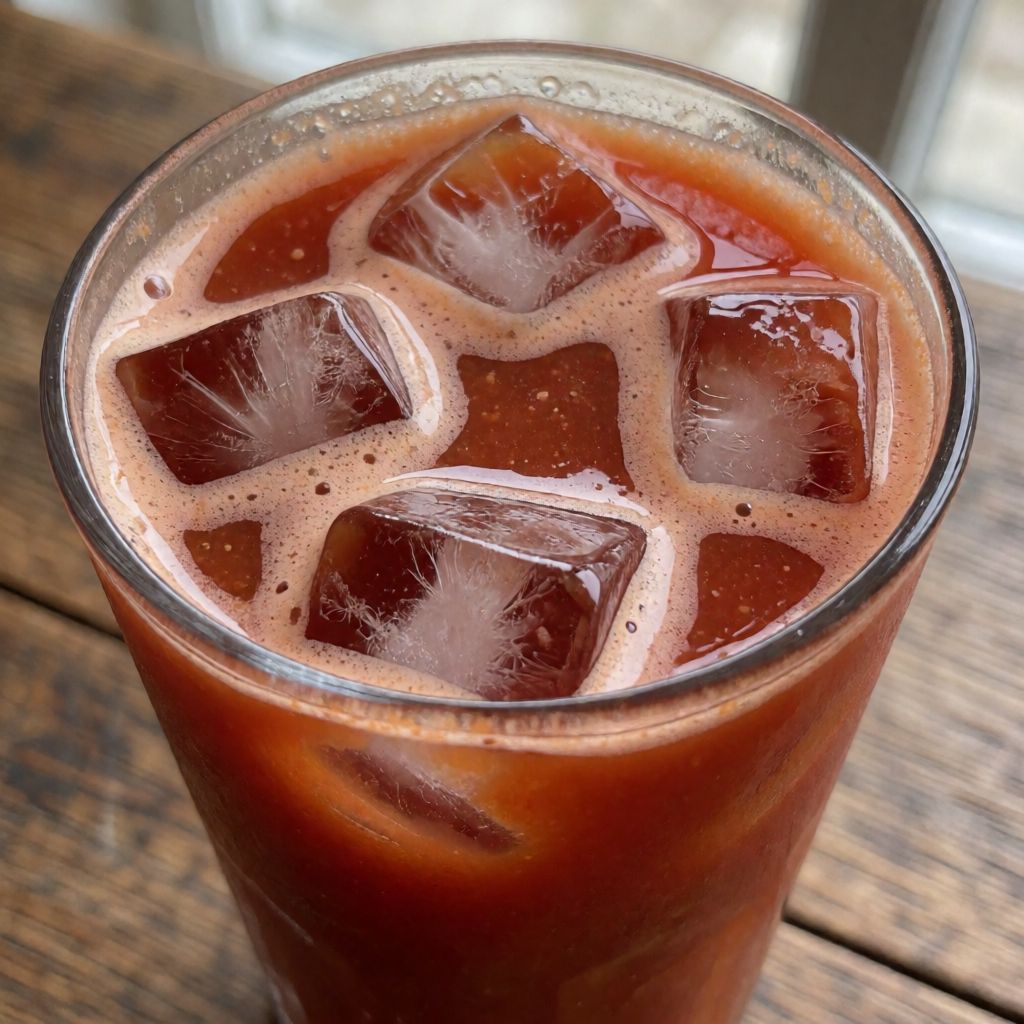
 AI photo
Bloody Mary
A classic vodka and tomato juice cocktail, spiced and served over ice with lemon and celery.
Labels are worked out automatically from the ingredients and can be wrong. Check the packaging if it matters to you.
Ingredients
- 2.5 tbsp Vodka
- 100 ml Tomato juice
- 1 tbsp Lemon juice
- Worcestershire sauce a few drops
- Tabasco sauce a few drops
- Salt to taste
- Black pepper to taste
- Ice cubes
- 1 pcs Celery stalk
- 1 pcs Lemon









Steps
Wash the lemon thoroughly to remove any residue from the skin, then squeeze out the juice.
Strain the lemon juice through a fine sieve into a shaker.
Add the tomato juice and vodka.
Add salt to taste, a pinch of black pepper, and stir.
Add a few drops of Worcestershire sauce and a few drops of Tabasco, then stir again.
Place about ten ice cubes in a glass, strain the mixture, and pour it into the glass.
Serve the Bloody Mary immediately, garnished with a lemon slice and a celery stalk.
A Bloody Mary isn't a list of ingredients, it's a balance of tastes pulling against each other — salt, acid, heat, savoury depth, and the cold itself. Get any two of those out of proportion and you taste vodka with tomato juice, which is a flatter, duller drink than the one you're after. What decides whether it works: the lemon has to cut through the tomato's sweetness without turning the whole thing sour, and the salt and pepper are judged by tongue, not by a measuring spoon, because every tomato juice already carries its own salt.
Some people think a Bloody Mary is vodka poured into tomato juice with a shake of hot sauce on top. No — because tomato juice on its own is flat, almost sweet, and without the Worcestershire's fermented depth and the Tabasco's heat arriving a beat after the salt, you're drinking savoury squash with alcohol in it. The whole point is building five sensations in, one after another, so each sip restarts the argument between them.
Ice does two separate jobs, and you want both: it chills the drink and it dilutes it. Shake or stir over one lot of ice, strain it away, then pour over a fresh lot in the glass — the first ice has already taken the raw edge off the vodka and let the flavours settle together, and the second keeps the drink cold while you sip without watering it down any further.
The celery stalk isn't there to be fished out and binned. It's there to bite between sips — its clean, slightly bitter crunch resets your palate so the next mouthful tastes as sharp as the first one did.
Vodka here is backbone, not flavour, and that's the whole job of it — it should taste of almost nothing, because anything characterful (a rye bite, a sweet corn note) fights the tomato and muddies the finish instead of sharpening it. A clean, neutral vodka is correct. If the one in your freezer is flavoured, use it, but taste as you go, because the balance has shifted.
Tomato juice is the one ingredient you can't fully control from a recipe, because every bottle or carton is seasoned differently by whoever made it. That's why salt goes in "to taste" rather than as a measure — taste the juice neat first, before vodka or lemon go anywhere near it, and you already know how much salt the drink needs. A thin juice makes a thin drink; a thick, almost pulpy one gives the whole thing more body to carry the spice.
Lemon juice is fresh and strained, and the straining matters more than it looks — pulp and pips in a shaken drink end up floating in the glass, and a pip on the tongue mid-sip is the fastest way to ruin one. Washing the lemon first isn't fussiness: the skin carries wax and spray residue, and some of that reaches the fruit through your hands when you cut it. Bottled lemon juice gets you partway there in an emergency, but it's flatter and more one-note without the oils that come off fresh zest as you squeeze.
Worcestershire sauce does a job tomato juice can't do alone: fermented, anchovy-and-tamarind based, it brings savoury depth — what's now usually called umami — that tomato, however good, doesn't carry enough of by itself. A few drops are enough because it's concentrated; more than that and the drink tastes of the sauce rather than of itself. Without it, a dash of soy sauce covers some of the same gap — less complex, but in the right direction.
Tabasco's heat is meant to land after the salt and acid, not instead of them — which is why it goes in near the end, stirred rather than shaken, so you can judge the bite rather than guess it. Any thin, vinegar-based hot sauce works on the same principle: heat riding on acid, dosed in drops, never poured by the glug.
Ten ice cubes for one glass looks excessive, and it's deliberate: a glass packed tight with ice melts more slowly than three or four cubes rattling in open space, because there's less warm air and liquid around each cube doing the melting. That's the real reason this gets over-iced — not show, just slower dilution per sip. Celery and lemon slice earn their place rather than decorate for free: the celery gives you something to chew between mouthfuls, and the lemon on the rim means citrus reaches your nose before the drink reaches your mouth, which primes you for the acid that's coming. In Britain this often turns up as the Sunday-morning drink alongside a roast on the table, reputed as a hangover cure — that's folklore more than physiology, salt and vitamin C won't undo a late night, but a cold, sharply balanced drink at eleven in the morning is, at the least, honest comfort. The patience here is short but real: season and taste before the final pour over ice, because once it's in the glass and garnished, you've committed.