
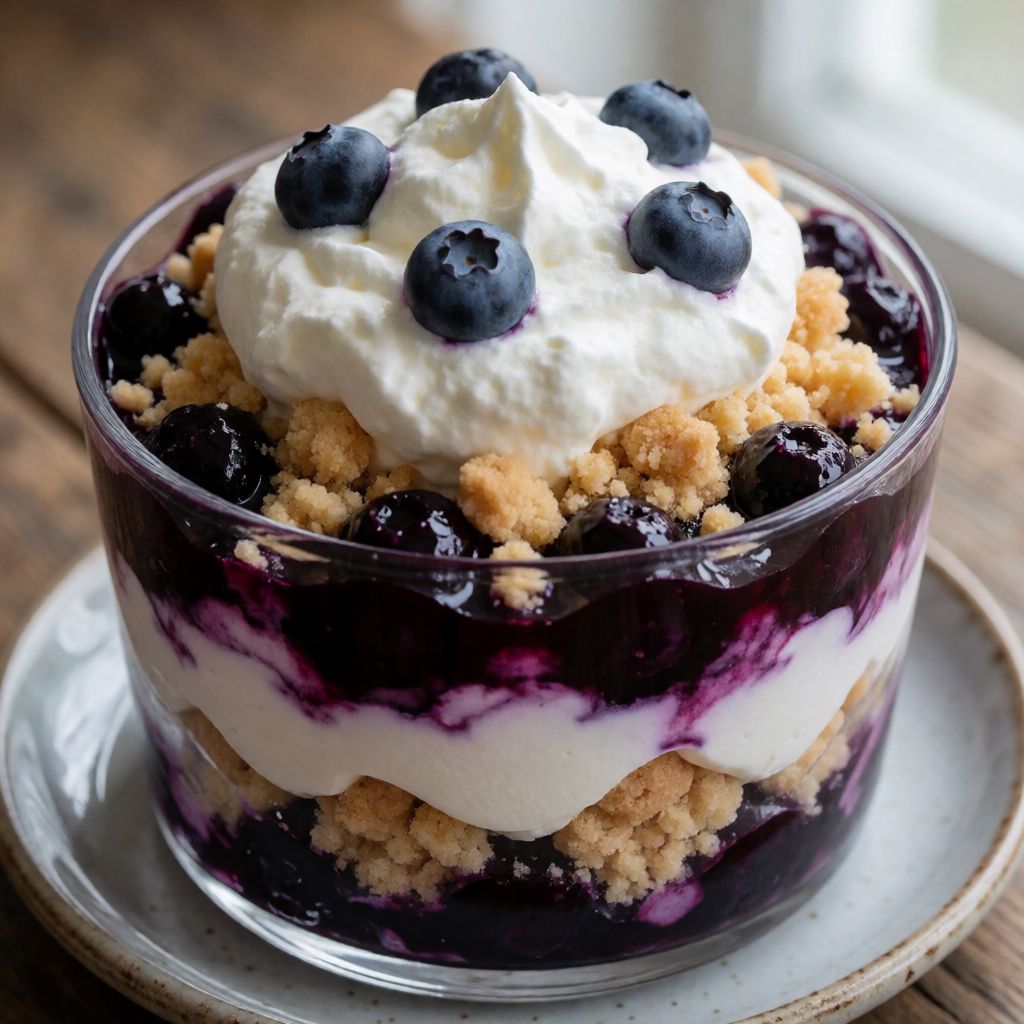
 AI photo
Layered Blueberry Dessert
A chilled, layered dessert of stewed blueberries, crushed amaretti biscuits and whipped cream.
Labels are worked out automatically from the ingredients and can be wrong. Check the packaging if it matters to you.
Ingredients
- 450 g Blueberries frozen or fresh
- 125 g Caster sugar
- 1 tsp Vanilla sugar
- 100 g Amaretti biscuits coarsely crushed
- 250 ml Double cream
- 0.5 tsp Vanilla sugar
- 100 g Blueberries for decoration



Steps
Put the blueberries, sugar and vanilla sugar into a saucepan and bring to the boil.
Let simmer gently, uncovered, for 15 minutes.
15 minTransfer to a bowl and chill in the fridge until completely cold.
If a lot of juice remains, drain it off – use the juice for a syrup or a cocktail, for example.
Whip the double cream with the vanilla sugar to a soft, creamy consistency.
Layer the blueberries, coarsely crushed amaretti biscuits and whipped cream alternately in nice glasses.
Decorate with fresh blueberries.
What was changed
The pasta was swapped for Amaretti biscuits, which fits the crumbly layers of this cream dessert as made in British kitchens.
This is a cold, layered dessert built in a glass: cooked blueberries at the bottom, crushed almond biscuit in the middle, soft whipped cream on top. No oven touches it — the only heat is a few minutes on the hob, turning raw fruit into a jammy compote. Every element is easy to get right on its own; what decides whether the whole thing works is whether the three stay separate once you've stacked them. That means cold compote, dry compote, and cream whipped just enough.
Some say frozen berries are the lesser choice, fresh is "proper" — no, because frozen fruit has already had its cell walls split open by ice crystals. It gives up its juice fast and evenly. Fresh berries, especially firm ones, can sit stubborn and whole even after a boil, refusing to collapse into a compote. For this dish, where you want the fruit to turn into syrup around itself, frozen is often the better tool, not a compromise.
Blueberries, caster sugar, vanilla sugar — straightforward. Caster sugar is chosen for grain size, not sweetness: it's fine enough to start dissolving into cold berries before the heat even takes real hold, so you don't get gritty pockets later. Vanilla sugar appears twice, once in the fruit and once in the cream, and that's deliberate — it's the one note that ties the bottom layer to the top. If you don't keep vanilla sugar in the cupboard, a splash of vanilla extract does the same job in both places; don't double the sugar to make up for a flavour that was never about sweetness.
Amaretti biscuits are Italian, bitter-almond, crisp. Historically they were a way of using what was left over from marzipan-making — ground almonds and spare egg whites, turned into something that wouldn't spoil. Their job in this glass is not to add more sweetness, there's already plenty of that from fruit and cream, but to give you one dry, cracking bite between two soft things. Crush them coarsely, into small pieces, not dust — powder dissolves into the cream and disappears, small pebbles survive long enough to still crunch when the spoon hits them. If amaretti isn't to hand, use any biscuit that breaks into crumbs rather than turning to paste in liquid — digestives, speculoos, even broken meringue if you want sweetness and crunch without the almond edge.
Double cream is specified because of its fat content, roughly 48%, which is what lets it hold a soft shape once whipped, without gelatine or any other help. Whip it only to soft, not stiff: over-whipped cream starts separating toward butter, turns grainy, and sits in the glass like a lump instead of draping over the layer below. The cue isn't a time, it's a look — lift the whisk and the cream should slump slowly back down, not stand up in a sharp peak. Anywhere outside the UK you'd look for the same percentage under a different name — heavy cream, for instance — and anything under about 36% fat simply won't hold its shape once you try to stack it; it will run straight back down into the compote.
The decoration berries are doing a job that has nothing to do with taste — they're there for a cold, raw contrast against everything soft and crunchy already stacked below, and for colour, since this whole dessert is meant to be seen through glass as much as eaten. If blueberries are expensive or out of season, any dark berry works the same way on top — raspberry, blackberry, whatever's fresh.
On the glass itself: use something clear. Not a mug, not an opaque cup. The entire reason this dish exists as a layered thing rather than a mixed fruit fool is that you can see the stripes. A tumbler, a jam jar, a wine glass — anything transparent and not too wide, so the layers don't slide sideways and blur into each other before they even reach the table.
This is really a cousin of the English trifle with the sponge and custard swapped out for Italian almond biscuit — which is useful on a day when the oven is already busy, say, with a Sunday roast. The compote needs to go into the fridge and be forgotten about for a while; that waiting is not dead time, it's the step doing its work. Make it ahead, let it sit cold while the roast takes care of itself, and assemble the glasses only once everything else is settled.