
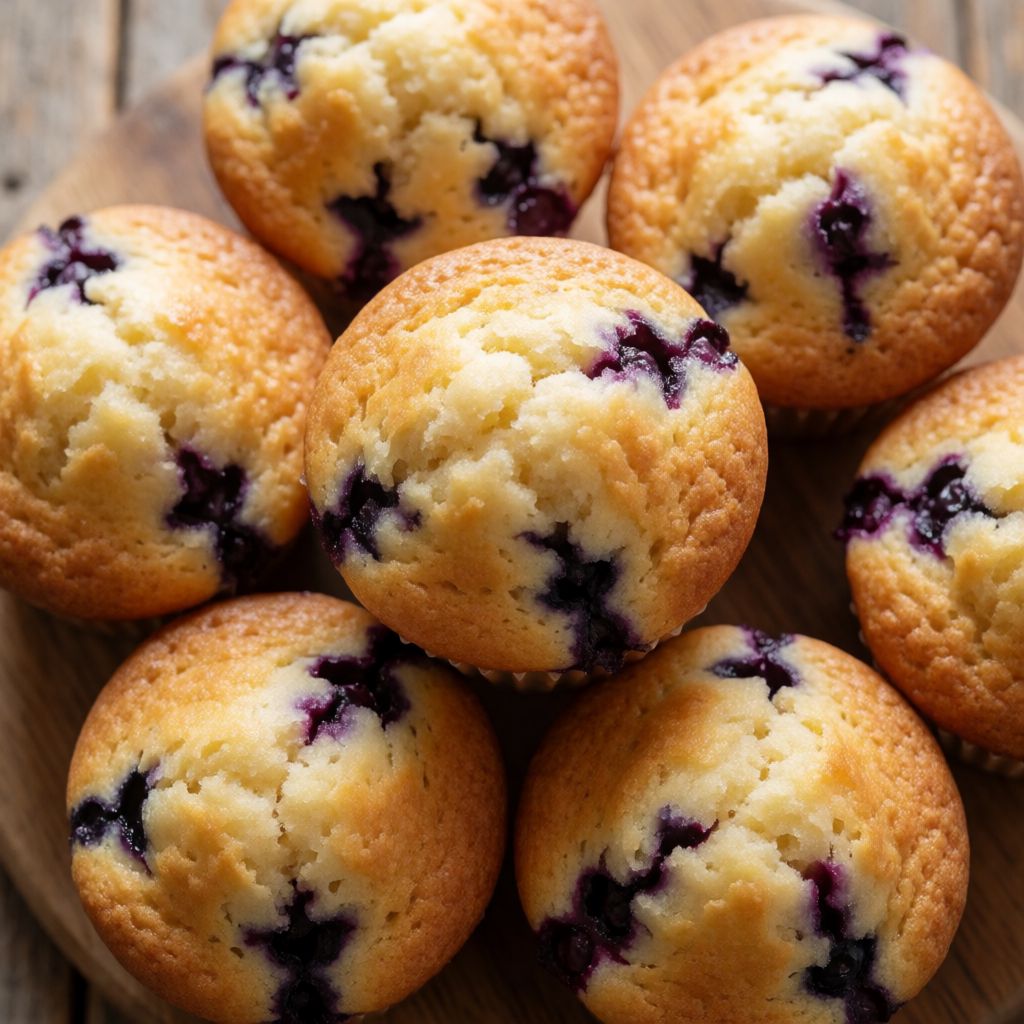
 AI photo
Blueberry Muffins
Soft, fluffy muffins studded with juicy blueberries, perfect for breakfast or a sweet treat.
Labels are worked out automatically from the ingredients and can be wrong. Check the packaging if it matters to you.
Ingredients
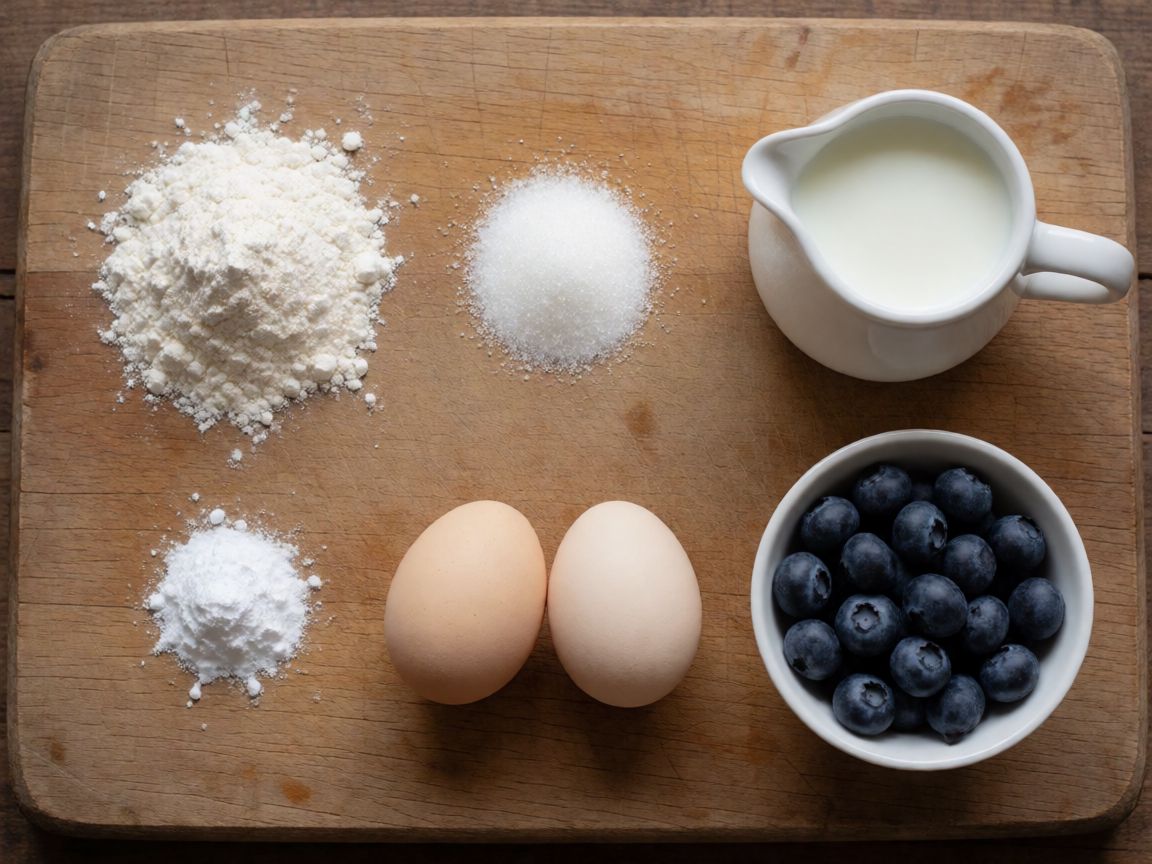
- 250 g Plain Flour
- 150 g Caster Sugar
- 1 pcs Baking Powder one sachet
- 100 g Vegetable Oil
- 150 ml Milk
- 2 pcs Eggs
- 200 g Blueberries







Steps
Sift the flour into a bowl, add the sugar and baking powder, and whisk together until all the dry ingredients are combined.
In a separate bowl, whisk the eggs with the oil and milk until smooth.
Combine the wet mixture with the dry ingredients and mix until you have a smooth batter.
Add the blueberries and gently fold them in with a spatula so they're evenly distributed.
Spoon the batter into paper muffin cases, filling them three-quarters full.
Bake at 180°C for 18-20 minutes.
19 minRemove the muffins from the oven and serve.
A muffin is a cupcake that never got invited to the fancy party — same basic batter, but where a cake wants you to work the butter and sugar into a silky cream, a muffin wants the opposite: don't work it. That's the whole mechanism this recipe hangs on. The moment flour meets a liquid, gluten starts forming — strands of protein that give bread its chew. In bread, you want that. In a muffin, every extra stroke of the spoon builds more of it, and more gluten means a tight, rubbery crumb with long tunnels running through it instead of the loose, pebbly crumb you're after. So you mix the wet into the dry only until the flour disappears. Lumps are not a mistake here — they're insurance against overmixing.
The second thing deciding success is the rise, and it's a race against the crust. At 180°C the outside of the batter sets and browns while the inside is still rising on the gas the baking powder is throwing off. If the oven runs cooler than it should, the crust takes too long to form and the muffin spreads flat before it can dome. If it runs hotter, the crust seals before the middle has finished expanding, and you get a muffin that's cracked open on top and gluey underneath. Filling the cases three-quarters full matters for the same reason — it leaves room for that dome, and it means the heat reaches the edges first, which set and push the rise up and out through the softer centre. That's where the characteristic muffin peak comes from. It's not decoration, it's physics finding the path of least resistance.
Flour: plain, not strong or bread flour. Strong flour has more protein, which means more gluten exactly where you don't want it. Plain flour gives you just enough structure to hold everything up and no more. Sifting isn't ceremony — it breaks up the lumps that would otherwise sit stubbornly in the batter and refuse to hydrate evenly.
Sugar: caster, because the fine grain dissolves fast into a batter that only gets mixed for seconds, not minutes like a creamed cake batter where you'd have time for coarser sugar to work its way in. If all you have is granulated, it'll still dissolve — just give the wet mixture a slightly longer whisk before it meets the flour.
Baking powder: this is the engine, not a seasoning. It's a mix of an acid and a base that only react properly once they're wet and warm — some gas comes off the moment it hits the liquid, the rest waits for oven heat. That's why you can't rush from mixing to baking and expect the same lift; the batter should go into the oven reasonably promptly so you catch both reactions working together, not one spent before the other starts. A sachet is usually around 2 teaspoons if you're measuring loose powder instead — check the strength on your tin, they vary.
Oil: the reason this recipe never asks you to cream butter and sugar is that oil stays liquid at room temperature while butter sets solid. A muffin made with oil stays moist a day later because there's no fat re-hardening in the crumb as it cools; one made with melted butter firms up faster and dries out sooner. Use anything with no smell of its own — sunflower, rapeseed, vegetable oil. Not olive oil; it'll argue with the blueberries.
Milk and eggs: milk supplies the water that gets the baking powder going and keeps the crumb tender; eggs bind the structure and add just enough richness that the muffin doesn't taste like plain batter with fruit in it. Whisking them with the oil first, before they meet the flour, means the fat is already distributed through the liquid rather than sitting in globs that need overmixing to break up — one more small defence against working the gluten harder than it needs.
Blueberries: fresh are easiest to control. If you're using frozen, don't thaw them first — they bleed far more once they've softened and sat, and you'll end up with batter the colour of a bruise before it's even baked. Tossing the frozen berries straight in, still hard, keeps most of the colour locked inside until the oven does its work. This is also a dish with a short, honest history worth knowing — it's not some ancestral recipe guarded by anyone's grandmother, it's a product of cheap raising agents and paper cases becoming available in America in the early twentieth century, which is exactly why it travelled so easily into British kitchens doing teatime instead of Sunday lunch: fast, cheap, no need for a proving drawer or a steady hand with pastry.
One honest note about the domestic oven: home ovens run uneven, often several degrees off whatever the dial claims, and hotter at the back or top depending on the model. If your muffins are colouring on one side before the other, that's the oven talking, not the recipe failing — turn the tray round halfway through rather than trusting the dial blindly. And give the batter patience once it's mixed: get it into the cases and into the heat without dawdling, but once it's in, leave the door shut. Opening it early lets the heat out exactly when the centre needs it most to finish its rise.