
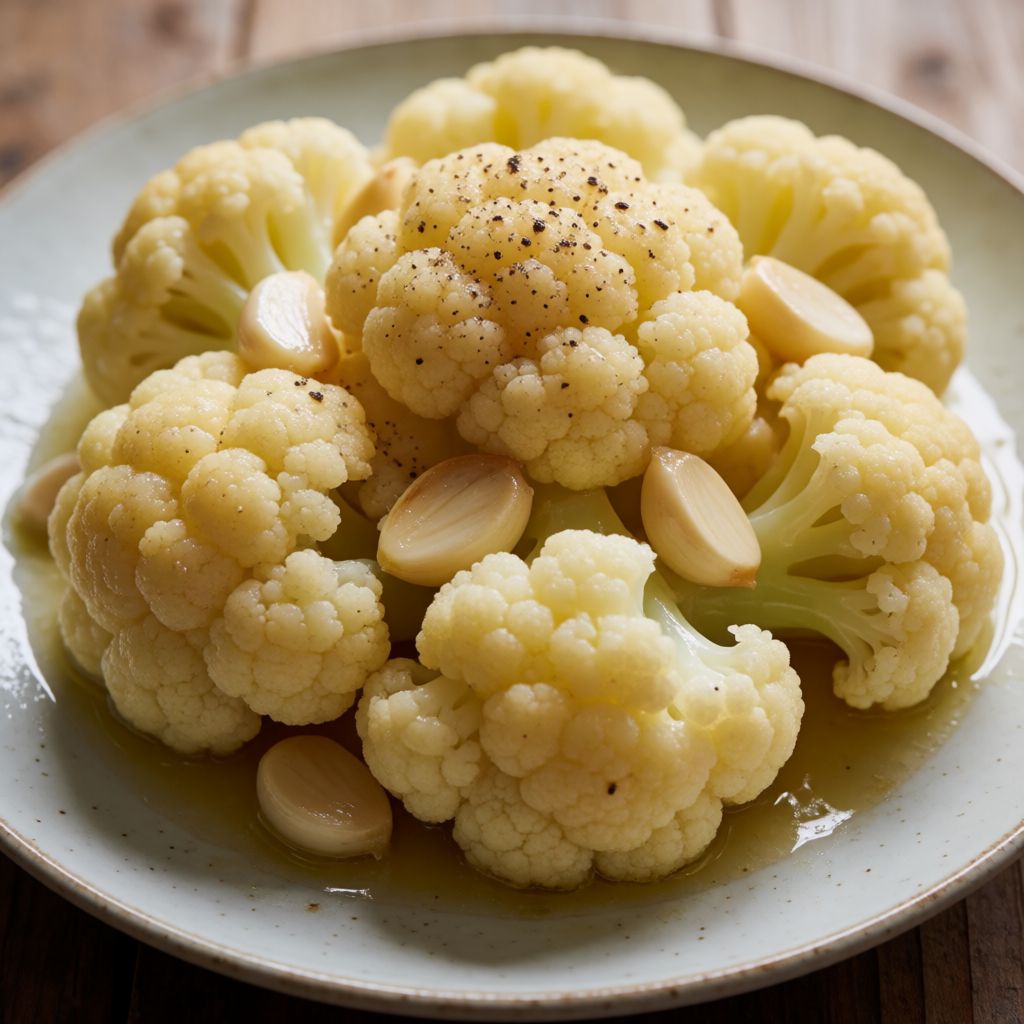
 AI photo
Braised Cauliflower
A simple side dish of tender cauliflower braised with garlic, olive oil and black pepper.
Labels are worked out automatically from the ingredients and can be wrong. Check the packaging if it matters to you.
Ingredients
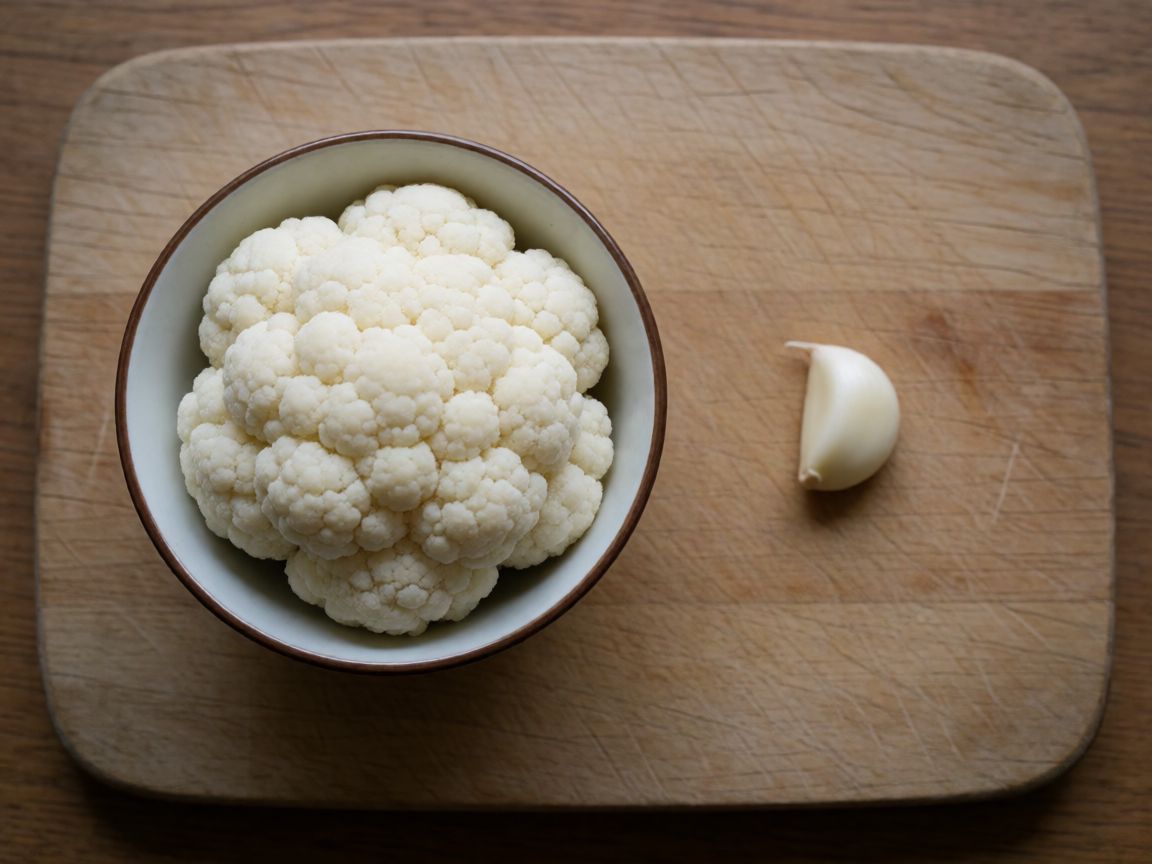
- 800 g Cauliflower
- 1 clove Garlic
- Olive oil to taste
- Salt to taste
- Black pepper to taste
- Water to taste






Steps
Break the cauliflower into florets and rinse them carefully.
Steam the florets, checking occasionally with a fork until they reach the desired texture.
Heat a little olive oil in a frying pan, add the garlic clove and let it warm through over low heat.
Drain the cauliflower well and transfer it to the pan.
Cover with a lid and continue cooking.
Braise the cauliflower, adding a tablespoonful of water from time to time, making sure the florets stay moist.
25 minSeason with salt and black pepper to taste.
This isn't a boiled vegetable with a knob of butter on top. It's a two-stage cook: steam first to soften the dense core gently, then a short braise in garlic-warmed oil to finish and flavour. Nothing fancy happens here, but the order matters, and so does stopping each stage at the right moment rather than the clock telling you to.
Here's the myth worth breaking: people say cauliflower smells, as if it's in its nature. It isn't. That smell turns up when the vegetable is pushed past done — the sulfur compounds that give brassicas their edge start breaking apart under too much heat for too long, usually in a pan of water that's been left boiling while someone answers the door. Steam it only until a fork meets a little resistance, not no resistance at all, and that smell never gets the chance to show up.
What decides whether this works: the floret keeps its shape when you lift it, it doesn't collapse into paste, and the garlic in the oil stays a quiet background note rather than a burnt, bitter one. The braise afterwards — lid on, a spoonful of water now and then — isn't there to cook the cauliflower from scratch. It's there to finish it in fat, pick up the garlic, and stop the pan drying out and scorching while that happens.
Set to feed four as a side. It sits well next to a Sunday roast, and it's a cheaper, lighter answer to the question cauliflower cheese usually answers with cream and a grill. Patience is the real ingredient in the braise — crank the heat to hurry it and you get scorched garlic and a dry pan, not a faster vegetable.
Cauliflower, 800 g — that's roughly one decent-sized head, and it's the only ingredient with real weight in this dish, so choose it properly. You want it tight and white, heavy for its size — a head that's gone loose and yellowing at the edges has been sitting too long and will taste of nothing but water. Break it into florets of similar thickness; uneven sizes mean the thin ones are done while the thick ones are still raw in the middle, and you end up either undercooking some or turning others to mush chasing the stragglers.
Steaming is the part people skip or botch because they don't have a kazan or a proper steamer — and you don't need one. A colander or sieve set over a pan of simmering water, with a lid over the top, does the same job: the cauliflower cooks in moisture it never sits in, so it doesn't leach flavour and colour into a potful of water the way boiling does. Check with a fork, not a timer. You're looking for the floret to give a little before the fork goes through, not to offer no fight at all. Go past that point and you've already lost the texture the braise is meant to finish, not create.
Garlic, one clove — this isn't a garlic dish, it's a dish with garlic standing quietly behind it. Warm it through in the oil over low heat before the cauliflower goes in; low heat because garlic's flavour compounds are volatile and turn bitter fast once they scorch. Some cooks think you need to fry garlic hard and golden to get flavour out of it — no, because that colour is one step before burnt, and burnt garlic flavours everything it touches with regret. Warmed gently, it perfumes the oil instead.
Olive oil, to taste — the criterion for swapping it is simple: use any oil that has flavour of its own worth keeping, because here the oil isn't just a cooking medium, it's doing seasoning work alongside the garlic. A neutral oil, sunflower or the like, won't ruin the dish, but you lose the faint bitterness olive oil brings, which suits a brassica well. If all you've got is a flavourless oil, a small extra pinch of pepper at the end makes up some of the difference.
Water, added a tablespoon at a time during the braise — its job is to keep the pan from going dry and the garlic from catching while the cauliflower finishes absorbing flavour under the lid. Add it when the pan starts to look dry, not on a schedule; your ear will tell you, too — a dry pan goes quiet or starts to spit, a properly moist one hisses gently when the water hits it.
Salt and black pepper go in at the end, after the braise, not before the steam. Salt the cauliflower while it's steaming and you draw moisture out of it right when you need that moisture to stay put and cook it through. Season it once it's already soft and sitting in the garlic oil, and the salt just does what it's there for — makes the thing taste of itself, a bit more.