
 AI photo
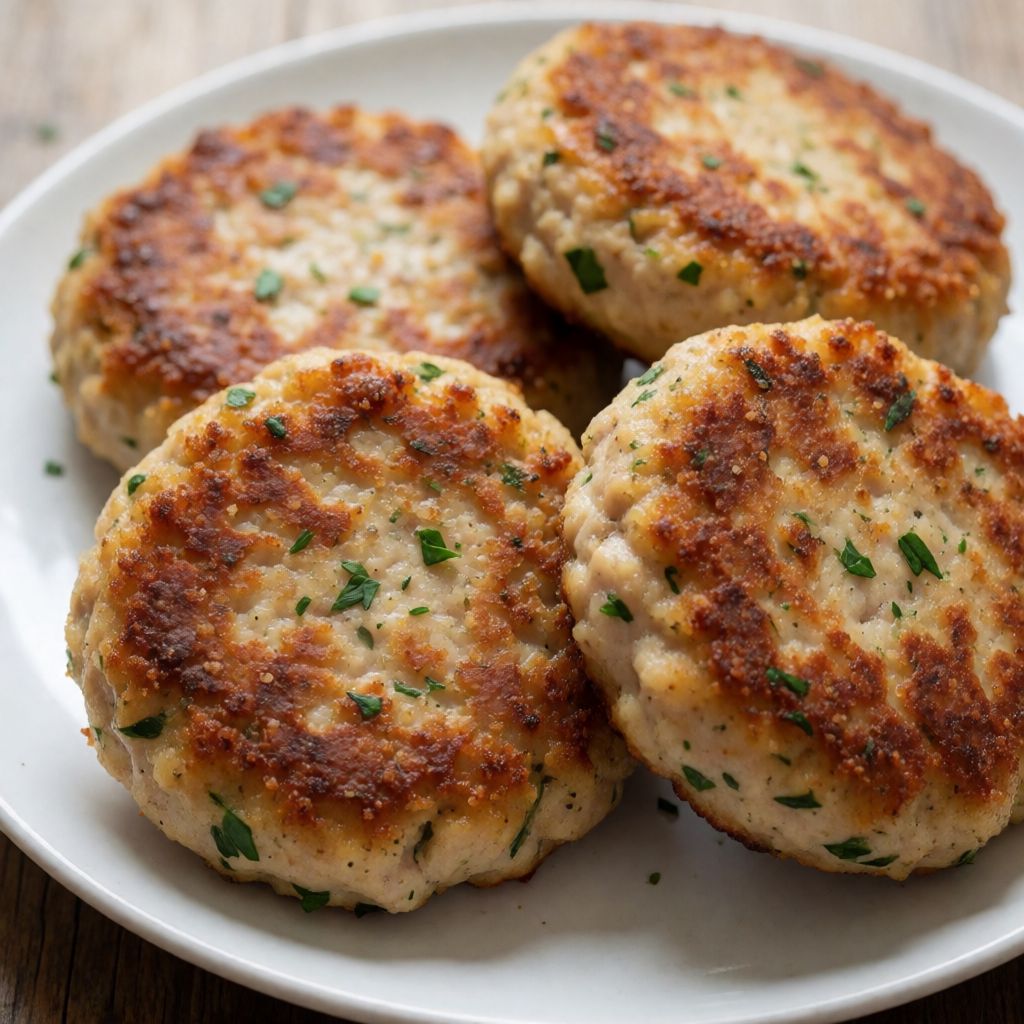
Oven-Soft Chicken Breast Burgers
Juicy chicken breast burgers, pan-fried under a lid for a soft, oven-like finish.
Labels are worked out automatically from the ingredients and can be wrong. Check the packaging if it matters to you.
Ingredients
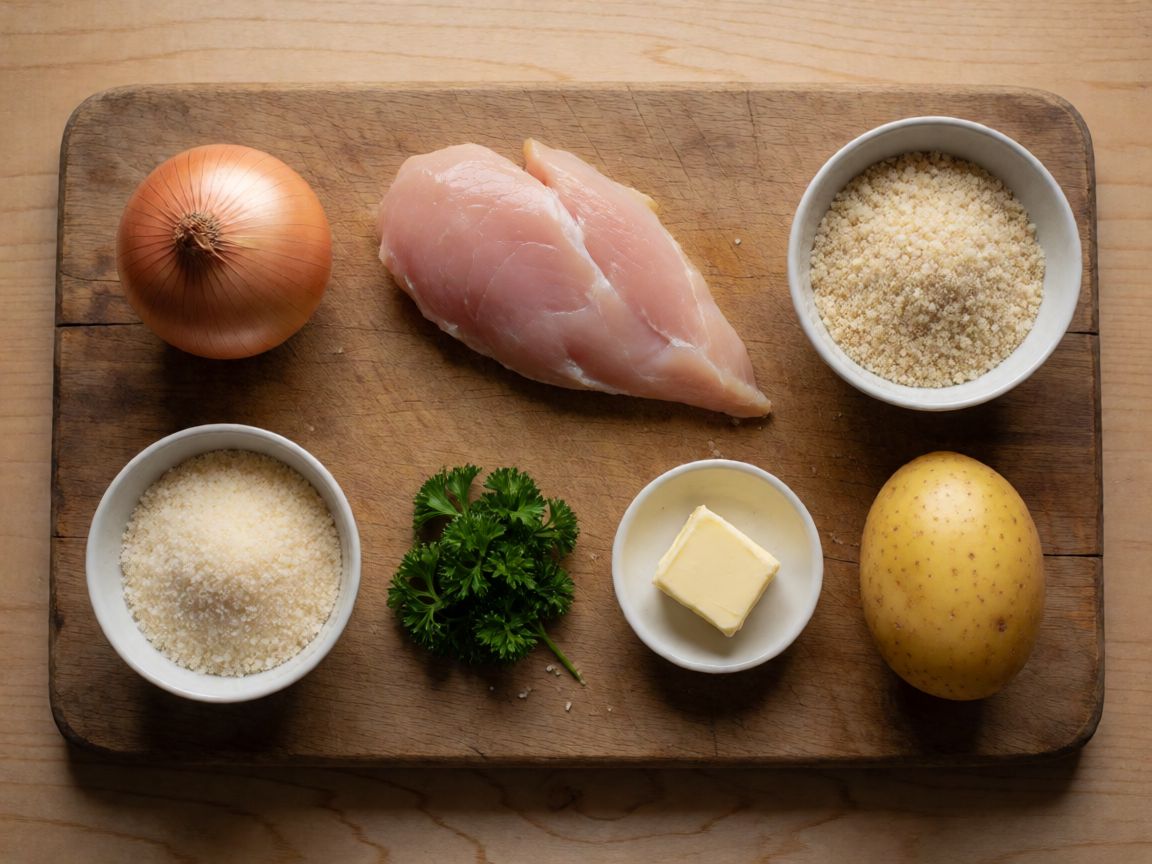
- 200 g Chicken breast
- 1/4 pcs Onion
- Breadcrumbs to taste
- Parmesan to taste
- Parsley to taste
- Salt to taste
- Black pepper to taste
- 20 g Butter
- 1 pcs Potato cooked








Steps
In a bowl, mix the chicken fillet, finely chopped onion, breadcrumbs, parmesan, parsley and grated cooked potato with salt and pepper to taste. Knead the mixture and shape into 4 burgers.
Melt the butter in a frying pan and add the chicken burgers. Cover with a lid and fry for 2 minutes on each side, turning once.
4 minRemove the lid, add more salt and pepper if needed, and cook for a further 5 minutes until fully cooked through (the internal temperature of the chicken should reach 74°C at its thickest point).
5 minServe with grilled vegetables.
This is not a cutlet and it is not a meatball — it is a patch job. Chicken breast has almost no fat and barely any collagen; it is the bird's sprint muscle, built to clench a wing closed for a second, not to simmer in its own juice like a thigh does. Cook it alone and it seizes, pushes out what little moisture it had, and you are left chewing cotton wool. Everything extra in this bowl — the grated cooked potato, the butter, the lid — exists to solve that one problem, not to add flavour for its own sake.
What decides whether it works is moisture management, not seasoning. The potato is already cooked, its starch already swollen with water; grate it in and it sits inside the mince like a sponge, releasing that water slowly as the meat tightens, instead of the meat having to supply its own. The lid in step 2 is doing the same job from outside: a frying pan has no oven's still, enclosed heat, so you borrow it — trap steam under a plate or a tight lid and you get a cheap echo of baking, enough to push the inside toward done before the outside scorches.
The title calls it "oven-soft" but there is no oven in the method. That is the trick worth noticing: you get oven-like gentleness from a hob and a lid, which matters if your flat has one underpowered oven you'd rather save for the Sunday roast.
Chicken breast, 200 g for four burgers, works out to about 50 g of meat per person — this is a light patty, meant to sit on a plate next to grilled vegetables and that potato, not to dominate it. If you only have breast with the tenderloin strip still attached, keep it in; it is slightly more fibrous but adds a bit more connective tissue, which is exactly what this cut is short of.
The onion, finely chopped and raw, is there for bite and a sulphurous edge that balances all that blandness — breast meat is bland because broiler chickens have been bred for decades to put muscle on the breast cheaply, with flavour and fat left on the thigh. If you only have a strong onion, use less of it; if you have a mild one, you can be generous.
Breadcrumbs bind the mix and soak up whatever liquid escapes while it sits — any dry, torn, slightly stale bread works, which is the actual reason breadcrumbs exist in frugal cooking at all: stale bread does not get thrown out, it gets ground down and put back to work. The parmesan is salt, fat and a jolt of glutamate doing the seasoning job the meat can't do for itself; any hard, aged cheese that melts into saltiness rather than clumping will do the same work — a mature cheddar from the Sunday roast cheeseboard is a reasonable stand-in, just taste before you add more salt, it's saltier than parmesan.
Parsley wants to stay green and mild — it is there for freshness, not for punch, so avoid herbs with a strong oil of their own like rosemary or thyme, which would fight the delicate meat rather than lift it. The cooked potato is the real engineer of this recipe: it must already be cooked, because raw potato starch behaves completely differently and will not hold water the same way. A leftover boiled potato from Sunday lunch is perfect here — this is not wasteful improvisation, it is exactly the kind of thrift that put breadcrumbs in cutlets in the first place.
Butter, melted first in the pan, gives you a fat with its own milk solids to brown and flavour the crust — something the lean breast cannot provide on its own. If you want to swap it, the honest criterion is a fat that can brown without burning at a gentle heat; a neutral oil with no smell of its own will cook the burgers fine but you lose that nutty top note butter gives, so it's not quite the same dish, just a safe one.
Last thing, and it costs nothing: let the shaped mixture sit a few minutes before it goes in the pan. The breadcrumbs need that time to actually pull in moisture rather than sit there dry in the middle of the patty. Patience here is not sentiment — it's the difference between a burger that holds together when you flip it once, and one that falls apart in the butter.