
Meat & fish
Chicken Breast
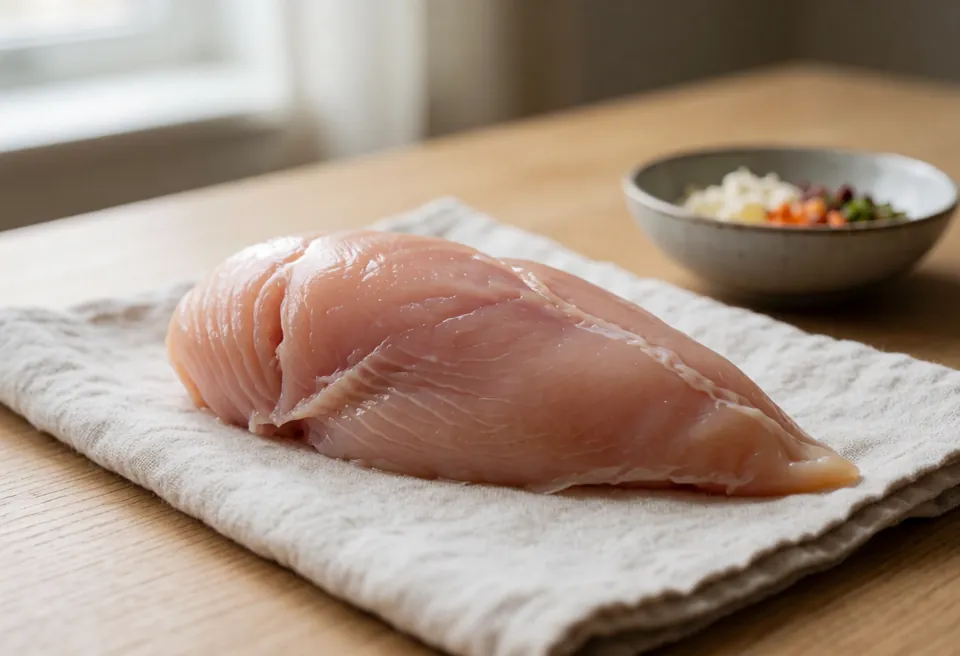
Chicken breast is lean, boneless, skinless chicken meat. It's fried, boiled, baked, or grilled.
120 kcal per 100 g
Nutrition per 100 g
120 kcal
| Protein | 22.5 g |
|---|---|
| Fat | 2.6 g |
| Carbs | 0 g |
| Fiber | 0 g |
Source: USDA FoodData Central, 2026-09-21. Per 100 g raw (per USDA FDC).
How many grams in a measure
Approximate weights of common measures. The exact figure depends on the product and how it is packed.
- 1 piece 200 g
Good to know: Chicken Breast
Let me tell you about chicken breast, and why so many cooks ruin it without even knowing.
This is the leanest muscle on the bird, and that's exactly its problem. Almost no fat means almost no protection when heat hits it. Muscle fibre is mostly water and protein, and protein tightens the moment it gets hot. Squeeze a sponge — that's what overcooked breast does to itself, and all the juice runs out onto your board.
Choose it by touch, not by label. The flesh should spring back under your finger, not stay dented. Colour — pale pink, even, no grey patches, no slick shine. Smell it close: clean, faintly milky. Any sourness, walk away.
Now, some people say chicken breast is naturally dry meat, nothing to be done. No! Dry chicken breast is not nature's doing, it's the cook's doing. This bird gives you exactly as much moisture as you leave in it.
That misconception sends people straight to the pan on high heat, "to seal it quick." They sear it hard, they cook it long "to be safe," and they get sawdust on a plate. Lower heat, shorter time, and a thermometer will serve you far better than fear.
Questions and answers
How many grams of chicken breast are in a 1 piece?
1 piece of chicken breast weighs about 200 g.