
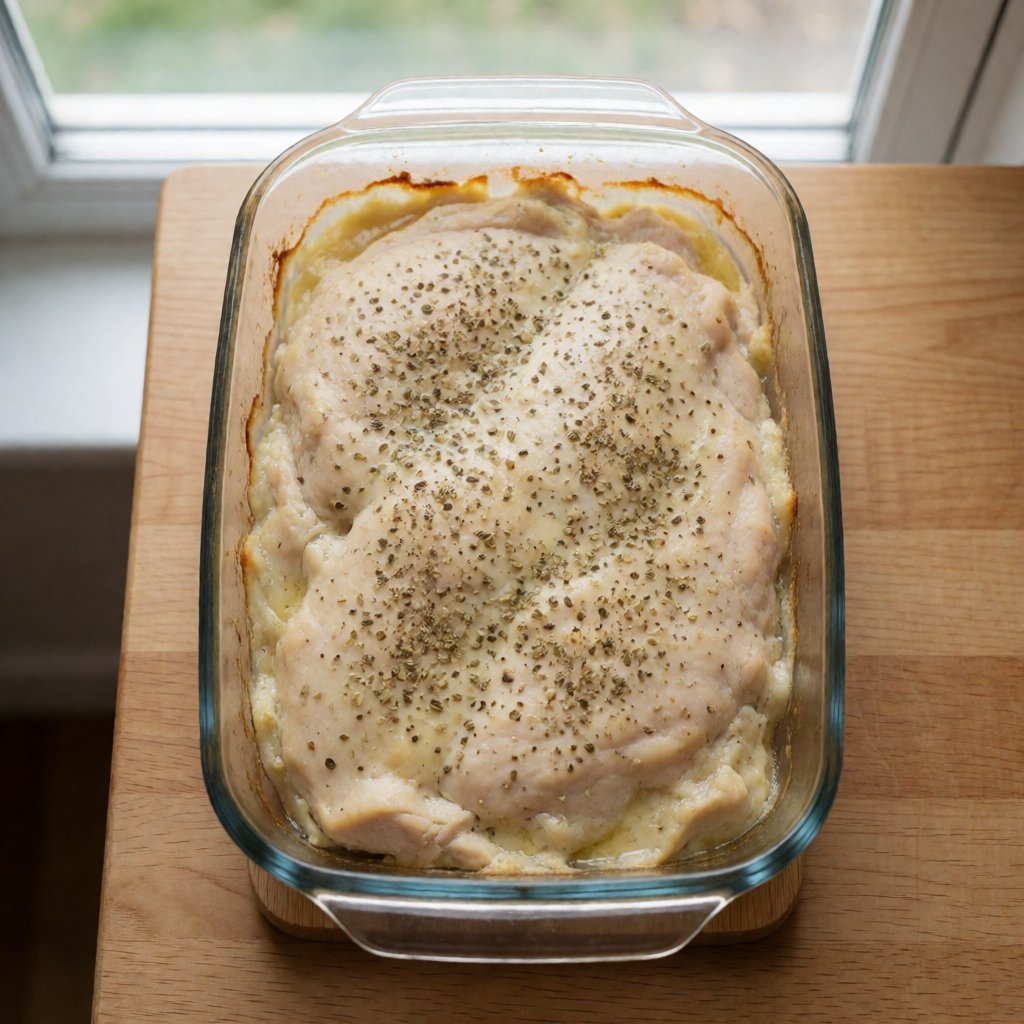
 AI photo
Chicken Breast Baked in Foil
Tender chicken breast baked under foil with oil and herbs for a quick, juicy dinner.
Ingredients
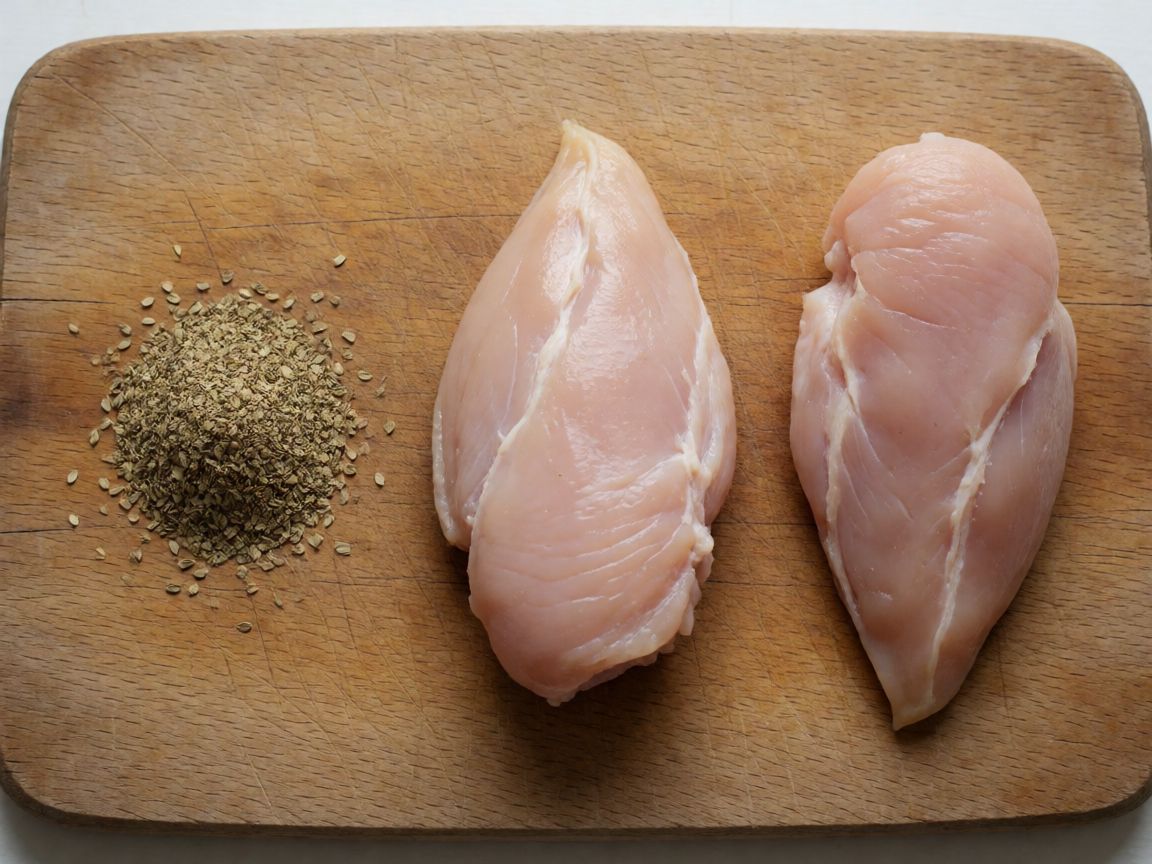
- 400 g chicken breast 2 pieces
- 1 tbsp sunflower oil
- 1 pinch salt to taste
- 1 pinch black pepper to taste
- 1 pinch dried oregano to taste





Steps
Flatten the chicken breasts to an even thickness of about 2cm, then rub with the oil and spices.
Cover with foil.
Place the dish in a preheated oven at 200°C and bake for 25 minutes, until the chicken reaches 74°C inside.
25 minRemove the dish from the oven. Let the chicken rest for 5 minutes before slicing.
5 min
This is chicken breast rescued from itself. Breast meat has almost no fat running through it — that's the whole problem with it, and the whole point of this method. No fat means no built-in protection against drying out, so you have to build the protection from outside: oil on the surface, and a foil seal that keeps the moisture the meat does have from escaping into the dry air of the oven.
What decides whether this works is evenness, and it starts before the oven even gets switched on. A chicken breast is a wedge, not a slab — thick at one end, thin at the tail end. Bake it as it comes and the thin end is finished, dry, going grey while the thick end is still raw in the middle. Flatten it to one even thickness and both ends arrive at doneness at the same moment. Some say you pound chicken with a mallet to tenderise it — no, not here, because breast has no tough connective tissue to break down like shin or shoulder does. You're not tenderising. You're evening out a wedge into a slab, nothing more.
The foil is doing a specific job, not just keeping dust off. Sealed, the chicken isn't really baking in the oven's dry heat — it's steaming in a small sealed pocket of its own juice and the air trapped with it. That's a gentler, wetter heat than the oven itself, and it's the only reason this cut survives 200°C without turning to rope.
Resting the chicken for those five minutes after it comes out isn't a formality, it's the last step of the cooking. While it's in the oven, the muscle fibres tighten and squeeze the juice toward the centre. Slice straight out of the oven and that juice runs onto the board instead of back through the meat. Give it five minutes somewhere warm and the fibres relax, the juice redistributes, and the slice holds moisture instead of leaking it. Patience here isn't virtue for its own sake — it's the difference between a chicken breast and a damp sponge.
On the chicken itself: buy it as even and plump as you can, because you're about to do the evening-out work anyway, but a breast that's already a reasonable rectangle saves you flattening. Two pieces for two people is generous — a 200g breast per person is a full plate once you add anything alongside it, this isn't a cut that needs padding out.
The oil's job is to carry the oregano and pepper into contact with the meat and to stop the spices sitting on top as dust that burns at the edges instead of seasoning. Use any oil with no smell of its own — sunflower, a flavourless vegetable oil, rapeseed, anything that won't compete with the oregano. Olive oil is fine too here since nothing is frying or browning under that foil, there's no high dry heat to turn its flavour bitter.
Salt and pepper and oregano are doing the only seasoning job this dish allows, since the foil traps whatever you put on, nothing bastes off, nothing caramelises in. Rub them on properly, into the surface, not scattered over the top — under foil there's no fat dripping down to redistribute a sprinkle for you.
On the oven: British home ovens vary more than their dials admit, so 200°C is where you start, not where you trust blindly — the thermometer in the meat is the only honest witness in the room. For the dish itself, any oven dish with sides deep enough that foil can be pulled tight and crimped at the edges will do — a loose sheet laid over the top like a blanket lets steam escape at the corners and you lose the whole mechanism the foil is there for. Press it down properly, like sealing a parcel, because a gap in the foil is a gap in the method.
·