
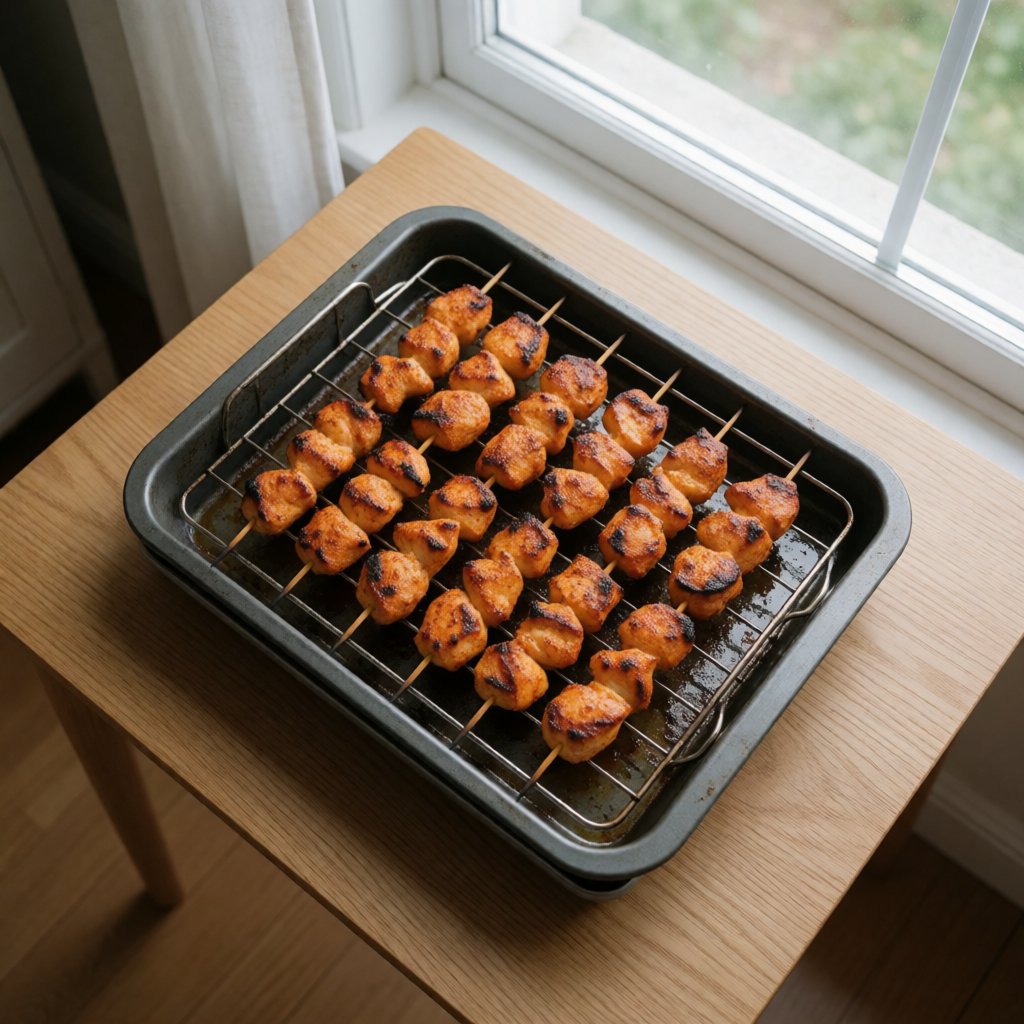
 AI photo
Chicken Skewers
Juicy chicken skewers marinated in yogurt and spices, then roasted until golden.
Labels are worked out automatically from the ingredients and can be wrong. Check the packaging if it matters to you.
Ingredients
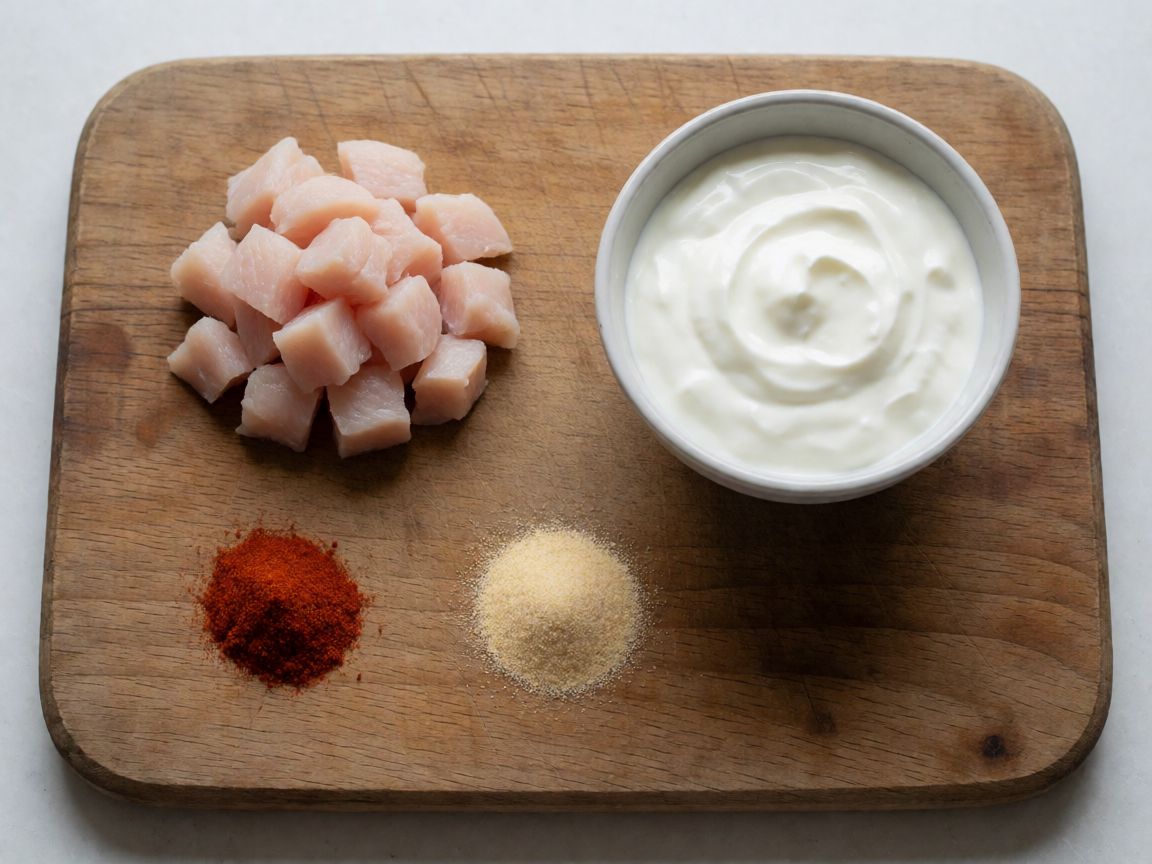
- 400 g Chicken breast cut into 3 cm cubes
- 3 tbsp Natural yogurt
- 1 tbsp Sunflower oil
- 1 pinch Paprika to taste
- 1 pinch Garlic powder to taste
- 1 pinch Salt to taste






Steps
Soak the wooden skewers for 20 minutes.
20 minMarinate the chicken with the yogurt, oil and spices for at least 20 minutes.
20 minThread the chicken onto the skewers and place on a baking tray.
Put the tray in the oven at 200°C for 12 minutes.
12 minHalfway through, turn the skewers and continue cooking for another 13 minutes, until the internal temperature reaches 74°C.
13 minRemove the tray from the oven.
This is shashlik's domestic cousin — chicken threaded on sticks, but cooked in a box with a heating element instead of over embers. No live fire means no smoke, no char, no flare-ups from dripping fat. What you get instead is roasting with a timer, and that changes what the yogurt is doing.
Yogurt here is not for flavour, it is for survival. Chicken breast has almost no fat running through it, so once the proteins tighten up past a certain point, the meat squeezes out its own moisture and goes to cardboard. The yogurt's mild acid and its proteins get in between the muscle fibres early, loosen that tight weave a little, and let the meat hold onto some water even after heat seizes it. Lemon juice or vinegar would do something similar but harder and faster — leave breast in lemon too long and the outside turns chalky before the inside has had a chance. Yogurt is slow and forgiving, which suits a 20-minute marinade in a flat kitchen where you are also soaking skewers and heating the oven.
What decides this dish is not time, it is the thermometer. Some say pierce the chicken and check if the juices run clear — no, because clear juice tells you almost nothing reliable on breast this small; by the time you trust your eyes the meat is often already past done and drying. 74°C at the centre is the actual marker. A probe thermometer costs less than a round of pub drinks and ends the guessing for good.
Start with the chicken itself. Breast, cut into roughly 3 cm cubes — any smaller and it overcooks before the outside has any colour, any bigger and the centre lags behind the outside by the time you pull the tray. Thigh would actually behave better here, since its fat and connective tissue forgive a few extra minutes, but breast is what most people reach for because it is the cut sold as clean, quick, and cheap, a habit that goes back to it being the lean part nobody wanted in the days when fat meant flavour and money. Use what you have — the method bends, the cooking time for thigh just runs a touch longer and the 74°C mark stays the same test either way.
The yogurt wants to be plain and unsweetened — natural yogurt, nothing with fruit or stabilisers fighting the acid. Three tablespoons for 400 g is enough to coat, not drown; you are marinating, not making a sauce. No yogurt in the house, no problem — buttermilk works on the same principle, or a thin layer of soured cream thinned with a splash of water.
Sunflower oil is doing one quiet job: stopping the marinade from being all water and acid, so it clings to the meat instead of running off, and helping what little fat there is transfer heat evenly at the surface. The rule for the oil is simple — anything with no smell of its own. Sunflower, rapeseed, a light vegetable oil, all fine. Olive oil is the wrong choice here, not from snobbery but because its flavour would fight the paprika instead of carrying it.
Paprika, garlic powder, salt — a pinch each, to taste, and that phrase is doing real work. This is not a dish that needs measuring spoons for its spice; it needs you to taste the marinade off your finger before the chicken goes in, because that is the only moment you can still fix it. Smoked paprika if you want a hint of the fire you are not actually using. No garlic powder, a small grated clove, added late so it doesn't scorch and turn bitter. Salt goes in gently — too much too early and it starts curing the surface rather than seasoning it, which is a different, tougher texture altogether.
Soaking the wooden skewers for 20 minutes is not superstition — dry wood under a grill or in a hot oven will scorch and blacken at the thin tips long before the chicken is done, and a blackened tip is just wasted wood, not flavour. Twenty minutes of water soaked into the fibres buys you enough steam resistance to get through the cooking time without losing the ends. Metal skewers skip this step entirely and conduct a little heat into the meat from the inside too, which is worth knowing if you cook this often.
And patience belongs on the ingredient list as much as anything you can weigh. The marinade needs its 20 minutes minimum to do anything at all — less than that and you have simply wetted the chicken. Give it longer, up to a few hours in the fridge, and it works deeper without turning the meat to mush, because yogurt is slow by nature. That's the whole bargain of this dish: it asks for a little waiting instead of a little skill, and in a Sunday-roast kitchen, waiting is something you already know how to do.
·