
 AI photo
Caramelised Pears
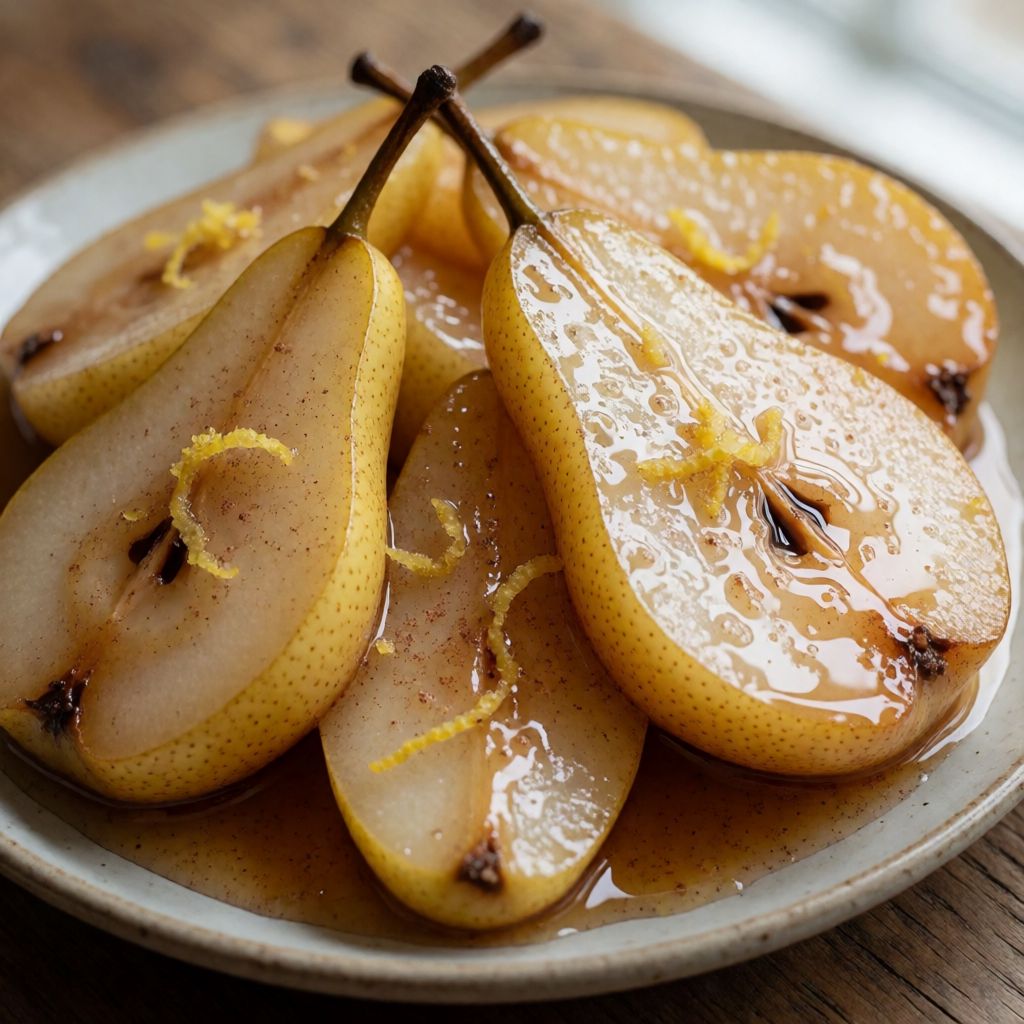
Pear halves briefly dipped in a spiced sugar and brandy syrup, then drained and cooled.
Labels are worked out automatically from the ingredients and can be wrong. Check the packaging if it matters to you.
Ingredients





Steps
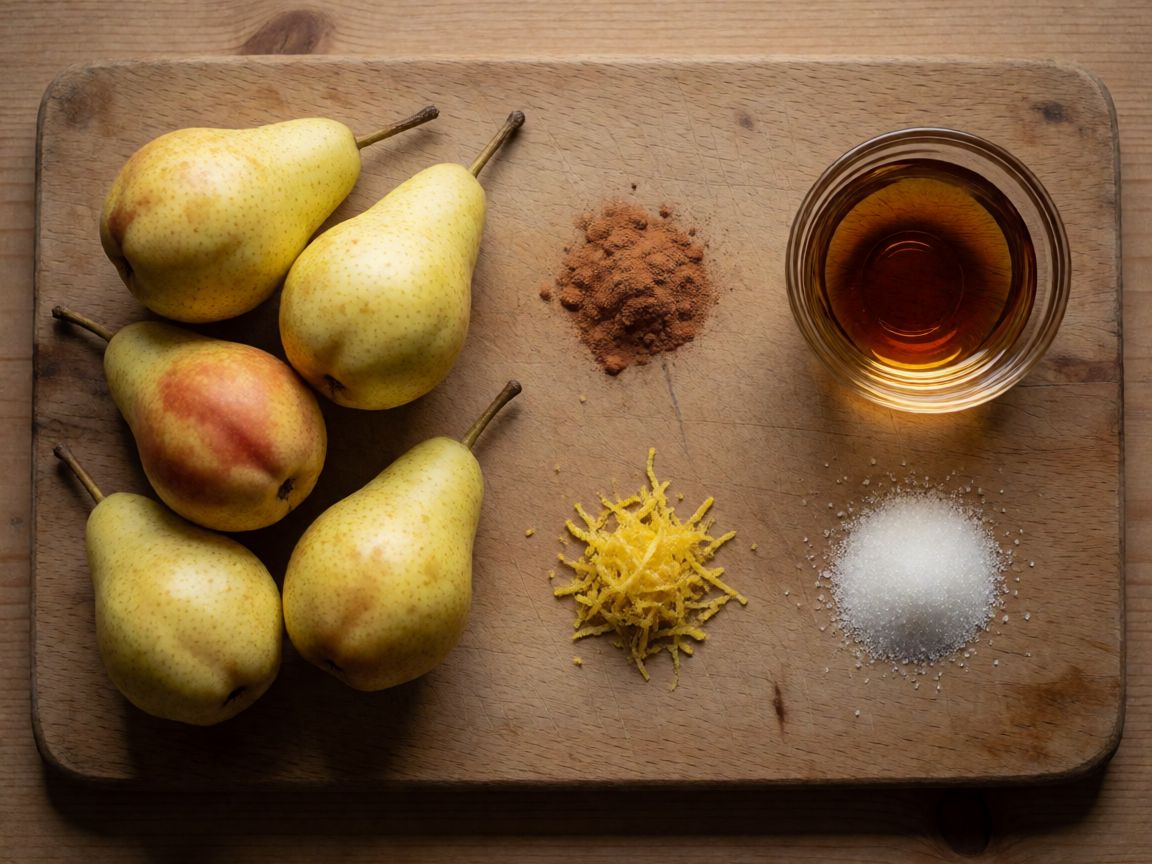
Pour the water into a saucepan, add the cinnamon, lemon zest, sugar and brandy. Wash the pears, halve them and remove the cores.
Bring the syrup to a boil over low heat.
Dip the pears into the syrup one at a time, turning them on both sides, then transfer them to a wire rack.
Place the pears on a plate and leave to cool to room temperature.
What you're making here isn't a caramel at all — it's pear halves given one hot dip in spiced sugar syrup, then set on a rack to drip and cool into a thin, shiny skin. People hear "caramelised" and picture brown toffee, sticky and dark. Break that one early: nothing here gets hot or dry enough for sugar to actually caramelise — to brown and turn bitter-sweet. The syrup stays pale amber, coloured by the brandy and the lemon zest, not by heat working on the sugar. What you get is a glaze, not a caramel, and that's the point: a thin shine over a pear that still tastes like a pear.
Because the dip is brief, the pear itself does almost all the cooking. There's no long simmer here to rescue a bad choice of fruit — the pear arrives at the pan already carrying its own doneness. Too unripe, and it stays raw and gritty under a warm glaze. Too ripe, and it collapses the moment you turn it in the hot syrup, falling apart on the spoon instead of holding its shape on the plate. You want the kind that gives a little at the stem end and no further — firm enough to survive being turned twice in a hot liquid, ripe enough that the flesh isn't still fighting you.
The syrup wants a low, slow start for a plain reason: sugar dissolved too fast, over heat applied too fast, catches on the hot metal at the edge of the pan before the liquid around it is even warm — you get a scorched patch and grains of sugar that never fully melt, both of which you'll taste later as bitterness or grit. Bringing it up gently means the sugar is fully in solution by the time the syrup boils, and the pan stays honest.
Pears: in a British kitchen the obvious choice is Conference, and it's a good one — firm-fleshed, holds its shape under heat, doesn't turn to mush the second it meets something hot. Comice works too if you can get one not yet soft. What you're avoiding is a watery, grainy pear that was bred for eating raw and falls apart under any cooking at all — those are fine for the fruit bowl, wrong for a pan.
The lemon zest, not the juice — and that's worth saying out loud, because the instinct with fruit and sugar is always to reach for the acid. Zest gives you the oil and the scent of lemon without the water and the sourness juice would bring; juice here would thin the syrup and fight the pear's own sweetness instead of framing it. The cinnamon is a pinch for the same reason — it's there to be noticed, not to dominate. If what you have is a stick rather than ground, let it sit in the syrup a little before the pears go in, since a whole stick needs time in hot liquid to give anything up at all, where ground cinnamon surrenders its flavour almost at once.
Brandy, in a dip this quick, barely gets the chance to cook off — so it's there mostly as scent, lifted by the hot syrup and carried onto the pear's surface rather than simmered into it. Use something you'd happily have a small glass of; there's no reason to spend on anything grand for a splash that's doing perfume work, not depth work. No brandy in the cupboard — a dark rum does a similar job, or leave it out and lean a little harder on the lemon zest and cinnamon instead.
The water is the one place the recipe is vague — it just says two, no unit, which tells you the exact volume isn't the thing that matters. What matters is depth: enough liquid in the pan that each pear half, turned on both sides, gets properly wet all over, not so much that you're heating a stockpot of syrup for four pieces of fruit. Fifty grams of sugar in a shallow pool is a glaze recipe, not a poaching recipe — don't drown it.
If you've no wire rack sitting in a drawer — and most flats don't keep one for anything but baking — an upturned colander over a plate does the same job: the syrup runs through, air reaches the fruit from underneath, and nothing sits in its own puddle while it cools.