
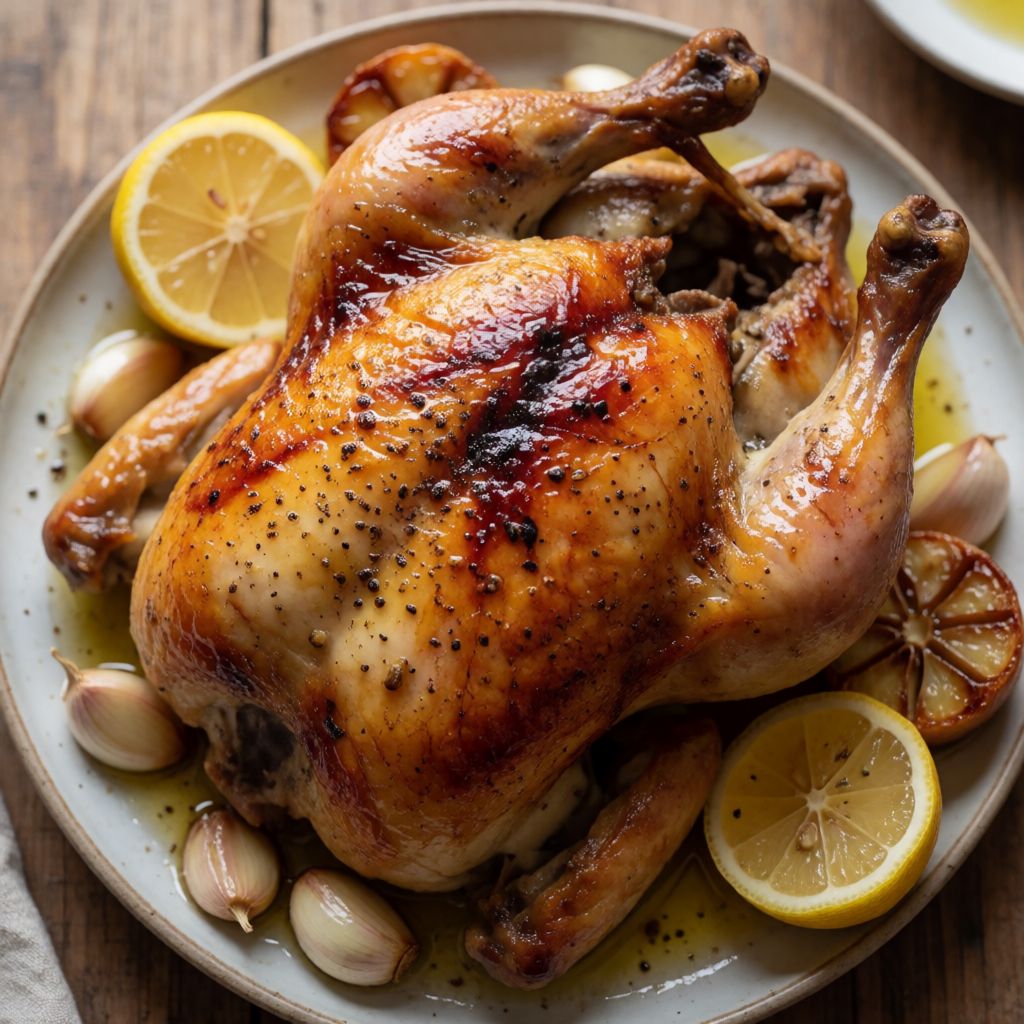
 AI photo
Carla's Tasty Chicken
A simple roast chicken with garlic, lemon and white wine, finished in the oven until tender.
Ingredients
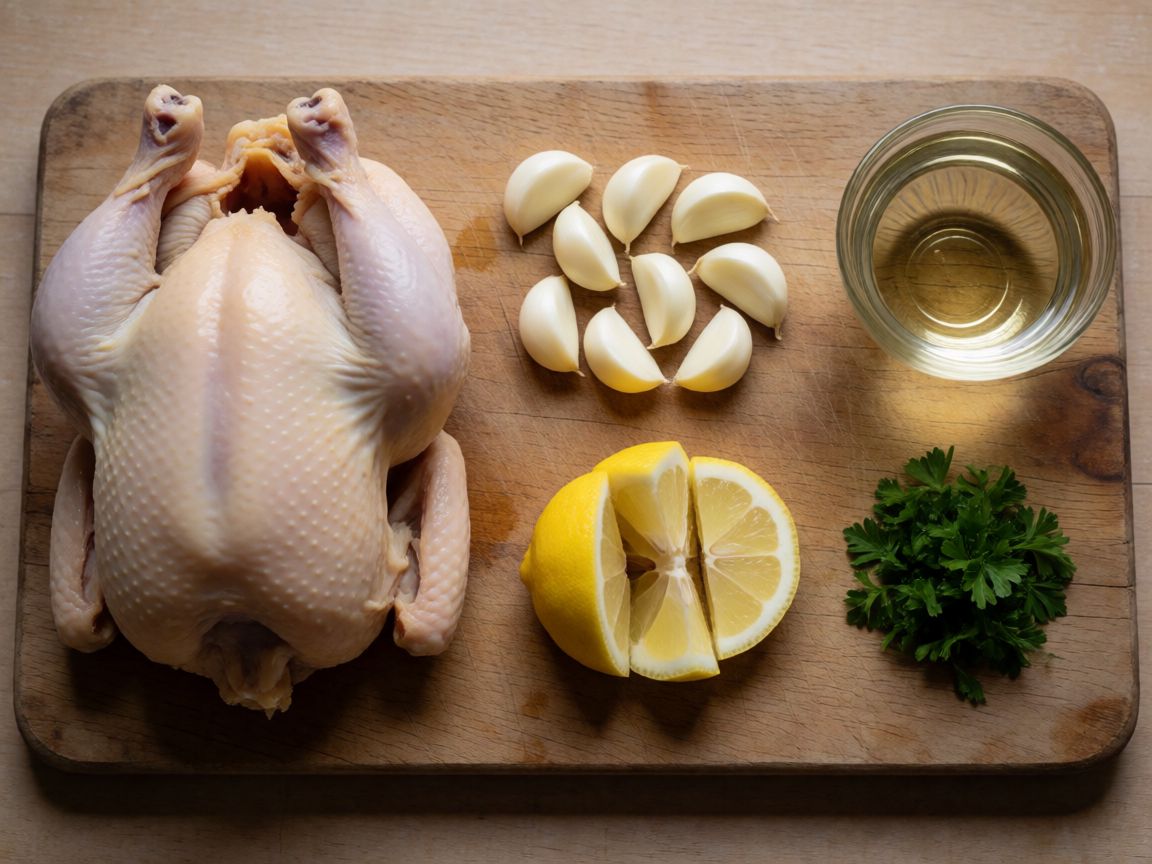
- 1 pcs Whole Chicken
- 8 clove Garlic skin on
- 1 pcs Lemon sliced
- Olive Oil to taste
- Salt to taste
- Black Pepper to taste
- Parsley to taste
- 8 tbsp White Wine








Steps
Cut the chicken into pieces, at least 8, and arrange in a roasting dish together with the garlic cloves, skin on, and the sliced lemon.
Add a little olive oil, a pinch of salt, black pepper and parsley.
Pour over the wine, cover the dish with foil and place in an oven preheated to 200°C.
30 minRemove the foil and cook for a further 20 minutes, until the chicken is done. Doneness: 74°C internally.
20 minServe with steamed vegetables or creamy mashed potatoes.
This is not a formal French braise, whatever the wine and garlic skin might suggest to you. It is a roast chicken that borrows one trick from braising: it spends its first half under foil, trapped with its own fat and the wine, and only in the second half does it meet open, dry heat. Two different mechanisms, one dish, and the whole question of whether it works is whether you respect the switch between them.
Cutting the bird into at least eight pieces is not for show. A whole chicken has two clocks running inside it — the breast finishes fast and dries out if you wait for the legs, the legs and thighs are full of connective tissue and need longer, gentler heat to loosen. Pieces let you spread that difference across the dish instead of fighting it inside one carcass. More cut surface also means more skin and flesh touching the garlic, lemon and wine — flavour gets in faster where the knife has been.
The foil for the first stretch is doing the job a lid does in a braise: it holds in the steam coming off the wine and the chicken's own fat, so the meat cooks in a moist little climate of its own rather than drying against the oven's air. Take the foil off too early and you lose that moisture before the legs have caught up to the breast; leave it on too long and the skin stays pale and slack, because skin only crisps and browns in dry heat, never in steam. The uncovered twenty minutes exist purely to let the surface lose water and start the browning that steam prevents.
The chicken itself should be a whole bird, not a bag of breast fillets — you want bone and skin in the pan, because both render fat and gelatine into the wine as it cooks, which is most of where the sauce's body comes from. Jointing it yourself with a decent knife or kitchen shears is cheaper and lets you choose the cut sizes, but if that's not where you want to spend your fifteen minutes, buying a mixed tray of bone-in, skin-on thighs and drumsticks plus a couple of breast pieces gets you the same two-speed cooking without the butchery.
Garlic goes in skin-on for a plain reason: bare cloves scorch and turn bitter at 200°C before the inside has gone soft and sweet. The skin is a buffer. After the full cook the cloves inside will have gone to something close to paste — squeeze them out of their jackets at the table rather than fighting them with a knife.
The lemon is sliced, not squeezed, and that matters. Juice alone gives you sharp acid everywhere at once; slices give you acid where the flesh actually touches the fruit, and the pith stays mostly out of the dish instead of turning the sauce bitter. If you're short a lemon, a splash of wine vinegar added with the wine covers the acid job, though you lose the citrus oil that comes off the peel in the oven.
White wine here is not something to agonise over — its job is acid and aromatic lift during the covered stage, and most of the alcohol cooks off before you ever taste it. An ordinary dry white from the bottom shelf does exactly what an expensive one does in this dish; you're not drinking the pan juices neat. If there's no wine in the flat, a mix of a little more lemon and a splash of stock gets you most of the acidity, though the depth is thinner.
Olive oil only needs to carry heat to the skin and stop things sticking — any oil with no strong smell of its own will do the same work; a mild olive oil or a plain vegetable oil are both fine, keep a fragrant extra virgin for the salad, not the roasting dish. Salt and pepper you judge by the size of the bird in front of you, and parsley at this stage is more for colour and a faint green note than for real flavour weight — it's not doing the work the garlic and lemon are.
This isn't the Sunday roast of a whole bird going round slowly for two hours — it's a faster, flat-friendly version of the same instinct, built for a domestic oven where you don't want the thing running all afternoon. A foil sheet standing in for a lid, a roasting dish standing in for a kazan — that's the honest version of this recipe for an ordinary kitchen, and there's nothing lost in saying so. The twenty uncovered minutes are where the patience sits: don't open the door to check on it, because every open door drops the oven's heat and slows exactly the browning you're waiting on.