
 AI photo
Carnival Cartellate
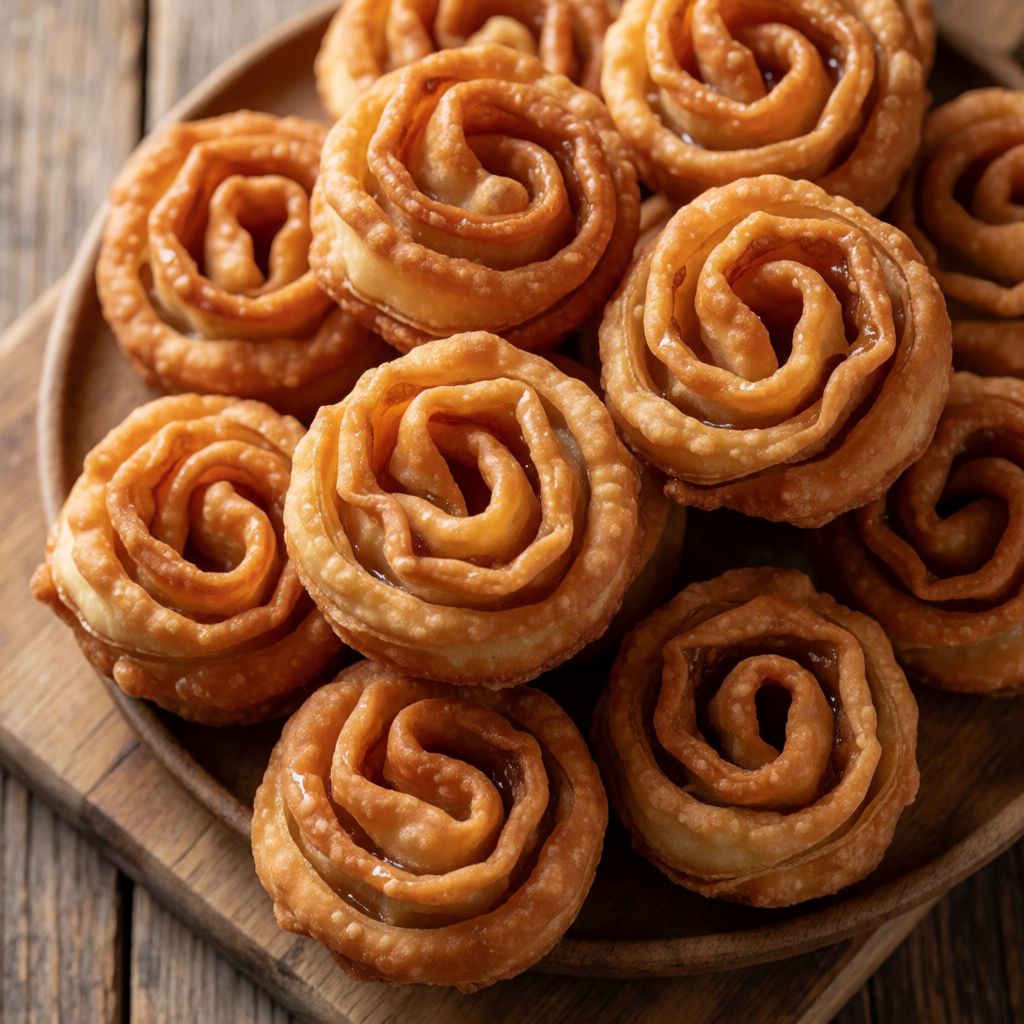
Crispy fried rosettes of dough, dipped in vincotto or honey - a festive Italian carnival treat.
Labels are worked out automatically from the ingredients and can be wrong. Check the packaging if it matters to you.
Ingredients
- 1200 g Plain flour
- 220 g Olive oil
- 350 ml White wine
- Vincotto or honey, to taste




Steps
Pile the flour into a mound on the work surface, make a well in the centre and slowly pour in the olive oil, gently working it into the flour.
Add the white wine and gradually knead the dough, working it energetically with your hands until smooth. Let the dough rest for a few minutes.
5 minRoll the dough out very thinly, to about 2-3 millimetres, using a pasta machine.
Tear off small pieces of dough and pass them through the machine; lay the sheet on a lightly floured surface and cut strips about 4 centimetres wide with a fluted pastry wheel.
Fold each strip lengthwise in half into a U shape and pinch the dough at intervals about a finger's width apart, pressing the edges firmly together.
Gently roll the strip onto itself to form a little flower-shaped rosette, and secure the end well so it doesn't unravel.
Fry the cartellate in a pan of well-heated oil in batches of six to seven, until golden on both sides.
5 minLift the cooked cartellate onto paper towel to drain off the excess oil.
Warm the vincotto (or honey) and dip the cartellate in one at a time for a couple of minutes, first on one side then the other.
2 minArrange the cartellate on a serving plate and decorate with sugar pearls, chocolate, dried fruit or nuts. Serve with a light sparkling white wine.
Cartellate are fried ribbons of dough, pinched into little pleated roses, then dunked — not drizzled — in hot syrup. The whole trick of the dish sits in that pinch: it isn't decoration, it's plumbing. Each pleat makes a pocket, and the pockets are what hold the vincotto once the pastry is fried. A flat strip would just get a shiny coat; a pinched one gets soaked right through, syrup sitting in every fold.
So the two things that decide whether this works are rolling and frying. Roll the dough thick and it won't crisp before it burns on the outside — you want it closer to the thickness of a bank card, thin enough that light nearly comes through. Fry the oil too cool and the dough drinks oil instead of crisping; too hot and it colours before the inside is cooked. There's no thermometer reading given because there never used to be one in a Puglian kitchen — drop a scrap of dough in first: it should rise and fizz straight away, not sulk at the bottom.
Some assume the dough itself should be sweet, like a doughnut. No — there's no sugar and no egg in it at all, only flour, oil, and wine. All the sweetness is deliberately kept out of the dough and put into the dip. That's not a stylistic choice, it's an old economy: wine and oil were what a Puglian household had plenty of; sugar was not. The syrup did the sweetening, and it was often made from what was left over after the grape harvest.
Flour here is doing structural work only, not flavour work — plain flour, nothing stronger. You're not building a chewy crumb like bread, you're building something that has to roll out to near-transparency without tearing and then go rigid and crisp in hot oil. A strong, high-gluten flour would fight you at the rolling stage, springing back instead of staying thin.
The olive oil in the dough isn't there for taste alone — oil worked into flour coats the strands of gluten and keeps them short, which is why this dough can be rolled paper-thin without turning tough or rubbery once fried. Any decent olive oil does the job; it doesn't need to be your best bottle, because its flavour is a minor note next to the syrup. If you only have a neutral oil — sunflower, rapeseed — the dough will still hold together, you'll just lose the faint bitterness olive oil gives, which is part of what balances the sweetness later.
The wine supplies the liquid, and it does two jobs at once: its acid loosens the gluten a touch, which is why the dough needs that short rest before rolling — skip the rest and it fights you, snapping back thicker than you rolled it. And its alcohol burns off in the frying, leaving the structure drier and crisper than water alone would manage. Any dry white works; you're not after its flavour, you're after its acid and its evaporation. In a pinch, water with a spoon of wine vinegar in it will get you a workable dough, just a slightly less crisp one.
Vincotto is cooked-down grape must — the liquid pressed from grapes, reduced over heat until it's dark and syrupy, somewhere between treacle and balsamic. It's a byproduct of the autumn wine harvest, and that's exactly why it ended up here: a household making wine had jars of must-syrup sitting around through winter, and Carnival — the last blowout before Lent — was the moment to use it up on something indulgent. Honey is the honest stand-in, named in the recipe itself, and pomegranate molasses or a thinned treacle will get you into the same register of dark, slightly bitter sweetness if vincotto isn't on your shelf, which in a UK shop it usually won't be.
The frying itself rewards patience more than skill. Batches of six or seven, not more — crowd the pan and you drop the oil's temperature, and once it drops, the pastries stop frying and start simmering in oil, which is how you get the greasy, sodden version nobody wants. Drain properly on paper towel before the syrup stage, because oil left on the surface stops the syrup soaking in — it needs a dry, porous surface to climb into, not a slick one. And when you dip, give it the couple of minutes on each side the recipe asks for — a quick pass through warm syrup just glazes the outside, the slow dip is what gets the inside of every pleat properly wet.
If you don't own a pasta machine, you can still roll this by hand with a pin — it just takes longer and more muscle, and you need to turn the dough and re-flour it as you go so it doesn't tear. Judge thickness by sight: hold it up and you should see the grain of the worktop faintly through it. That's thinner than most people roll pastry at home, and it's meant to be — a thick cartellata just steams inside its own fried shell instead of going properly crisp.