
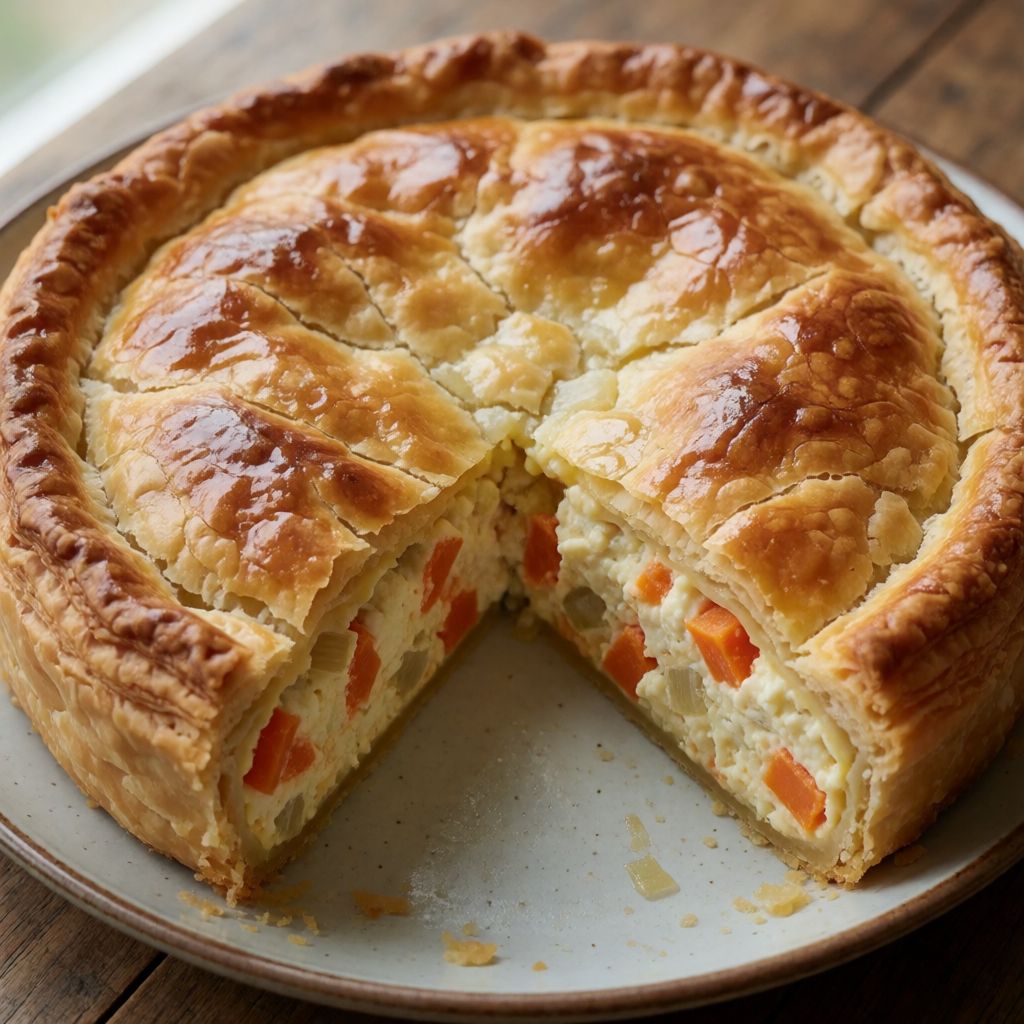
 AI photo
Carrot Pie
A savoury pie of sautéed carrot, courgette and onion on puff pastry, topped with ricotta and pumpkin seeds.
Labels are worked out automatically from the ingredients and can be wrong. Check the packaging if it matters to you.
Ingredients
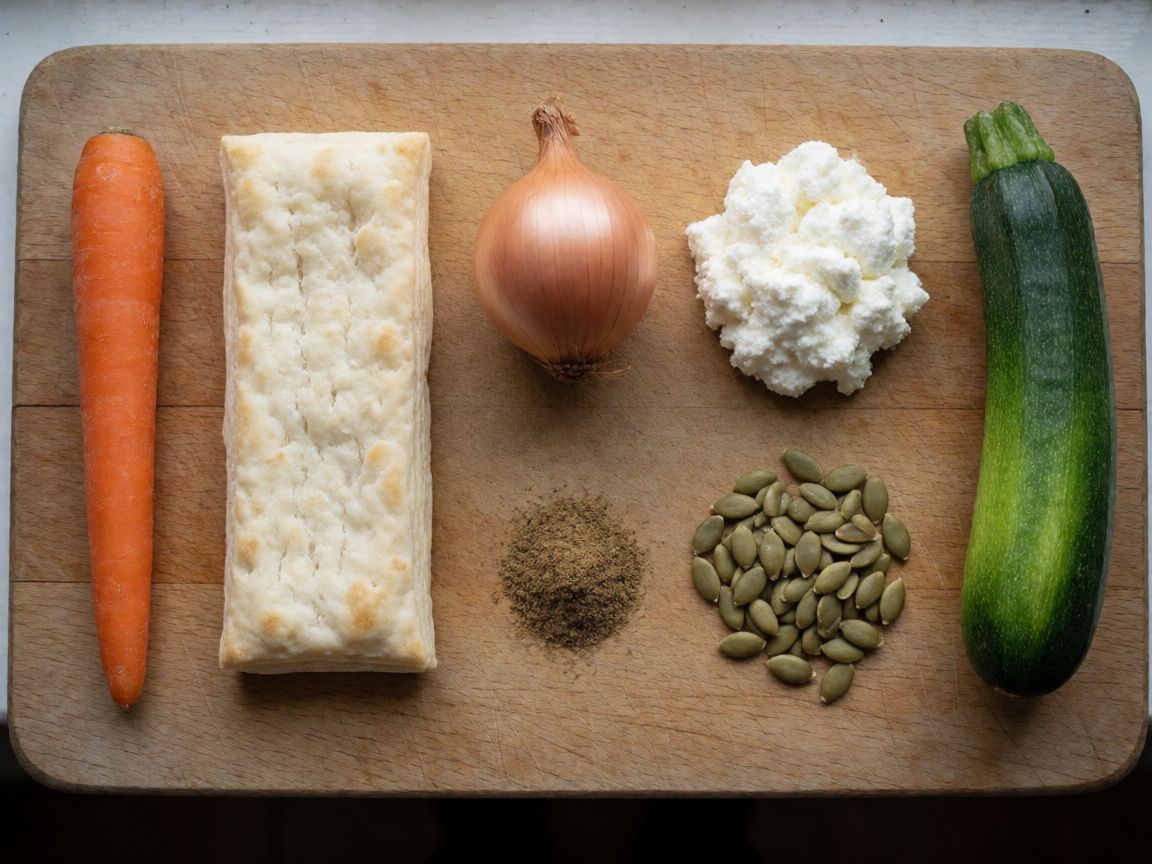
- 450 g Carrot
- 1 pcs Puff Pastry
- 1 pcs Onion
- 400 ml Water
- 250 g Ricotta
- Cumin to taste
- Pumpkin Seeds to taste
- 1 pcs Courgette
- Salt to taste
- Olive Oil to taste








Steps
Finely chop the onion. Slice the courgette thinly, and do the same with the carrot.
Heat the olive oil in a frying pan together with the cumin.
Add the onion and fry until soft and golden.
Add the carrot and courgette to the pan, fry for a minute, then pour in the water.
Cook until all the liquid has evaporated.
Lay the puff pastry in a tin lined with baking parchment. Prick the base with a fork.
Once the vegetables have cooled, add the ricotta to the pan and mix well. Add a pinch of salt.
Spread the filling over the puff pastry.
Sprinkle with pumpkin seeds.
Bake at 180°C for 35-40 minutes.
38 min
This is a galette dressed up as a pie — a flat sheet of puff pastry carrying a mound of sweated vegetables and ricotta, nothing folded over, nothing hidden. What decides whether it works is not the baking, it's the frying pan stage before it: if you skip the business of cooking off all the water, you get a soggy base and a pastry that never crisps, no matter how long you leave it in the oven.
Carrot and courgette both carry water you can't see. Slice them thin, soften them in oil with the onion, then add the water in the recipe and let it cook away completely — not simmer down, gone. That water isn't there to add moisture to the dish; it's there to steam-cook the vegetables through without scorching the onion while they do it. Once it evaporates, what's left behind is vegetable that's actually cooked, not just seared on the outside and raw in the middle. Skip the water and rush the heat instead, and you'll crisp the courgette edges while the carrot centre stays stubborn — carrot doesn't bend to bite the way a softened onion does, it needs real time in liquid heat, not just oil.
Some say you can tip wet vegetables straight onto puff pastry and the oven will sort it out. No — puff pastry's whole trick is layers of butter and flour that need dry heat to lift and separate; wet filling sitting on raw pastry just steams the bottom layer flat before the top ones even get started. That's why the vegetables get cooled before the ricotta goes in too — warm veg meeting room-temperature ricotta weeps liquid onto the base as everything sits and bakes.
Carrot is the backbone here — 450g of it, which is more by weight than the ricotta, so don't treat it as decoration under a cheese pie. You want it sliced thin and even, because a thick carrot disc simply won't cook through in the time the courgette takes; uneven slicing is the real reason some carrot pieces end up raw while others collapse. Any firm, sweet root that holds its shape through frying and doesn't turn to mush — parsnip, swede — could stand in, but you lose the colour and the particular sweetness carrot brings once it's cooked past raw crunch into something closer to jam.
Courgette's job is moisture and softness, not flavour — it has very little flavour of its own, which is exactly why it works alongside the stronger carrot and ricotta rather than competing with them. Pick one that's firm, not the ones gone soft and seedy at the till — a watery courgette just adds to the evaporation job you already have to do.
Ricotta wants to be the plain, barely-salted kind — its purpose is to bind the vegetables and add creaminess without announcing itself, so a ricotta that's already heavily seasoned or watery (check the tub for whey pooling) will throw off the texture. If you can't get ricotta, a well-drained cottage cheese or a mild curd cheese does the same binding job, though you'll want to press out excess liquid from either before mixing in.
Puff pastry here is bought, not made — and that's not a shortcut to apologise for. Butter-laminated pastry is a trade skill; buying a ready block is simply the honest version of what most bakeries and home cooks have done for decades once commercial puff pastry became reliably available. What you control is not making it, but not drowning it: prick the base so steam escapes through small holes rather than pushing the whole sheet up in one blister, and keep the filling cool and reasonably dry when it goes on.
Cumin goes into the oil at the start, not scattered on top at the end, because its flavour lives in oil-soluble compounds that need gentle heat to release — thrown on raw or added late, it tastes dusty rather than warm. Olive oil is specified, but the real requirement is an oil with no flavour loud enough to fight the cumin and sweated vegetables — a light, flavourless oil would do in a pinch, though you'd lose some of the base note olive oil gives the onion as it turns from pale to gold.
Pumpkin seeds on top aren't garnish for the photograph — scattered over the filling before baking, they toast in the oven's dry heat and give you the one crunchy texture in a dish that's otherwise soft all the way through. If you've none, any seed that toasts rather than burns at pastry-baking heat — sunflower, pine nuts — fills the same gap.
On patience: the vegetables need their full cooking-down time before the ricotta goes anywhere near them, and that's not a step to rush past because the oven is "nearly ready." A domestic hob doesn't have the fierce, even heat of a professional range, so that evaporation stage will take genuinely longer at home than you expect — watch the pan, not the clock, and don't add the cheese until there's no liquid left to see.