
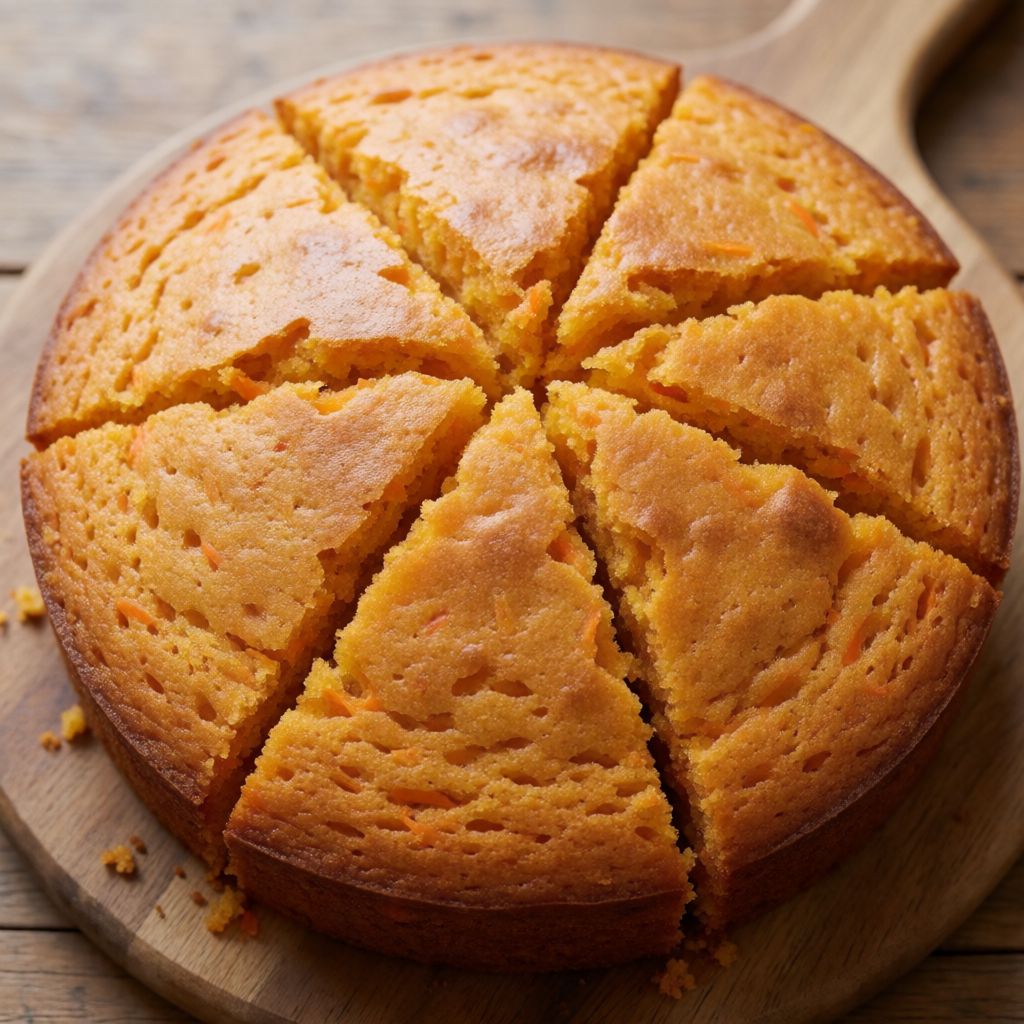
 AI photo
Air Fryer Carrot Cake, Soft and Delicate
A soft, delicate carrot cake baked in an air fryer.
Labels are worked out automatically from the ingredients and can be wrong. Check the packaging if it matters to you.
Ingredients
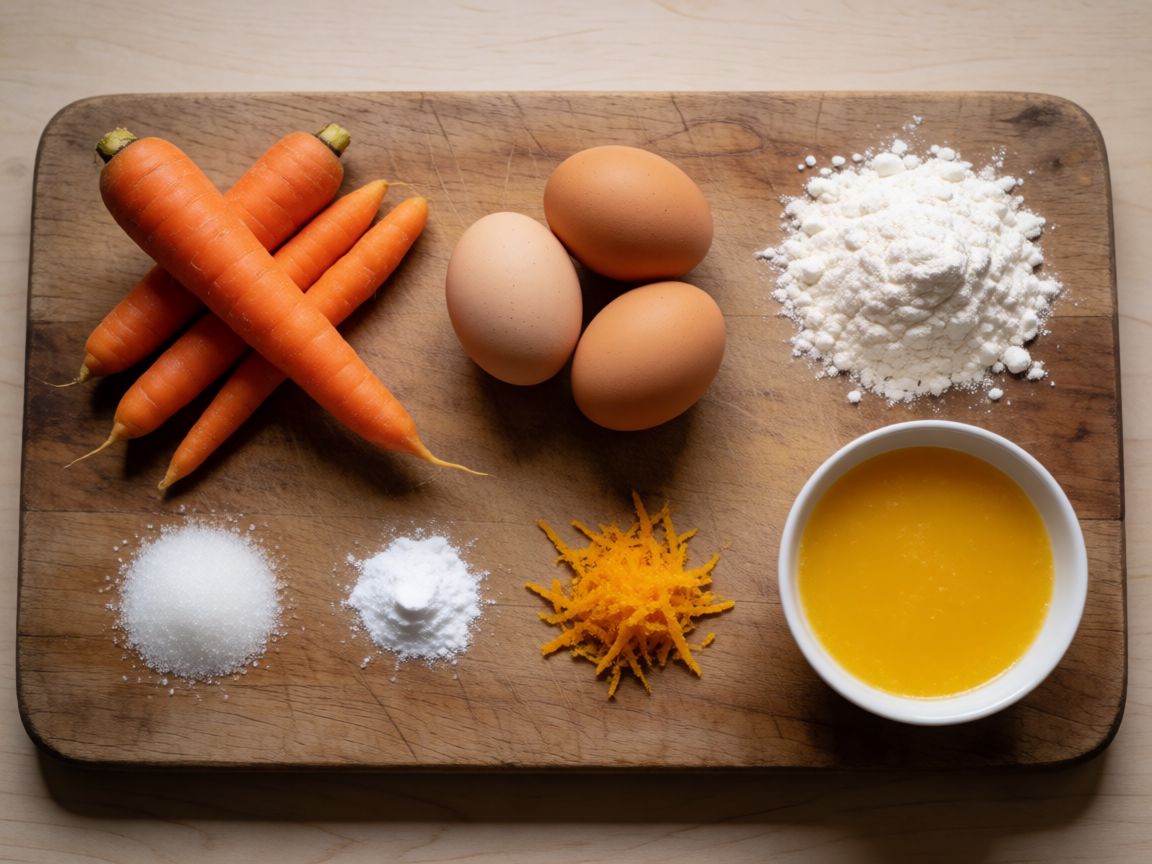
- 250 g Carrot
- 3 pcs Eggs
- 200 g Sugar
- 150 ml Vegetable Oil
- 300 g Plain Flour
- 15 g Baking Powder
- 1 pcs Orange Zest zest of one orange
- 100 ml Orange Juice








Steps
Wash and peel the carrots, cut into chunks, then blend with the vegetable oil until smooth.
10 minCrack the eggs into a bowl, add the sugar and whisk until pale and fluffy, then fold in the blended carrot and the grated orange zest.
5 minContinue whisking while pouring in the orange juice.
2 minSift together the flour and baking powder, gradually fold into the mixture until smooth.
5 minPour the batter into a greased 20cm cake tin.
2 minBake in the air fryer at 160°C.
45 min
This is not the shaggy, cinnamon-heavy carrot cake you get in a British café with a slab of cream cheese on top. No icing here, no spice cupboard raid — just carrot, egg, orange, and a crumb that's meant to be soft enough to eat with tea and nothing else. It behaves more like a sponge that happens to be orange and faintly vegetal than a traditional carrot cake, and that's because of what happens in step one: the carrot goes into the blender with the oil, not into a grater.
That's the hinge the whole cake turns on. Some say you must grate carrot by hand for a "proper" carrot cake, with visible threads running through the crumb — no, because grated carrot sheds water as it bakes, and that water either pools and makes the middle soggy, or it has to cook off and leaves you with dry shreds sitting in a wet cake. Blend the carrot into the oil instead, and you get an orange-flecked emulsion: oil wraps every cell of carrot, there's nothing left to weep out later, and the whole thing folds into the batter instead of sitting in it. You lose the rustic bite. You gain a cake that's reliably moist rather than moist in some bites and dry in others.
Carrot: go for ones that still have some snap to them, not the limp ones at the bottom of the fridge drawer — a tired carrot has already lost sugar and water to shrivelling, and you want both. Old, woody carrots also blend less smoothly, leaving fibrous bits the sieve of your batter will never hide. If you've only got big maincrop carrots rather than the sweeter young ones, that's fine; just peel properly, since the skin is where the bitterness concentrates.
Eggs: three, and letting them sit out of the fridge for half an hour before you start helps the whisking along — cold egg whites resist forming the air pockets you're relying on here, since the fat in the yolk sets stiffer when chilled and won't incorporate air as readily. If your kitchen's cold, a bowl sat briefly in warm water does the same job.
Sugar: 200 g, ordinary granulated is fine, though caster sugar dissolves into the egg faster and gives you a smoother, quicker whisk — worth using if you have it, not worth a special trip if you don't.
Oil: any oil with no smell of its own. Sunflower or rapeseed, both easy to find in a British supermarket, do the job without arguing with the orange. Olive oil will fight the citrus and leave a bitter edge once baked, so save it for something that wants that edge.
Flour and baking powder bought separately, rather than self-raising flour, is deliberate — it lets you control exactly how much lift you're adding on top of the air already whisked into the eggs. Sift them together before folding in, which isn't ceremony: it breaks up any clumps of baking powder so you don't bite into a bitter pocket later, and it aerates the flour slightly before it ever meets the wet mixture.
Orange zest and juice are doing two different jobs, not one. The zest carries the fragrant oils and goes in early so it has time to perfume the batter; the juice goes in after, mainly for moisture and a mild acidity that keeps the crumb tender rather than tight. If your oranges are the glossy supermarket kind, give them a proper scrub before zesting — that shine is often a wax coating, and you don't want it grated into your cake. No oranges to hand, lemon zest and juice work as a substitute, though the cake will read sharper rather than warm.
It's worth knowing why carrot turns up in a cake at all, since it isn't really a modern health gesture — in wartime Britain, sugar was rationed and carrots weren't, so bakers leaned on the carrot's own sweetness to stretch what little sugar they had. The habit stuck long after rationing ended, because it genuinely works: carrot sugar plus added sugar plus a citrus lift is a cheaper, moister cake than one running on sugar alone.
And the tin matters more than it looks. A 20 cm tin is chosen because it fits a domestic air fryer basket with air still able to circulate round it — push a bigger tin in and you'll get a cake that's pale and underbaked in the middle because the hot air simply can't get round the sides to do its job evenly. If your basket is small, a slightly narrower, deeper tin is the safer swap over a wider one.
Last thing: let it sit in the tin a few minutes after baking before you turn it out. A warm sponge is a fragile sponge — give it the few minutes it needs to firm up, and you keep the shape you worked for in the first three steps.