
 AI photo
Carrot Jam
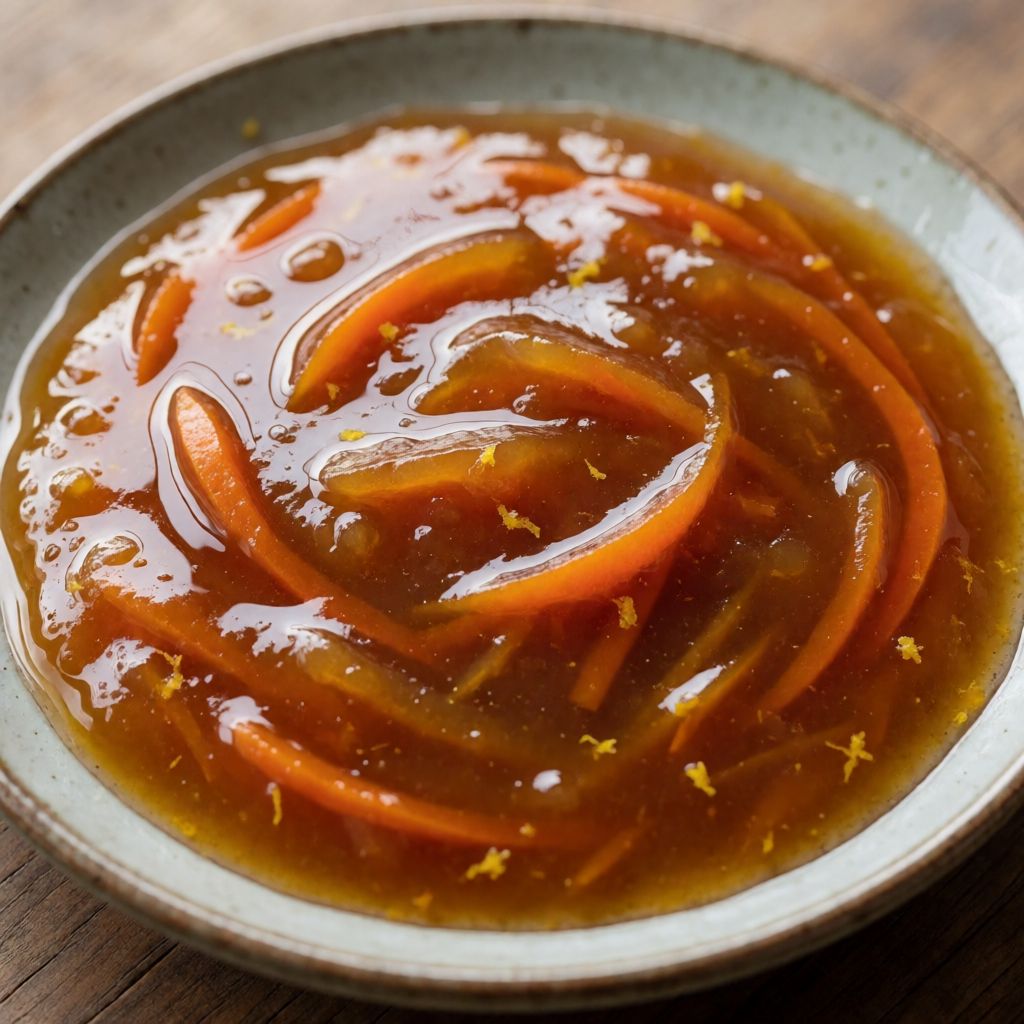
A simple homemade carrot jam, flavoured with lemon and a touch of brandy.
Labels are worked out automatically from the ingredients and can be wrong. Check the packaging if it matters to you.
Ingredients
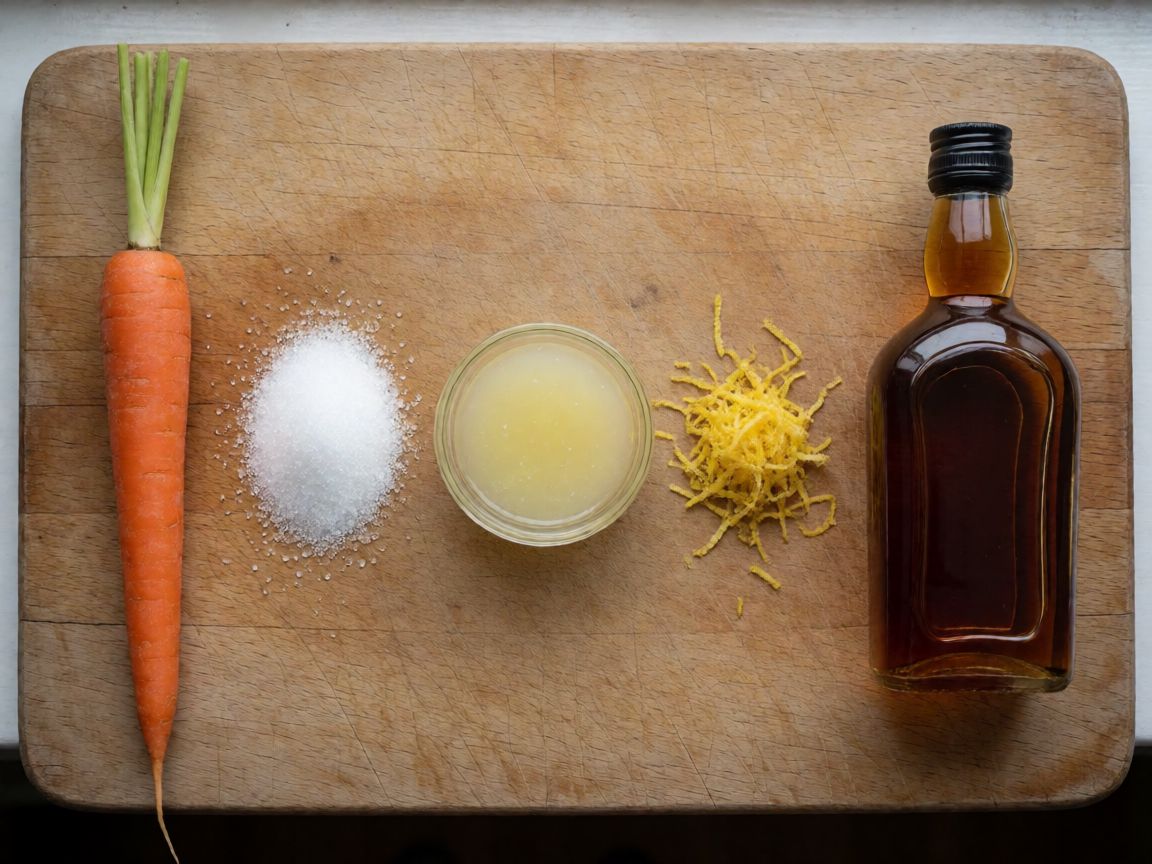
- 1 kg Carrots
- 500 g Sugar
- 2 pcs Lemon Juice juice of 2 lemons
- 1 pcs Lemon Zest zest of 1 lemon
- 1 pcs Brandy




Steps
Wash the carrots under cold running water, dry them, trim the ends and peel with a vegetable peeler.
Cut the carrots into not-too-large pieces and place them in a saucepan with water and the lemon juice.
Cover the saucepan with a lid slightly ajar to let the steam escape and cook for about 15 minutes.
15 minLet the carrots cool, then pass them through a sieve to make a purée.
Return the purée to the saucepan and put it back on the heat.
Add the sugar and lemon zest, and cook over low heat for about 30 minutes until it reaches the desired thickness.
30 minLet the jam cool slightly, then stir in the brandy and mix for a few minutes.
Fill sterilised jars with the finished jam and seal tightly with airtight lids.
Wrap the jars in clean kitchen towels to let them cool gradually.
Store in a dark, cool and dry place.
Carrot jam sounds like a trick until you remember what jam actually is: something sweet cooked down with sugar and sharpened with acid until the water leaves and the taste stays. Carrots bring almost no acid of their own and very little pectin — that's the lemon's whole job here, juice and zest both — and that's why a splash of brandy stands at the end instead of nothing: it gives back some of the perfume the long cooking takes away.
What decides whether this works is not minutes, it's water. First you boil carrot pieces until a knife goes through a piece without resistance — that's doneness, not a clock, fifteen minutes is just where to start checking. Then, once the purée is back on the heat with sugar, you drive water out a second time, slower, until the mixture stops running off a spoon and instead hangs from it for a beat. Push that stage with a higher flame and you don't get thick jam faster — you get burnt sugar sitting under thin, unfinished jam, because sugar scorches long before the water underneath it has actually gone.
"Carrots in a jam jar, really?" — some say it's a gimmick. No, because root-vegetable preserves are old and practical, not a modern joke: wherever fruit was expensive or short for half the year, cooks turned sweet, wet vegetables — pumpkin, tomato, carrot — into something that would keep, using exactly this trick of sugar plus acid. It isn't fruit pretending to be jam. It's a vegetable doing jam's actual job.
Start with the carrot, because jam concentrates flavour, it doesn't invent it. Maincrop carrots sold through a British autumn and winter have usually sat through cold, and cold pushes a carrot to convert some of its starch into sugar as a kind of antifreeze — which is why a carrot in December tastes sweeter raw than one in July, and matters even more once you've boiled and sugared it. Skip anything with a pale, woody core; that core stays fibrous even after sieving, and you'll meet it again as threads in the finished jar.
Peel properly and sieve rather than blend, for related reasons. The skin carries grit and a faint bitterness the flesh doesn't have, so there's nowhere to hide it once you're aiming at a smooth purée. A sieve pushes fibre out; a blender chops it fine enough to disappear into the texture while still being there, and it also beats in air you don't want — air that later shows up as foam on the surface and shortens how well the jam keeps.
The lemon is doing two separate jobs, which is why the recipe asks for juice and zest rather than one or the other. Juice, added early, is acid — without it the carrot doesn't taste like jam, it tastes like sweetened vegetable, because carrots have essentially none of their own. Zest, added later with the sugar, is aroma — the fragrant oil sits in the coloured skin, not the white pith underneath, so take only the surface and stop before anything pale and bitter. No lemon to hand: any sharp, fragrant citrus does both jobs — an orange will work, though the result is softer and less cutting, so use a bit more of it. The sugar itself can just be ordinary white granulated — it has no flavour of its own to add or hide, so there's nothing gained here from reaching for brown sugar or honey; its job is pulling water out, not adding taste.
The brandy goes in once the pan is off the heat and cooling, never while it's still bubbling — boil a spirit and most of what makes it smell like brandy leaves with the steam, and you're left with the heat of alcohol and none of its scent. Stirred in while the jam is merely warm, the aroma stays. Any spirit you'd happily drink neat on its own will do — Cognac, Armagnac, a dark rum if that's what's open. Leave out anything smoky, a peated whisky and the like — that smell sits on top of the carrot instead of lifting it.
On the practical side: for the sugar stage, reach for the widest pan in the cupboard, not the deepest one that happens to hold the volume. Width is surface area, and surface area is where the water actually leaves — a narrow saucepan takes longer to thicken and spends more time over heat doing it, with more chance the bottom catches before the top has reduced. A domestic hob ring is usually smaller than the base of a decent pan too, so stir now and then even on a gentle heat — the metal directly above the flame or element runs hotter than the rest, and that's where scorching starts first.
Sterilising the jars and then wrapping them in towels aren't tradition for its own sake, they're two different jobs. Sterilising kills off whatever would otherwise grow in a jar of warm, damp sugar once it's sealed. Wrapping slows the glass's cooling so it doesn't crack from a sudden temperature drop, and the slow cool also lets the lid pull down properly as the warm air trapped inside contracts — the same vacuum any home-sealed jar relies on, nothing more mysterious than that.