
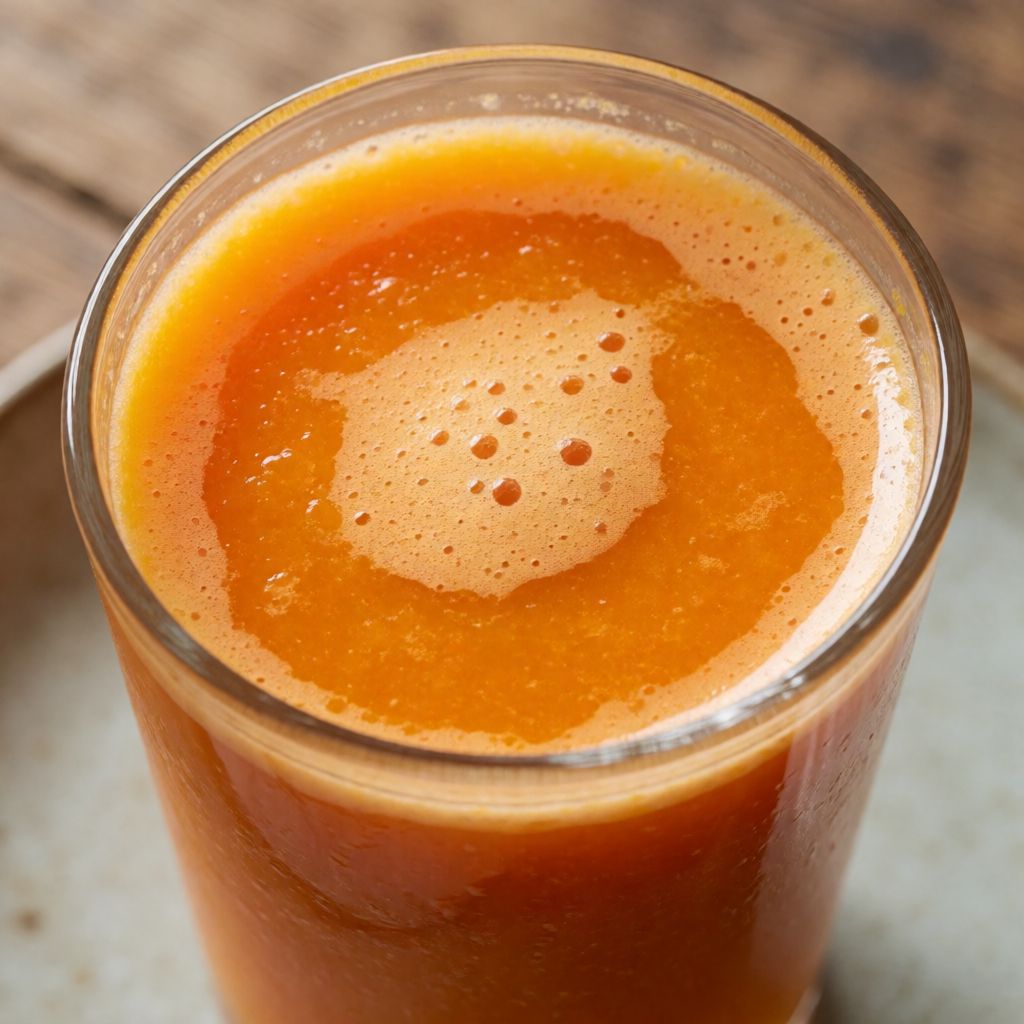
 AI photo
Carrot Juice
A simple homemade juice made from carrot, orange, apple, celery and ginger.
Labels are worked out automatically from the ingredients and can be wrong. Check the packaging if it matters to you.
Ingredients





Steps
Peel the oranges and ginger, and wash and peel the carrots thoroughly.
Pass everything through a juicer and enjoy the freshly pressed carrot juice.
This isn't cooking, it's extraction. No heat touches anything here, which means the whole result depends on what you put in, not on technique — there's no pan to watch, no browning to catch. The only "doneness" is in the produce itself: a carrot that bends and snaps crisp rather than going limp, an orange heavy for its size, an apple that still has some crunch left in it.
What decides whether this works is balance, not skill. Carrot is the base — watery, mildly sweet, a bit earthy. Everything else is there to correct it: orange brings acid and brightness, apple adds sugar without the sourness, celery gives it a green, almost savoury edge so it doesn't taste like dessert, and ginger cuts through all that sweetness with heat. Get the ratio wrong and you've made carrot-flavoured squash, which is a different drink entirely.
Some say fresh juice has to be drunk within seconds or the vitamins are gone. No — that's a half-truth stretched into a rule. Vitamin C does oxidise, and it oxidises faster if your juicer spins hard and whips air into the liquid, which is exactly what a cheap centrifugal juicer does — you'll see the foam on top as proof. But you have a window of maybe twenty, thirty minutes, not a countdown. Drink it the same morning and you've lost nothing worth grieving over.
Patience here isn't about standing over heat — it's about not rushing the shopping. A soft carrot or a mealy apple will ruin this faster than any mistake at the juicer.
Carrot is the one ingredient you can't fake your way around. You want it firm, bright orange, no cracks, no give when you bend it — a carrot gone rubbery has already lost sugar to starch breakdown and will taste flat and a bit soapy. Wash it hard, not just a rinse, because dirt sits in the grooves near the top where the skin is thinnest, and that's exactly where grit and any residue collect. Peeling is less about taste and more about not grinding soil into your juice.
Orange does two jobs: acid and aroma. Peel it properly, pith and all, because the white pith is where the bitterness lives — leave too much in and the juice turns sharp in the wrong way, not sharp like ginger, sharp like regret. Any sweet citrus with decent acid will stand in for it — a couple of satsumas, a blood orange if you want colour. Lemon won't work alone here; it's too sour with nothing sweet to carry it.
Apple is pure sweetness and body, nothing more. Use something firm — a Braeburn or a Cox, not a soft eating apple that's been sitting in the fruit bowl a week. A mealy apple gives you less juice and more pulp, which just clogs the juicer sooner. If you're out of apples, a pear does the same job, just with a touch less bite.
Celery is the ingredient people leave out and shouldn't. It stops the drink tasting like liquid fruit salad — it's the vegetable note that makes this read as "juice" rather than "smoothie's thin cousin." Any firm stalk vegetable without a loud flavour of its own can take its place, though nothing does quite the same quiet job celery does.
Ginger is the one ingredient you adjust by nose, not by recipe. Fifteen grams is a guide, not a law — smell the cut piece, and if it's got a sharp, almost citrus heat to it, you can use less. If it smells faint, use more. It's there to stop the whole thing being a glass of sugar wearing a health halo.
On the juicer itself: feed hard, fibrous things like celery and ginger between the soft, watery ones like orange and apple. It keeps the machine from clogging on fibre and stalling halfway through — a real fault with a real cause, not just bad luck. If you've only got a centrifugal juicer, that's fine; you'll get more foam and the juice won't keep as long, but for drinking it fresh in a British kitchen on a Sunday morning before the roast goes in, that's not a problem worth buying a cold-press machine to solve.