
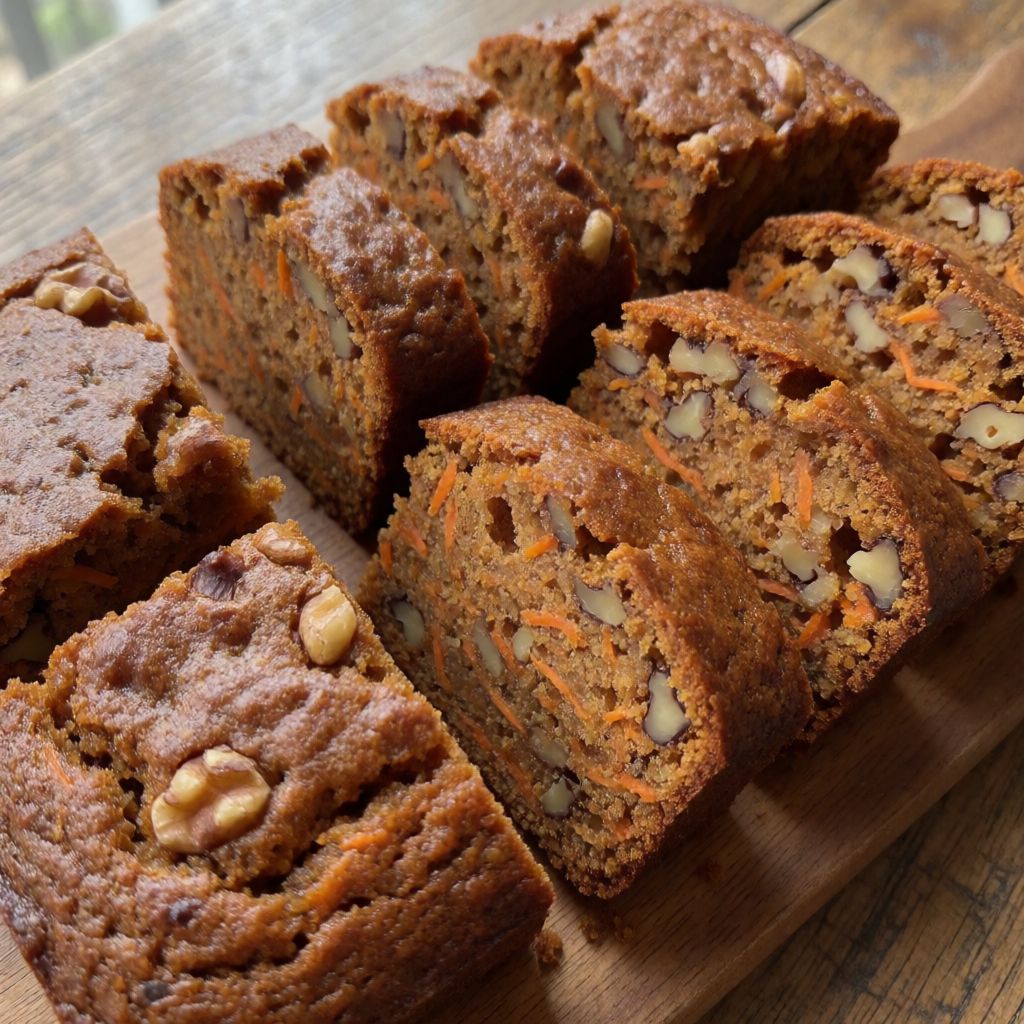
 AI photo
Wholemeal Walnut and Carrot Cake
A moist wholemeal cake with grated carrot and chopped walnuts, finished with icing sugar.
Labels are worked out automatically from the ingredients and can be wrong. Check the packaging if it matters to you.
Ingredients
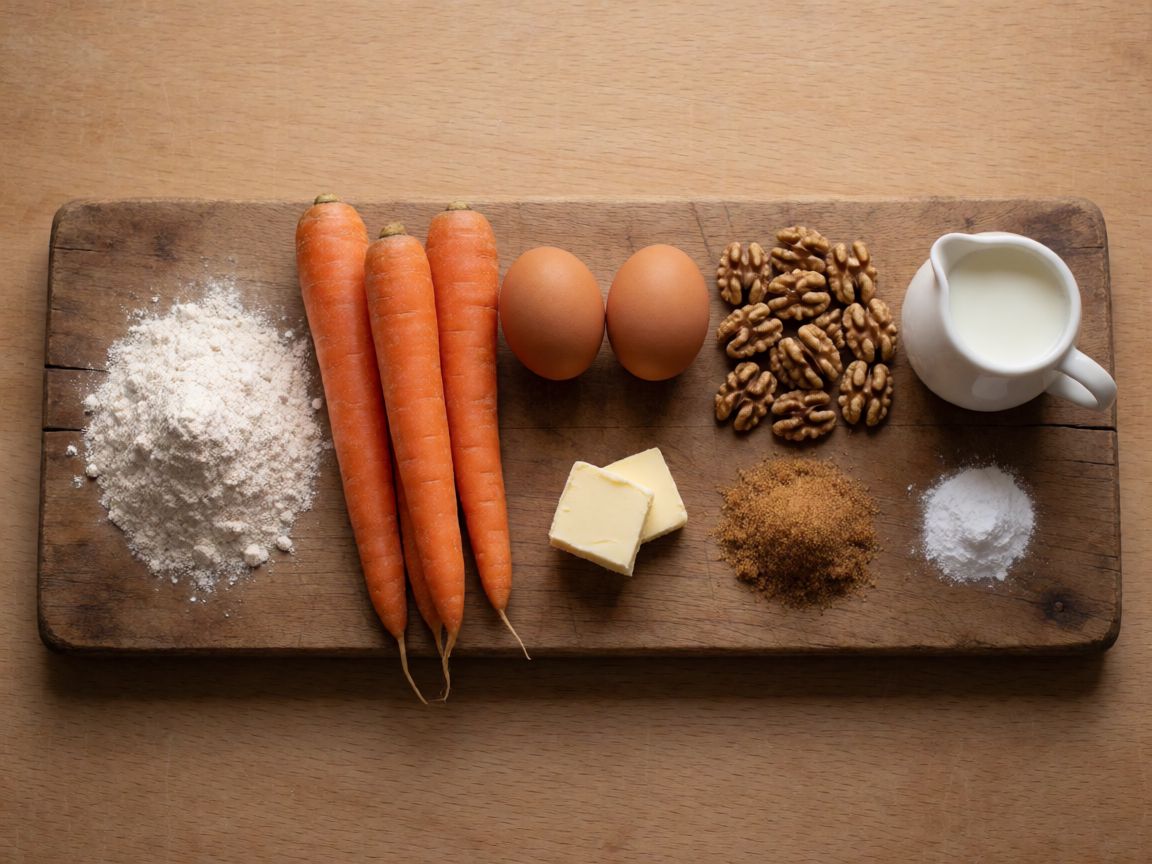
- 200 g Wholemeal flour
- 3 pcs Carrot large; or 6 small
- 2 pcs Eggs
- 3 tbsp Vegetable oil
- 30 g Butter
- 150 g Brown sugar
- 30 pcs Walnuts
- 1 pcs Baking powder
- 3 tbsp Milk
- Icing sugar to taste
- Walnuts to taste, for decoration
- Carrot to taste, for decoration










Steps
Wash and peel the carrots, then grate them. Shell the walnuts and chop them.
In a large bowl combine the chopped walnuts, grated carrot, wholemeal flour, vegetable oil, melted butter, brown sugar, baking powder, milk and eggs.
Mix by hand or with a mixer until smooth.
10 minGrease the baking tin with butter and dust with flour.
Pour the batter into the prepared tin and bake at 180°C.
28 minOnce baked, let the cake cool, then decorate with icing sugar, walnuts and carrot.
If the top browns too quickly before the cake is cooked through, cover it with a sheet of foil.
This is a one-bowl cake, not a layered construction — you dump everything in, mix, bake, and the carrot does the work that a mixer usually does in a butter cake. No creaming, no folding egg whites, no drama. What decides whether it works is moisture control: wholemeal flour drinks more liquid than white, and grated carrot is mostly water with a bit of sugar and fibre holding it together. Get the ratio wrong either way — too dry a batter, or too wet a carrot — and you get either a brick or a cake that sinks in the middle once it leaves the oven.
Some say carrot cake is "healthy" because there's a vegetable in it. No — it's a sugar-and-oil cake wearing a vegetable as a disguise. The carrot's job isn't nutrition, it's structure: its natural sugars caramelise slightly in the heat and its moisture keeps a dense, wholemeal-heavy batter from drying out into sawdust. That's the whole trick, and it's a good one, but don't eat it thinking you've had your five-a-day.
The walnuts are not just texture. Raw, chopped walnuts are oily enough that if you add them loose into a wet batter, that oil can slick the crumb and stop it rising clean in places — which is why they're folded through rather than scattered on top before baking. Toasting them lightly first (optional, but worth it if you've the time) deepens the flavour so you're not just getting crunch, you're getting actual walnut taste that survives the sugar.
Wholemeal flour here isn't a health swap you can treat like-for-like with white. It's coarser, it has bran in it that cuts gluten strands short, and it absorbs more liquid before it feels "wet enough." That's exactly why this recipe leans on grated carrot and milk rather than more eggs for moisture — eggs set the structure, they don't loosen it. If you've only got white flour, use it, but hold back a tablespoon of milk at first; white flour needs less liquid to reach the same batter consistency, and a too-wet white-flour batter won't firm up the same way wholemeal does.
Grate the carrot yourself rather than buying pre-shredded bagged carrot if you can — bagged carrot is often older, drier, and has lost moisture to the packaging, which is precisely the moisture this cake is relying on. Large carrots versus small ones doesn't matter for flavour, it's just about getting to roughly the same total weight of grated flesh; three large or six small both land you in the same place on the scale.
The oil-and-butter combination is doing two separate jobs, not one. Vegetable oil stays liquid at room temperature and keeps the crumb soft for days — this is why oil-based cakes (carrot cake, many Mediterranean ones) survive being made ahead, while all-butter cakes firm up and dry out faster once cool. The 30g of butter is there for flavour and a touch of richness that oil alone can't give; you could drop it and use all oil, but the cake will taste flatter, slightly one-note. Any neutral oil — sunflower, rapeseed, anything with "no smell of its own" — works; olive oil will fight the walnut and carrot for attention, so leave it for savoury things.
Brown sugar isn't a nicer-looking stand-in for white. It carries molasses, which brings moisture and a faint toffee note that plays well with the slight caramel edge the carrot gives off in the oven — white sugar would leave the cake tasting flatter and slightly drier on the tongue, even at identical weight. If it's all you've got, add a teaspoon of golden syrup or treacle to compensate.
On a domestic hob and a standard home oven, 180°C is an instruction for the dial, not a guarantee of what's happening inside the tin — ovens run hot or cold by ten, fifteen degrees without telling you, and fan ovens brown faster than they cook through. That's exactly why the recipe tells you to foil the top if it's colouring before the inside's set: the surface sugars catch heat and darken long before the dense wholemeal-and-carrot centre has finished turning from batter to crumb. Foil isn't a fix for a mistake, it's buying the centre more time without burning the top — a standard move, not a panic measure.
Let it cool properly before icing sugar goes anywhere near it — a cake that's still warm will melt icing sugar into a wet, see-through patch instead of a dusting. This is patience doing actual work, not just good manners: warm cake, impatient hands, ruined finish. Ten minutes in the tin, then onto a rack, is enough to stop that happening without the cake drying out from sitting too long exposed.