
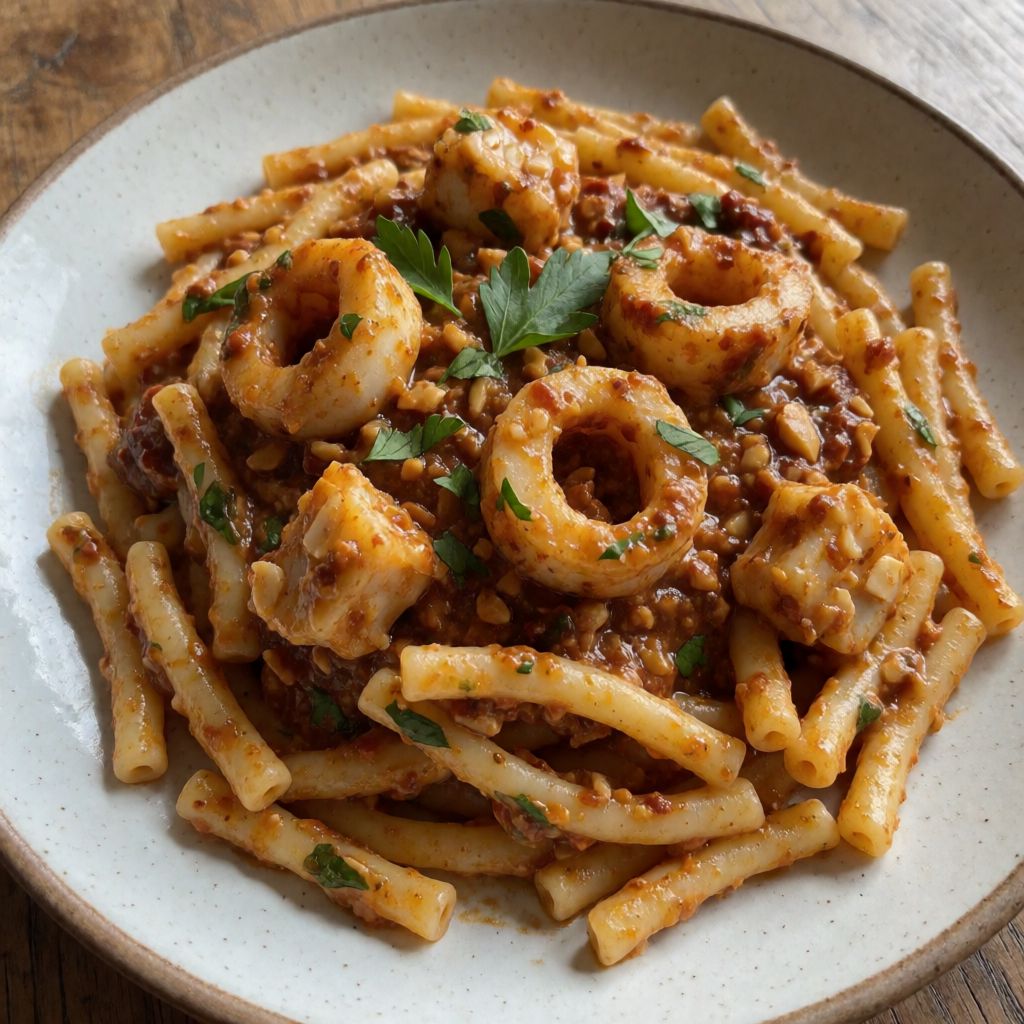
 AI photo
Casarecce with Almond and Sun-Dried Tomato Pesto
A quick pasta dish of seared cuttlefish tossed with a vibrant almond and sun-dried tomato pesto.
Labels are worked out automatically from the ingredients and can be wrong. Check the packaging if it matters to you.
Ingredients
- 300 g Cuttlefish
- 400 g Casarecce pasta
- Black pepper to taste
- 1 bunch Parsley
- 15 pcs Basil leaves
- Olive oil to taste
- 1 pinch Salt
- 50 g Almonds
- 1 package Sun-dried tomatoes
- 1 tbsp Pecorino Toscano grated










Steps
In a blender, combine the almonds, basil, parsley and a pinch of salt. Blend, then add the sun-dried tomatoes, grated Pecorino Toscano and olive oil, blending until you have a smooth, creamy pesto.
Cook the casarecce in plenty of boiling salted water until al dente.
Quickly sear the cuttlefish in a non-stick pan or on a griddle plate. It is ready when the thickest part reaches 63°C.
Season the cuttlefish with salt, black pepper and a sprinkling of parsley.
Drain the pasta al dente and toss with the prepared pesto, adding a little of the pasta cooking water if needed to loosen the sauce.
Serve the casarecce topped with the seared cuttlefish.
This is a dish built on two quick fires - one in the blender, one in the pan - and a slow boil in between that holds it together. Raw pesto, flash-seared cuttlefish, pasta as the carrier. No simmering sauce, no long braise. That is the whole point of it: everything happens fast except the patience you need to wait for each thing to be actually ready, not just hot.
Whether it works comes down to two moments. Pesto: cold-blended, never cooked, because heat would break basil down into something bitter and grey within seconds - chlorophyll does not survive heat kindly. Cuttlefish: seared hard and fast, pulled the second it hits 63°C in the thickest part, because cephalopod muscle has a narrow window - too little heat and it is slimy, too much and the fibres clamp down, squeeze out their water, and you are chewing on an eraser. There is no middle setting that saves you from either side.
Some say cuttlefish needs a long slow braise to go tender - and for a whole cuttlefish cut into chunks, stewed an hour in its own ink, that is true. But that is a different dish with a different mechanism: long cooking melts the collagen between fibres, the same way an oxtail goes soft after four hours, not forty minutes. This recipe doesn't give you that time, so it takes the other route - cook it so fast the fibres don't have time to contract before the inside is done. Two roads to tender cuttlefish, no road in between.
Almonds instead of pine nuts is not an upgrade or a downgrade, it is geography paying the bill. Classic Genoese pesto uses pine nuts because pine trees grow on that coast; further south, in Trapani, almonds are the local, cheap nut, so that is what went into the mortar. Pine nuts are also softer and oilier - almonds give you more bite and a drier, grainier pesto, which is exactly why it needs loosening with pasta water at the end rather than more oil. If you have neither, walnuts work on the same logic - any oily nut without a sharp flavour of its own that can carry fat into a paste.
Sun-dried tomatoes bring concentrated umami and acidity that a fresh tomato cannot, because drying does to a tomato what reducing a sauce does - it drives off water and leaves the sugar, the glutamate, the sourness all standing closer together. If yours come packed in oil, use some of that oil instead of plain olive oil in the blend; if they are the dry, leathery kind, soak them in warm water a few minutes first or the blender will just shred them into stringy bits instead of pulping them.
Basil and parsley together, not basil alone, is the quieter decision here - parsley has almost no smell of its own next to basil's, so it adds bulk and a clean green colour without fighting the basil for attention. Don't skip the pinch of salt at the blending stage either: it's there before the liquid goes in because salt helps break the cell walls of the leaves early, and a pesto blended without it tends to turn a duller green faster once it's sitting on the plate.
Pecorino Toscano is a sheep's milk cheese, sharper and saltier than parmesan because sheep's milk simply carries more of both by nature. A tablespoon is a small amount on purpose - it should round off the pesto's edge, not turn it into a cheese sauce. Parmesan will do if that's what's in the fridge, just taste before adding extra salt to the pasta water, because parmesan is gentler and you may want a touch more.
On an ordinary UK hob, the cuttlefish step is where things go wrong fastest. A domestic non-stick pan or griddle plate doesn't hold heat the way a heavy cast-iron one does in a restaurant kitchen - it cools the instant cold cuttlefish touches it. So: pat the cuttlefish properly dry with kitchen paper first (wet surface means steaming, not searing, and steaming is what gives you grey rubber instead of a seared crust), get the pan properly hot before it goes anywhere near the cuttlefish, and don't crowd the pan - two pieces touching release enough moisture between them to drop the pan's temperature and undo the sear. A probe thermometer earns its keep here; 63°C in the thickest part isn't a guess, it's the point past which texture turns from silk to rubber, so trust the number over the clock.
Salt the pasta water generously and well before the pasta goes in - not to season the surface, but because starch in the pasta absorbs some of that salt as it cooks, seasoning it from the inside, which a pinch added at the table can never do. And keep a cupful of that water back before you drain; it's cloudy with starch, and a splash of it worked into the pesto is what turns a stiff almond paste clinging in clumps into a sauce that actually coats the casarecce evenly, rather than sitting in the dips and leaving the rest bare.