
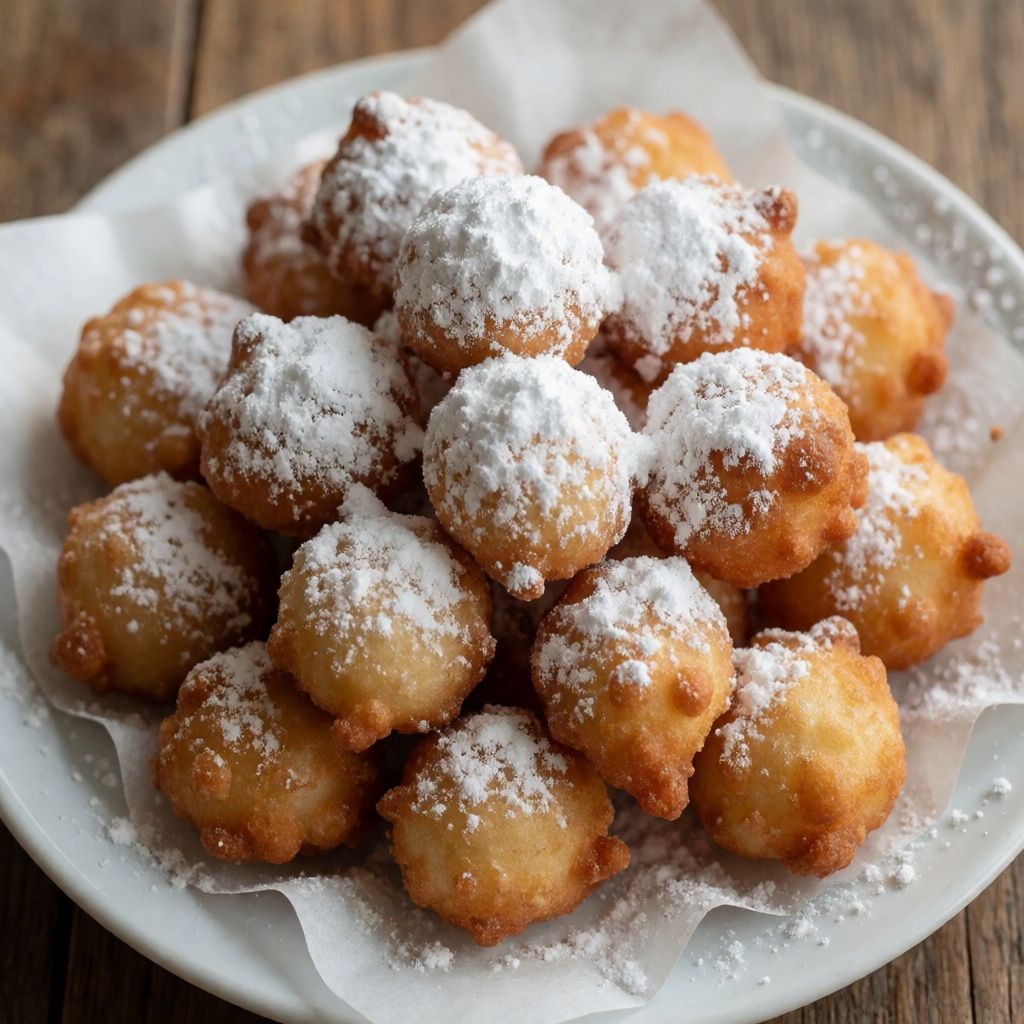
 AI photo
Quick Carnival Castagnole
Quick carnival-style castagnole: light fried dough balls, finished with sugar or honey.
Labels are worked out automatically from the ingredients and can be wrong. Check the packaging if it matters to you.
Ingredients
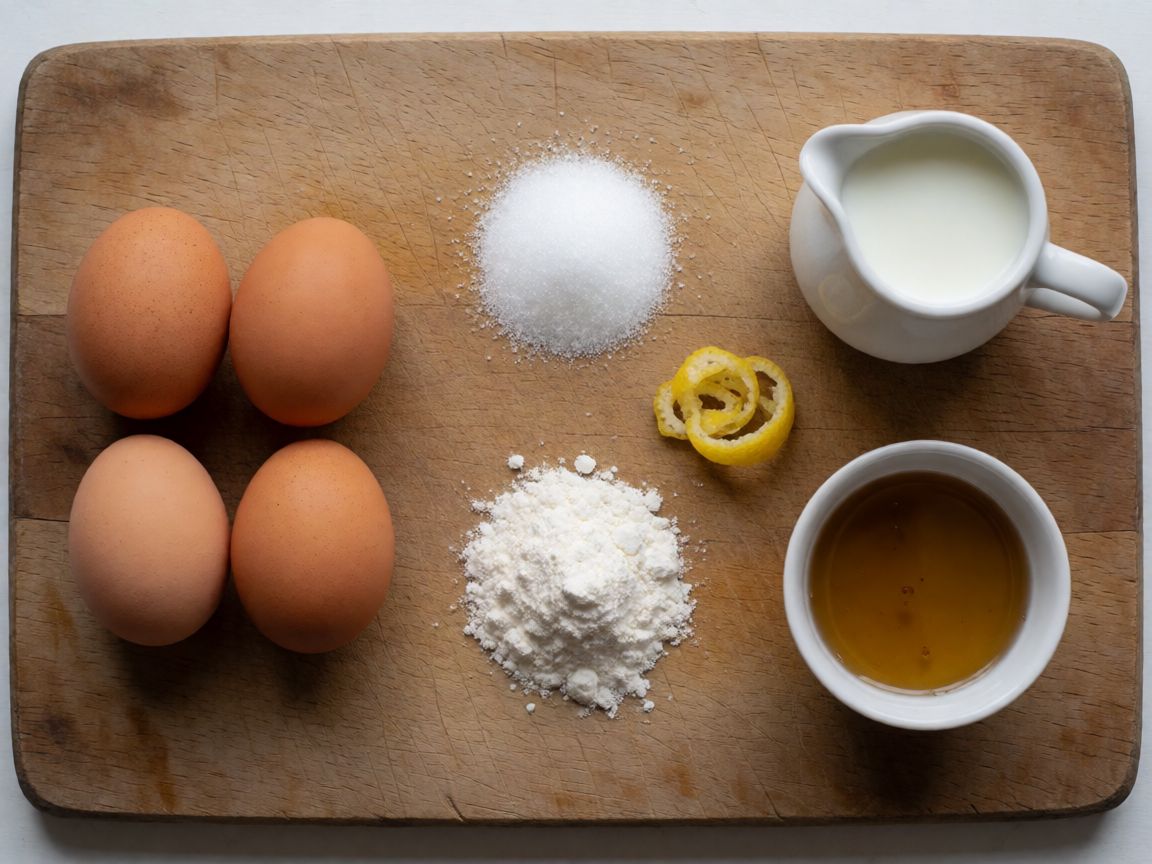
- 4 pcs Eggs
- 80 g Caster sugar
- 350 g Plain flour
- 30 g Milk
- 1 pcs Lemon zest
- 2 tbsp Anise liqueur
- Vegetable oil for frying, to taste






Steps
In a large bowl, break the eggs, add the sugar and lemon zest, and whisk well.
Add the anise liqueur and milk, and stir.
Add the flour and mix until the dough is thick enough to drop slowly from a spoon.
Heat the oil for frying in a pan to the right temperature.
5 minScoop out even-sized pieces of dough with a spoon and carefully drop them into the hot oil.
Fry until golden, then lift the castagnole out with a slotted spoon and place them on a paper towel.
10 minWhile still hot, dust the castagnole with sugar or drizzle with honey.
Castagnole are a carnival sweet — little fried knobs of egg dough, shaped and sized like roasted chestnuts, which is where the name comes from. They belong to the week before Lent, when Italian households used up their eggs, sugar and fat before forty days of fasting. Cheap pantry stuff, dressed up with lemon and a splash of liqueur because it's a feast day, not an ordinary Tuesday.
The whole recipe turns on one sentence you might skim past: mix until the dough drops slowly from the spoon. That's not vague writing, that's the actual specification. Too thin, and the dough spreads the moment it hits the oil, soaks up fat instead of sealing, and you get a greasy puddle instead of a ball. Too thick, and the outside browns long before the inside sets, so you bite into raw flour paste. The flour amount in the recipe is a guide, not a law — eggs vary in size, flour varies in how much liquid it drinks, so you add flour watching the spoon, not the scale.
There's no baking powder here, and that's deliberate, not a gap. Some say castagnole need a raising agent to be light — no, because the lift comes from two other places: the air you beat into the eggs and sugar until they pale and thicken, and the violent little burst of steam each ball gives off the second it touches hot oil. That steam is what pushes the crumb open from inside. A raising agent just makes a different, breadier fritter — fine, but not this one.
Eggs are the structure of this dough, not just binding. Whisked with the sugar until pale and noticeably thicker, they trap the air that later turns to lift in the fryer. Don't skip the whisking time to save a minute — this is the one place patience actually buys you texture, because a half-beaten egg-sugar mix gives a dense, leaden fritter no amount of good oil will fix. Use them at room temperature if you can; cold eggs resist taking in air.
Sugar in the dough is there for flavour and for colour — it helps the crust brown faster, which matters because these fry quickly and you want gold, not pale. Caster sugar dissolves cleanly into the eggs; if you only have granulated, give the whisking longer, because undissolved grains will grit in the batter.
Flour is the only ingredient you measure by eye rather than scale, whatever the recipe says in grams. Plain flour, nothing self-raising — remember, the lift isn't chemical here, and a self-raising flour would throw off the whole balance toward a bready result. Add it gradually and stop at the spoon test, not at 350g if your eggs were on the large side.
Milk is a small adjustment, not a main liquid — just enough to loosen a dough that's gone slightly too stiff after the flour goes in. If you're out of milk, water does the same loosening job; you lose a little richness, nothing structural.
Lemon zest is for fragrance only — use the zest, never the white pith underneath, which is bitter and will sour the whole batch. The anise liqueur (sambuca or anisette are the usual choices) gives castagnole their traditional carnival perfume; the substitution criterion is something with a warm anise note, not sweetness for its own sake — a little fennel-seed-infused warm milk gets you partway there if you've no liqueur in the cupboard, or leave it out and lean harder on the lemon; the dough won't fail without it, it'll just taste plainer.
For the oil, the rule is: anything with no smell of its own — sunflower, groundnut, a light vegetable oil — so the lemon and anise come through in the finished piece instead of fighting a strong-flavoured oil. Olive oil, for this one, is the wrong tool; its own taste crowds the fry. Drain the cooked pieces on a few sheets of ordinary kitchen roll, not a wire rack — the paper actually pulls surface oil off, a rack just lets it sit there. And dust them with sugar while they're still hot: the warmth and the thin film of oil on the surface is what the sugar grips onto, so it stays put rather than sliding off a cooled, dry shell. Honey instead of sugar gives you gloss and a stickier bite — different character, same hot-moment logic for sticking.