
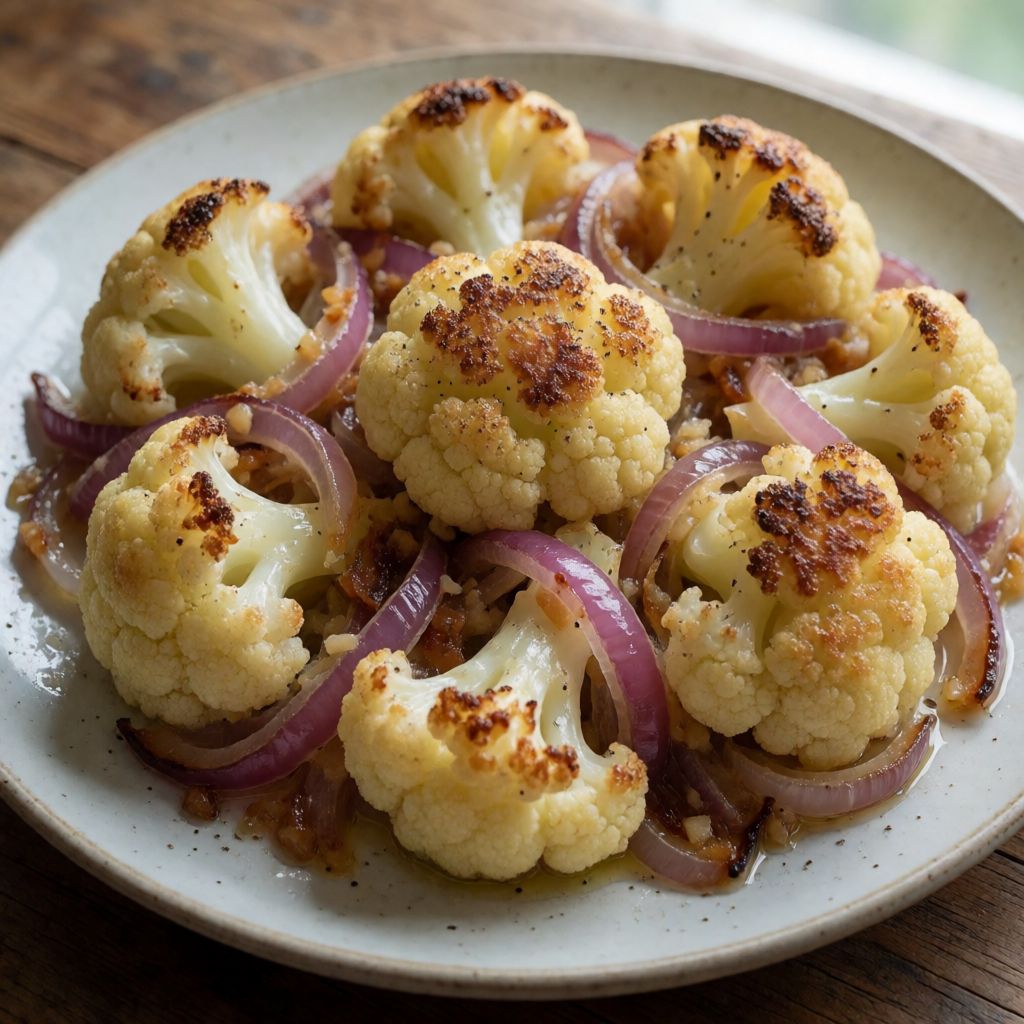
 AI photo
Pan-Roasted Cauliflower Gratin
A simple stovetop cauliflower gratin, finished with crisp breadcrumbs and black olives.
Labels are worked out automatically from the ingredients and can be wrong. Check the packaging if it matters to you.
Ingredients
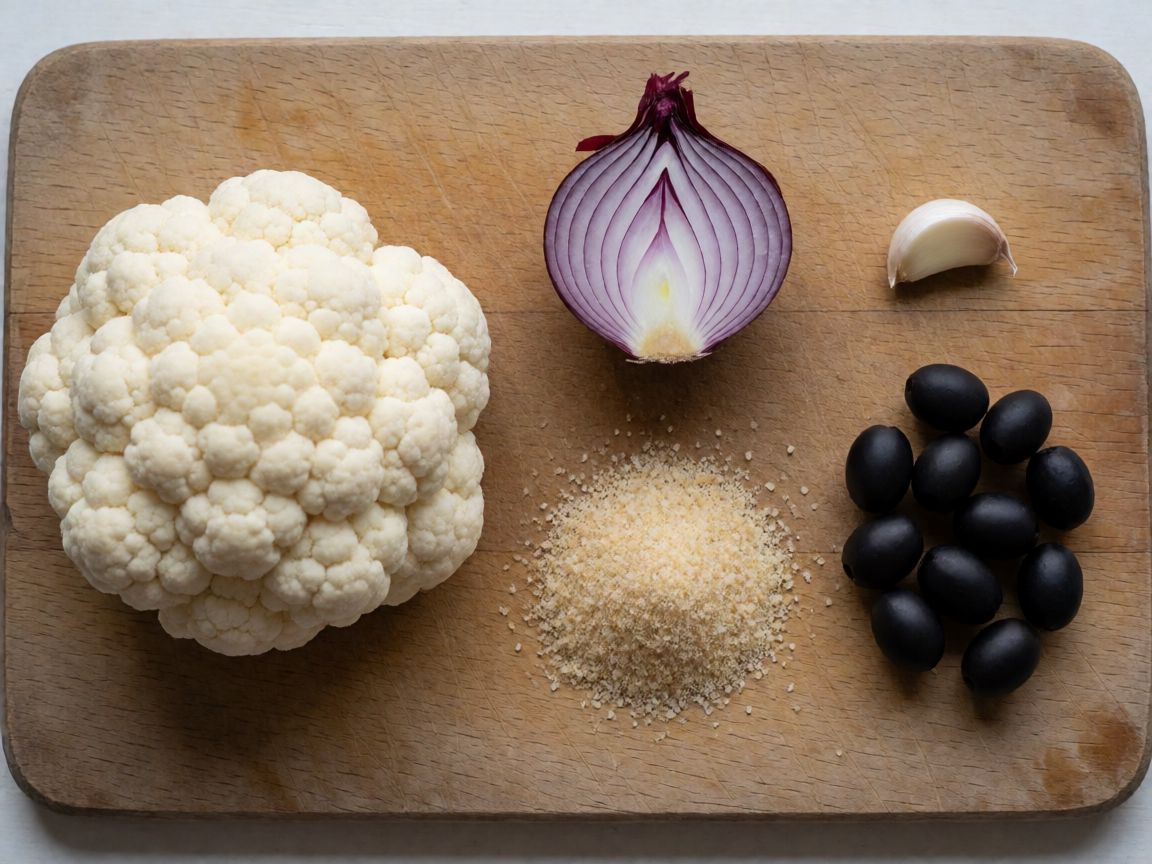
- 1 pcs Cauliflower
- 1/2 pcs Red onion
- 1 clove Garlic
- Olive oil
- Salt
- Black pepper
- 4 tbsp Breadcrumbs dried
- 10 pcs Black olives








Steps
Break the cauliflower into florets, wash well and leave to drain in a colander.
Bring a large pan of salted water to the boil.
Lower the cauliflower florets into the boiling water.
Cook for about 15 minutes, then drain, keeping some of the cooking water.
15 minFinely chop the onion and garlic with a knife.
Put the onion and garlic into a frying pan with 4 tbsp olive oil.
Fry over high heat for a few minutes, then add a couple of ladles of the cooking water.
Let the liquid evaporate over high heat.
Add the cauliflower florets, pour over a ladle of cooking water, season with salt and pepper to taste.
Add the black olives, sliced into rounds. Cover with a lid and reduce the heat to low.
In a small frying pan, pour in 1 tbsp olive oil, add the breadcrumbs and toast over high heat, stirring often.
When the cauliflower has absorbed all the liquid, remove the lid and sprinkle with the toasted breadcrumbs.
Season with salt if needed and serve hot.
Despite the name, there is no oven and no cheese here. "Gratin" is doing honest work in reverse — it describes the crust, and the crust comes from toasted breadcrumbs thrown on at the end, not from browning under heat. What you actually have is boiled cauliflower finished in a flavoured liquid until it drinks it dry, then dusted with a crunchy topping fried separately in its own small pan. Two pans, two jobs: one braises, one toasts. Don't try to merge them — breadcrumbs dropped into wet cauliflower turn to paste, and paste was never the point.
What decides whether this works is not the boiling, it's the evaporating. Twice you're told to let liquid reduce over high heat before adding more — once with the onion and garlic, once at the very end under the lid. That's the whole mechanism: you're not stewing cauliflower in water, you're building a thin savoury coating around it by letting water leave and flavour stay. Skip that patience and you get wet, bland florets sitting in grey soup. Give it that patience and the cauliflower ends up seasoned all the way through, because it absorbed what it's cooking in rather than just sitting next to it.
Some say cauliflower should always go in whole and be cut after boiling, to "keep it from getting watery." No — the opposite problem is the real one: whole, it cooks unevenly, mushy on the outside before the core gives. Florets of similar size cook at the same rate, and a bit of surface area is exactly what lets them soak up the onion-garlic-olive liquid later. That's not a flaw to guard against, that's the plan.
Cauliflower itself needs no scrutiny beyond freshness — tight white curd, no grey patches, leaves still a bit crisp at the base if they're attached. It's blanched hard here, properly boiled, not steamed to "retain nutrients" as some kitchens insist. You want it soft enough to take on the pan liquid afterwards, bend don't snap, because a cauliflower that's still assertively crunchy won't absorb anything in step 9 — it'll just sit there being crunchy and dry at once, which is the worst of both.
Red onion isn't negotiable for colour reasons alone; it's milder raw-sharp than white or yellow, and since it only gets a few minutes of high heat before liquid goes in, it doesn't have time to mellow the way a long-cooked onion does. If you've only got a white onion, fine — give it slightly longer before the water goes in, because you're compensating for sharper raw bite with more cooked-out bite.
The cooking water you keep back isn't a garnish, it's the entire sauce of the dish. It's salted, it's carrying starch off the cauliflower, and it already smells of the vegetable you're cooking — using tap water instead would mean starting flavour from zero at every addition. This is the same economy behind keeping pasta water: don't throw away a liquid you've already paid to season and flavour.
Olive oil is specified because it's traditionally what this dish is built on — Mediterranean, modest ingredients, built from pantry and garden. But the rule for substitution is about behaviour, not origin: any oil that doesn't fight the olives and garlic for attention works, so a neutral vegetable oil is fine, a heavily flavoured one (sesame, truffle-infused anything) is not, because it'll argue with the dish instead of carrying it.
Black olives sliced into rounds are there for salt and a faint bitterness that cuts the softness of boiled cauliflower — they're not decoration, they're the one note of resistance in a dish that's otherwise entirely soft and absorbed. If you dislike olives outright, you're better served dropping them than replacing them with something sweet or crunchy that changes the character; a few capers would at least keep the same job — salt, sharpness, small and scattered.
The breadcrumbs toasted separately in their own tablespoon of oil are the only textural contrast in the whole dish, and that's exactly why they're kept apart until serving. Toast them until they go from pale to the colour of light toast itself, stirring so they don't catch unevenly in the one-or-two hot spots every domestic hob has — a thin pan heats unevenly at the edges, and breadcrumbs left still a moment too long will tell you about it in bitter patches. Dried breadcrumbs, not fresh — fresh ones have moisture to cook off first and will steam before they toast, by which point the oil's already burnt.