
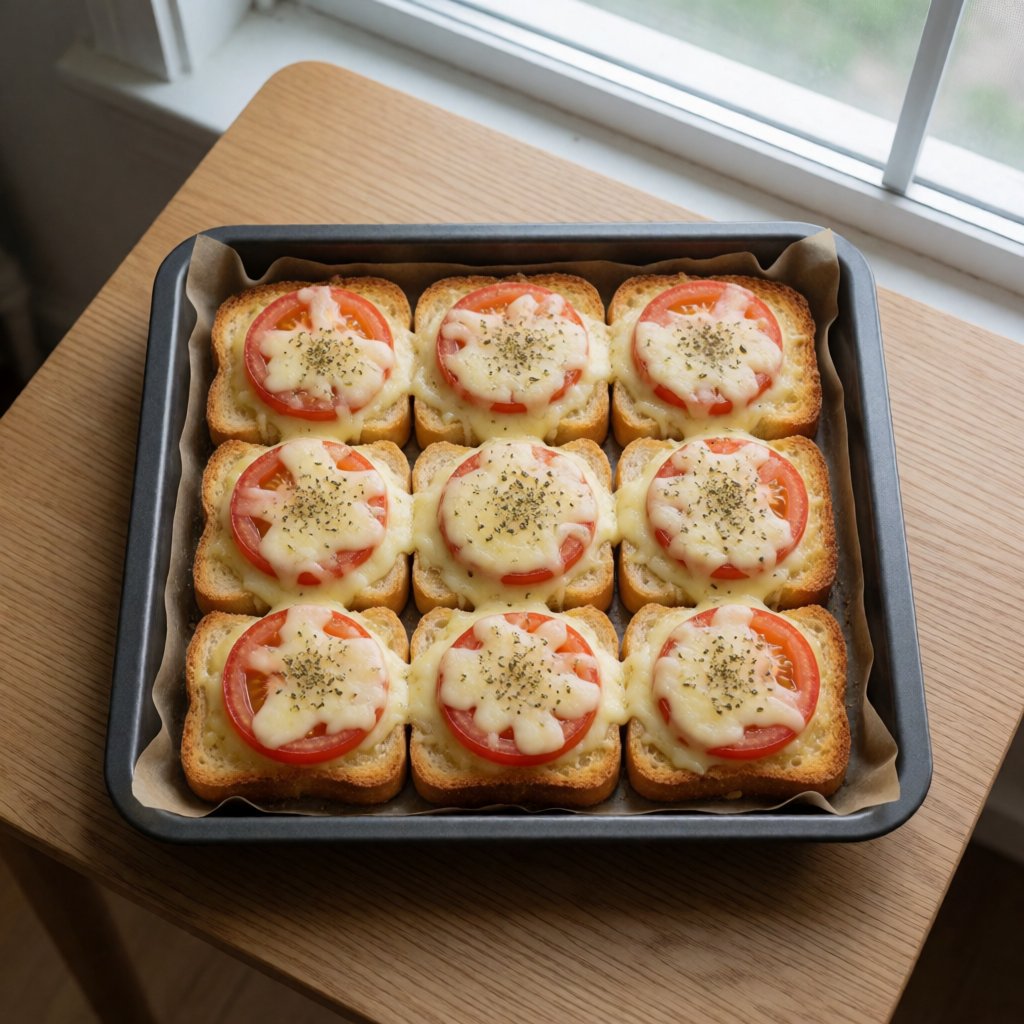
 AI photo
Cheese and Tomato on Toast
A quick, simple cheese toast with tomato, grated cheese and butter, baked until the cheese melts.
Labels are worked out automatically from the ingredients and can be wrong. Check the packaging if it matters to you.
Ingredients
- 4 pcs Sliced bread
- 80 g Mature cheddar grated
- 1 pcs Tomato sliced
- 10 g Butter
- 1 pinch Oregano to taste




Steps
Lightly butter the bread, then top with tomato slices and grated cheddar.
Sprinkle with oregano and place on a baking tray lined with parchment paper.
Put the tray in the oven at 200°C for 10–15 minutes, until the cheese has melted.
15 minRemove the tray from the oven.
What was changed
The hard cheese has been swapped for Mature cheddar, the type most commonly used for this dish in UK kitchens.
This is not complicated, but it is two things happening to one slice at once, and that's where it lives or dies. From below, the tray's heat is drying and crisping the bread. From above, the oven's heat is melting cheese and coaxing water out of the tomato. If you rush either side, you get a soft, pale slice with rubbery cheese on top — not toast with a topping, just warm bread with cheese sitting on it like a hat it doesn't want to wear.
The butter under the toppings is not there for taste, though it adds some. It is a barrier. Tomato, once it meets heat, weeps its water, and bread is basically a sponge for that water. Butter it first, and the fat forms a thin seal the juice can't soak through as fast — the bread stays structured underneath while the top goes soft and melted. Skip it, and fifteen minutes in a hot oven is long enough for the underside to go damp and sad, no matter how good the cheese on top looks.
Some say any cheese melts the same, you just need heat. No — moisture and fat decide what happens. A cheese with more fat and less water, like a mature cheddar, melts into itself and starts to brown and blister a little at the edges where it meets the hot tray. A younger, wetter cheddar mostly just softens and sweats, stays pale, and you end up with a slick rather than a melt. Mature cheddar is specified here for exactly this reason — it's doing a job, not decoration.
Bread: four slices, sliced white or a basic wholemeal from the bag — this dish was built around using up ordinary sliced bread, not artisan sourdough. A denser, more open-crumbed bread actually works against you here, because it has more surface to absorb tomato juice and less structure to resist going soggy. Humble sliced bread, slightly dry even, is the right tool, not a compromise.
Butter: just enough to cover the surface, not a thick spread — 10g for four slices is a scrape, not a layer. Its job, as said, is to waterproof the bread before the tomato's juice goes looking for somewhere to go. If you're out of butter, any fat that can sit as a thin solid-ish film works on the same principle — a light smear of margarine, even a very thin film of oil brushed on, though oil won't give you quite the same seal because it doesn't set the way butter does when it cools slightly before the tray goes in.
Cheddar: mature, grated, 80g for four slices — not a lot, but enough once it melts and spreads to cover. The reason mature cheddar works and mild doesn't is water content and acidity: ageing drives moisture out and breaks down protein structure, so the cheese melts more freely and takes on colour instead of just going rubbery. If you want a substitute, look for the same profile rather than the same name — a firm, lower-moisture cheese that's been aged, like a red Leicester or a strong Gruyère. Avoid fresh, wet cheeses on their own here (mozzarella, for instance) — they'll melt, but they won't brown, and you lose the contrast that makes this worth doing in the oven rather than just under a grill for two minutes.
Tomato: one, sliced, is deliberately modest. This isn't a tomato dish with cheese on it — it's cheese on toast with tomato for moisture and acid cutting through the fat. Too many slices, or very ripe, watery tomato, and you're fighting the butter's barrier with more water than it can hold off for fifteen minutes in a hot oven. If tomatoes are out of season and mealy, you're better off using fewer, thinner slices than compensating with more.
Oregano: a pinch, added dry before baking, not after. Dried herbs carry their aroma in oils that need heat to release — sprinkle it on raw cheese and let the oven do the work, rather than dusting it on at the end where it just sits on the surface, dry and a bit bitter, doing nothing.
There's no kazan logic to defend here and no grandmother's law — this is a short-order kitchen dish, built from what's left in the fridge: end-of-the-loaf bread, a tomato going soft, a cheese wedge nobody finished. Its ancestor is the same thrift that gave Britain Welsh rarebit — cheese stretched over bread because meat was dear and cheese kept. The only real patience required is waiting for the cheese to fully collapse before you pull the tray, and then waiting a minute more before you bite, because molten cheddar holds heat far longer than it looks like it should.
·