
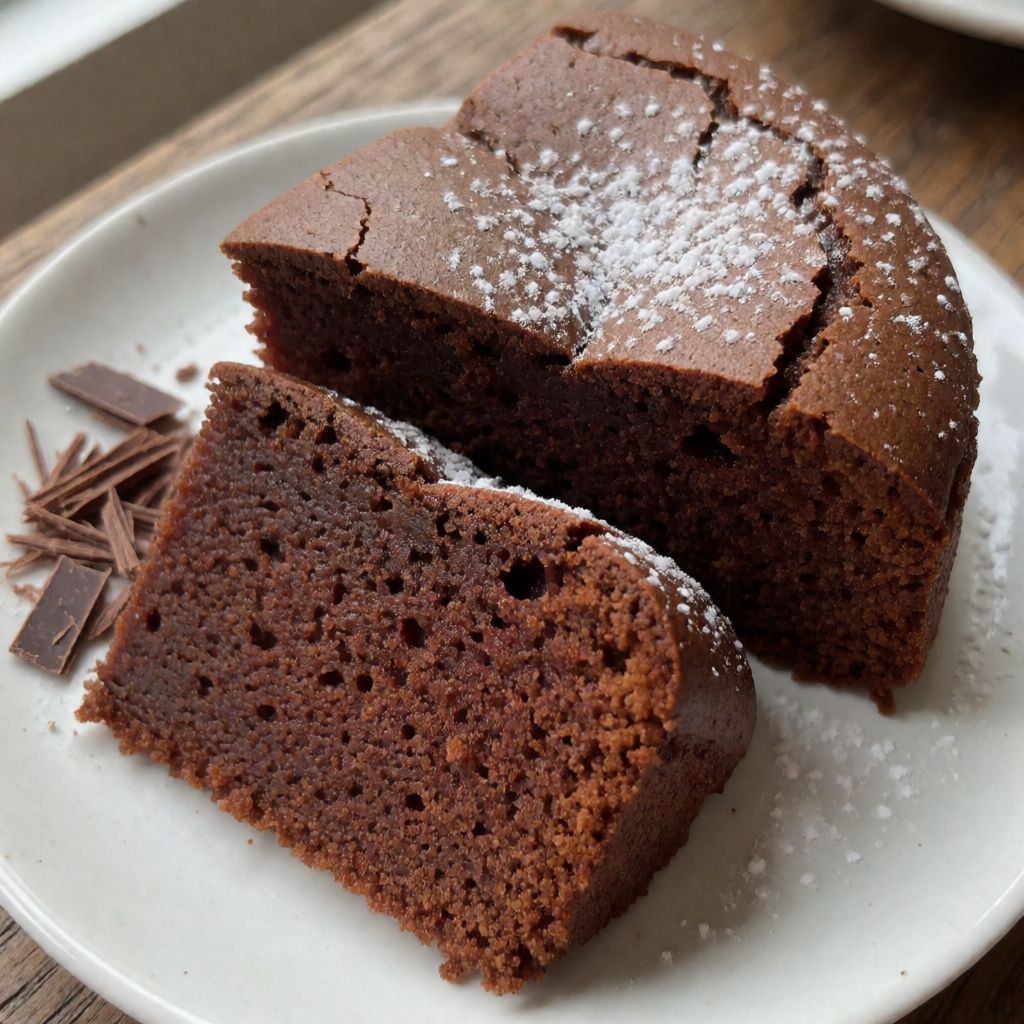
 AI photo
Chestnut Flour and Chocolate Cake
A rich cake made with chestnut flour and dark chocolate, lightly scented with citrus zest.
Labels are worked out automatically from the ingredients and can be wrong. Check the packaging if it matters to you.
Ingredients
- 150 g Plain flour
- 250 g Caster sugar
- 100 g Butter softened
- 4 pcs Eggs
- 150 g Chestnut flour
- 100 g Dark chocolate
- 15 g Baking powder
- Orange zest to taste







Steps
Place the softened butter in a bowl and beat with an electric mixer together with the sugar until smooth and creamy.
Add the eggs one at a time, beating well with the mixer each time so the mixture stays smooth and creamy.
Gradually sift in the flour and baking powder, then fold in the chestnut flour. Mix well until smooth.
Stir in the orange zest for flavour, then pour in the dark chocolate, melted over a double boiler, and mix thoroughly.
Pour the batter into a 22cm tin, greased with butter and dusted with flour.
Bake in a preheated fan oven at 160°C.
65 minRemove the cake from the oven, let it cool, then serve.
What was changed
The oven temperature was rounded to , and the zest ingredient was corrected to Orange zest to match the author's description.
This is a dense, moist cake — closer to a pound cake than a sponge — where half the flour is swapped for chestnut flour, and dark chocolate melted and folded through the batter gives it weight and bitterness against the chestnut's natural sweetness. It's not trying to rise tall and light. It's trying to be rich and close-textured, the way a cake made in a place with no wheat but plenty of chestnut trees would turn out.
What decides whether it works is mostly in the first two steps, before the oven ever gets involved. Beating butter and sugar together isn't just "mixing" — the sugar crystals cut tiny air pockets into the fat, and those pockets are what lift the cake later, when heat expands them. If you just stir butter and sugar until combined, you lose most of that lift and the baking powder has to do all the work alone, which it can't — you get a cake that's flat and a bit tough, not wrong exactly, just smaller than it should be.
Adding the eggs one at a time matters for the same reason, from the other direction. Butter is fat; egg is mostly water. Tip four eggs in at once and you're asking the fat to absorb more water than it can hold in one go — the mixture splits, goes grainy, and you lose some of the air you just worked to get in. One egg at a time, beaten smooth before the next, keeps the emulsion whole.
Chestnut flour is the one ingredient here that isn't a stand-in for something else — there's no clean substitute, because nothing else has its combination of no gluten, natural sweetness, and that faint, smoky, nutty flavour that comes from drying and milling chestnuts rather than wheat. People sometimes treat it as "the gluten-free flour," a straight swap for plain flour cup for cup — no, because it brings its own sugar and its own moisture, and a cake made entirely from it collapses into something closer to a dense pudding. That's why this recipe keeps plain flour alongside it: the plain flour gives some structure, the chestnut flour gives flavour and that slightly damp, fudgy crumb. If you genuinely can't find chestnut flour — it's a specialist item in most UK supermarkets, more likely in an Italian deli or online — ground almonds get you closer than any other substitute, though you lose the particular sweetness and smokiness that's the whole point of using chestnut in the first place.
Butter should be soft enough to leave a dent when you press it, not melted — melted butter won't hold air the way soft butter does, because it's lost the structure that traps bubbles when you beat sugar into it. Take it out of the fridge an hour before, or if you forget, a few seconds in short bursts in the microwave gets you there without tipping into liquid.
The eggs want to be at room temperature too, for the same reason as the butter — cold egg straight from the fridge can shock the butter mixture and make it more likely to split, however carefully you add it. If you've only got fridge-cold eggs, a few minutes in a bowl of warm water sorts that out.
Dark chocolate, melted over a double boiler rather than direct heat or a microwave, is about control. Chocolate scorches and turns grainy the moment it gets too hot, and a pan of simmering water underneath keeps it below that point without you needing to watch a thermometer. Let it cool slightly before folding it in — if it's still hot enough to feel properly warm against your wrist, it can start cooking the eggs already in the batter at the edges where it touches them. Any dark chocolate with 60–70% cocoa works; much higher and the bitterness fights the chestnut rather than balancing it, much lower and you're really adding sugar with a bit of cocoa flavour attached.
Orange zest is there to cut through all that richness — butter, chocolate, chestnut sweetness — with something sharp and bright. Use the zest only, not the pith underneath, because the pith is where the bitterness lives and it's the wrong kind of bitter, nothing like the chocolate's. A vegetable peeler and then a fine chop works if you don't have a dedicated zester.
Baking powder here is doing backup work, not the main lift — that's the point of creaming the butter and sugar properly first. 15g is a fair amount for this quantity of flour, there to make sure the dense chestnut flour doesn't drag the whole thing down flat. Don't be tempted to add more thinking it'll make the cake lighter — too much baking powder gives a soapy, metallic aftertaste, and it won't fix a batter that wasn't creamed properly to begin with.
This makes a 22cm cake, which from this amount of batter will feed six with a reasonably generous slice — small enough that most UK kitchens have a tin for it already, usually the same one used for a Victoria sponge. Let it cool properly in the tin before turning it out; a cake this moist and dense is still setting as it cools, and turning it out hot risks it breaking in the middle where it's still firming up. That's patience as much as any step in the method — the oven's job ends at 65 minutes, but the cake's job doesn't.