
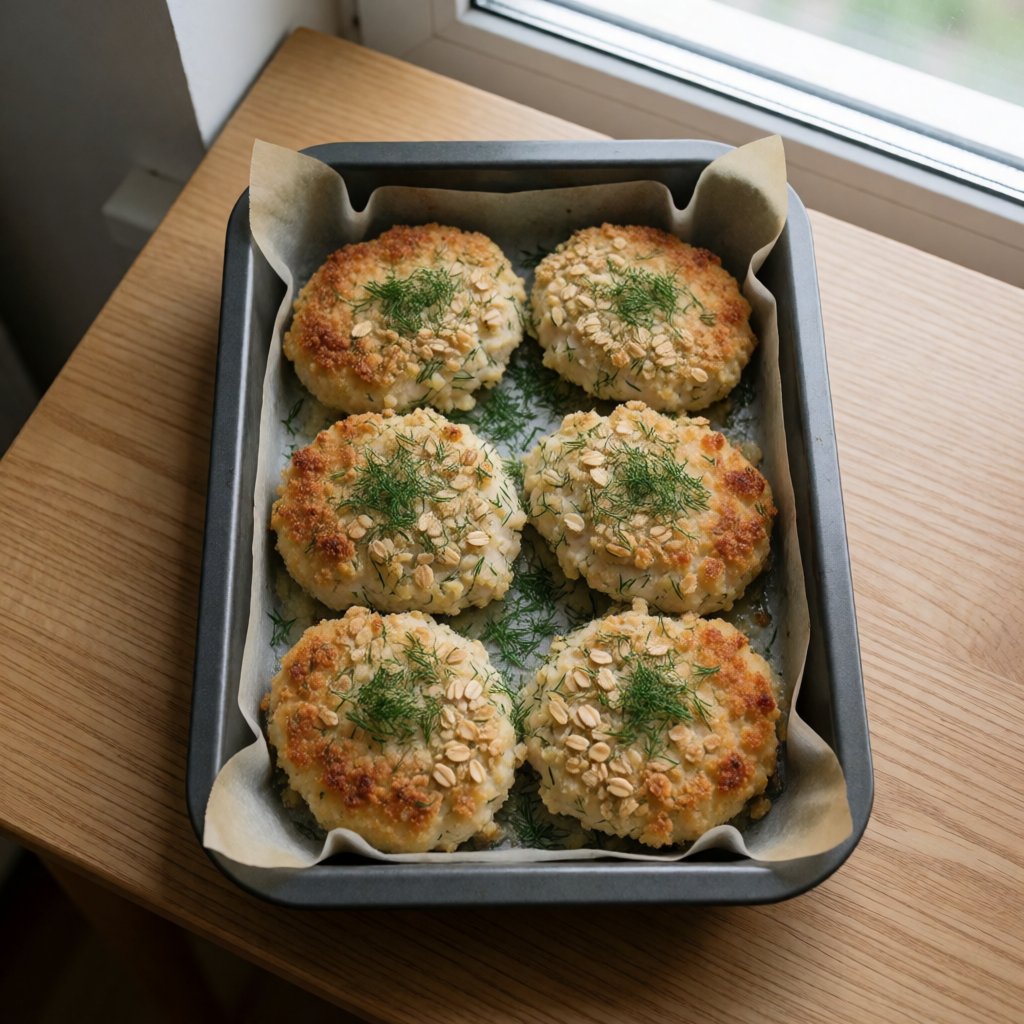
 AI photo
Chicken Patties
Juicy oven-baked chicken patties with oats and dill.
Labels are worked out automatically from the ingredients and can be wrong. Check the packaging if it matters to you.
Ingredients
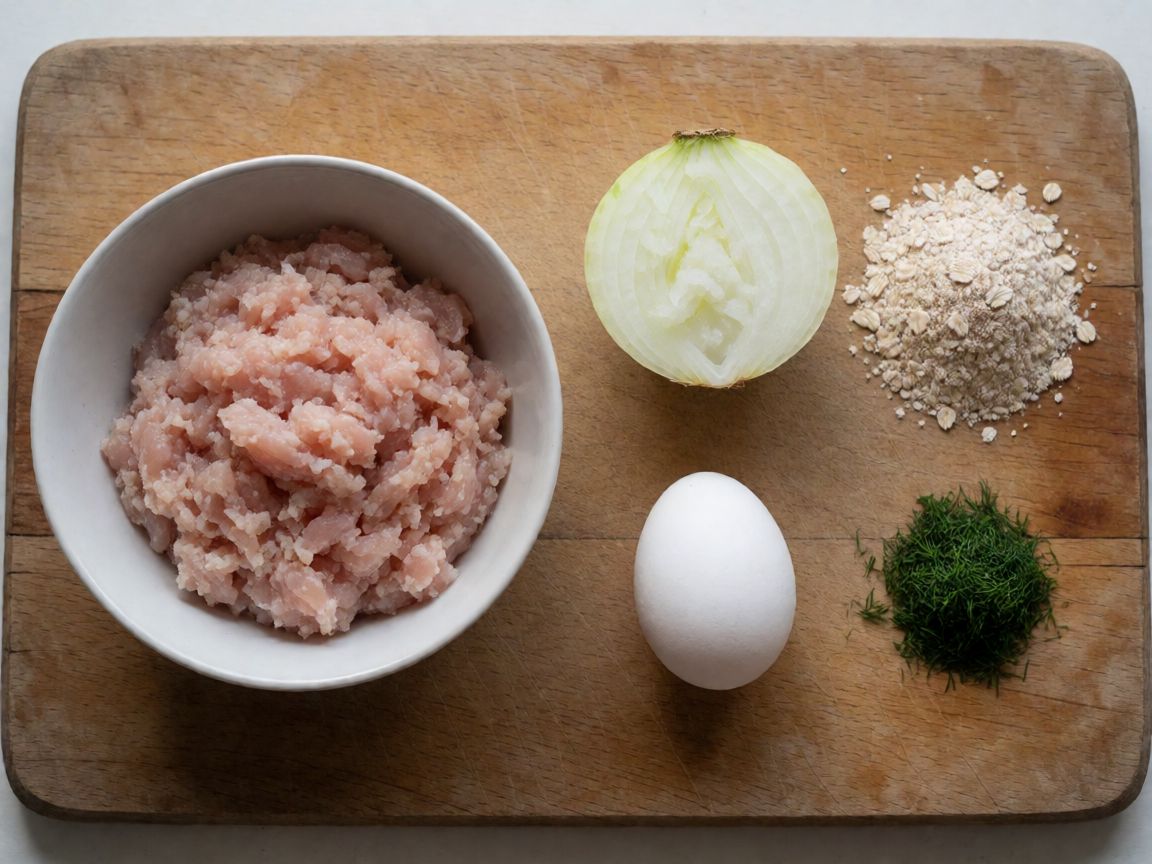
- 400 g Chicken mince
- 0.5 pcs Onion grated
- 1 pcs Egg
- 30 g Oats
- 1 pinch Salt to taste
- 1 pinch Black pepper to taste
- 1 pinch Dill to taste







Steps
Mix everything together, wet your hands, and shape into patties of about 80g each.
Place the patties on a greased baking tray.
Put the tray in the oven at 200°C and bake for 12 minutes.
12 minTurn the patties over after the first 12 minutes, then bake for a further 13 minutes, until they reach 74°C inside.
13 minRemove the tray from the oven.
This is chicken mince held together by egg and swollen oats, baked rather than fried — closer to a British oven bake than a cutlet from a pan. Chicken breast mince has almost no fat of its own, so the whole dish is a fight against dryness, and everything in the method exists to win that fight.
What decides whether it works is not seasoning, it's moisture management and heat control. Grated onion bleeds juice straight into the mince instead of sitting in it as crunchy chunks. Oats don't add flavour — they swell and lock that juice inside the patty so it doesn't run out onto the tray while baking. Egg isn't there to make it rich, it's there to hold the structure together once the proteins set in the heat. Lose any one of these and you get a dry, crumbling puck, not a patty.
The oven does two jobs at once that pull against each other: it has to colour the outside and cook the inside through, and with lean mince those two things don't finish at the same moment by accident. 200°C gives you a surface hot enough to brown before the inside dries out — go lower and you just steam the moisture away with nothing to show for it; go much higher and the outside is leather before the centre is safe to eat.
Chicken mince: choose it with visible fat flecks if you can find it — thigh mince rather than pure breast gives you a margin of error, because that little fat renders and self-bastes the patty from inside, something breast mince can't do for itself. If all you have is lean breast mince, treat the onion and oats as non-negotiable, not optional extras — they're doing the fat's job.
Onion, grated not chopped: the point of grating is that the onion stops being a piece of food and becomes liquid plus pulp, distributed through the whole mix. Chopped onion in a patty this size stays raw-tasting and crunchy, because it never gets hot enough for long enough to cook through — a patty bakes in minutes, not the half hour an onion needs to turn sweet in a pan. Grating solves that by removing the need to cook it at all.
Oats: the substitution rule here is simple — anything dry and starchy that can soak up liquid and swell works. Rolled oats, a slice of stale bread torn fine, a spoonful of cooked rice, even breadcrumbs — the mechanism is the same, a sponge that holds water inside the meat structure instead of letting it leak out onto the tray as the patty firms up. Skip the binder altogether and you'll see exactly why it's there: shrunken, fissured patties and a tray full of liquid that should have stayed inside them.
Egg: one is right for this amount of mince — more and the mix turns sticky and dense, because egg sets firm, and too much of it makes the patty rubbery rather than tender. If you're out of eggs, a spoonful of plain yoghurt or a touch more soaked oats can hold things together, though neither sets as decisively, so handle the shaped patties more gently going onto the tray.
Salt, pepper, dill: fresh dill if you have a windowsill pot or a bunch going slightly tired in the fridge — it wilts into the mince rather than staying as sharp flecks. Dried dill works but is more concentrated, so use less than instinct tells you, a pinch really is a pinch. Season the mix before shaping, not after — mince this lean has almost no juice of its own to carry salt once it's cooked, so it has to go in at the mixing stage or it never reaches the middle.
The greased tray matters for the same reason a non-stick pan matters for an omelette: lean mince has no fat of its own to act as a release agent between meat and metal, and a patty torn in half pulling it off the tray is a patty that dries out faster at the broken edge. Turning once, halfway, is there because a domestic oven's heat usually comes mostly from the top or the back, and a patty sitting still for the whole time browns unevenly and can trap steam underneath where it touches the tray — turning gives both sides a fair shot at the hot air. And give yourself the two or three minutes it takes to shape the patties properly, with wet hands, roughly equal in weight — patience here isn't virtue for its own sake, it's what keeps all of them finishing at the same time instead of some drying out while you wait on the thick one.
·