
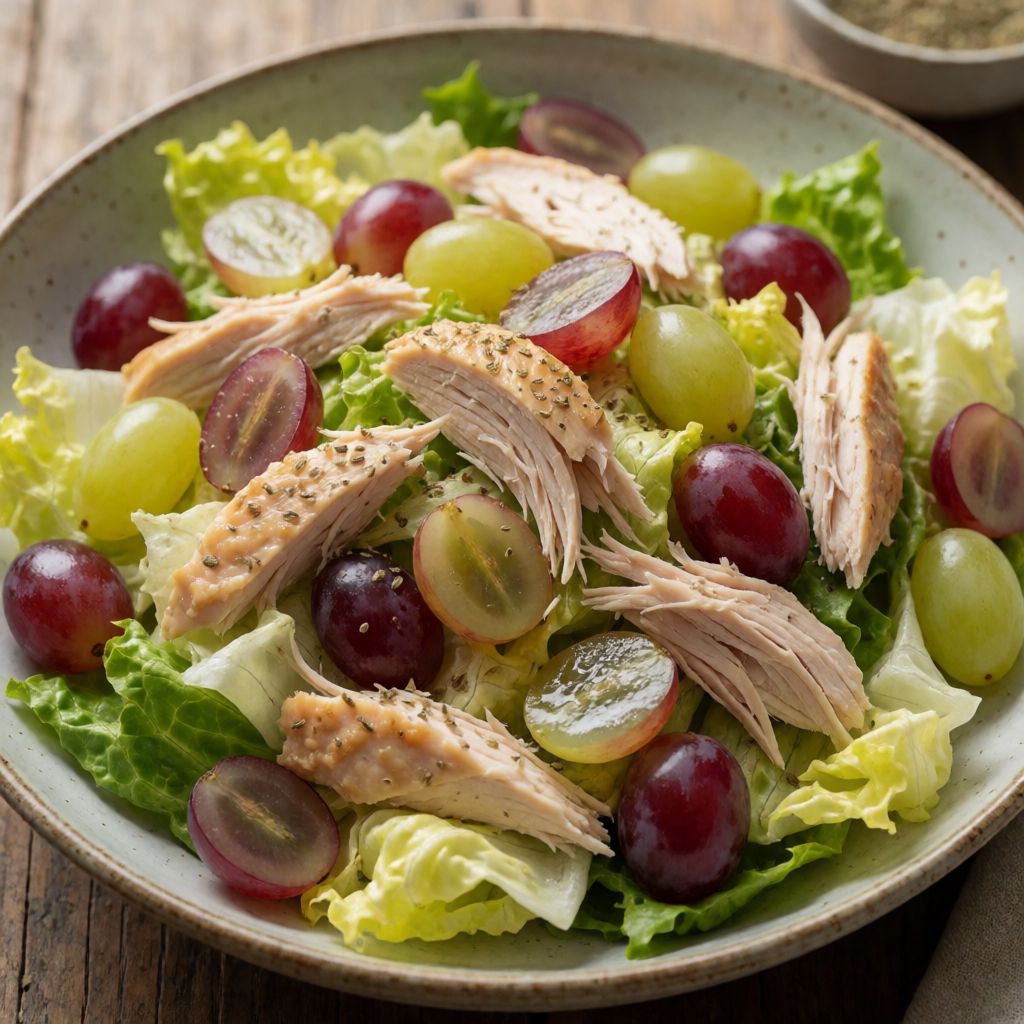
 AI photo
Chicken Salad with Grapes
A light salad of baked chicken wings, fresh grapes and lettuce, finished with lemon juice and a dash of hot sauce.
Ingredients
- 400 g Chicken wings
- 130 g Grapes halved and deseeded
- 80 g Lettuce washed and dried
- 2 pcs Tabasco drops
- 1 pcs Lemon juice fresh
- 1 pcs Oregano chopped
- 1 pcs Parsley fresh
- 2 tbsp Olive oil
- 1 pinch Ground chilli pepper ground, to taste
- 1 pinch Salt









Steps
Mix the olive oil with the chopped oregano and fresh parsley, add a pinch of salt and a little ground chilli pepper.
Place the chicken wings in a baking dish and coat evenly with the prepared mixture. Cover with cling film.
Leave the wings to marinate.
180 minBake the wings in an oven preheated to 200°C, conventional setting.
30 minWash the lettuce, dry it and cut it up.
Put the lettuce into a salad bowl, add the grapes, halved and deseeded.
Cut the baked wings into small pieces.
Add the chicken to the salad, mix with a spoon and dress with fresh lemon juice.
Add a few drops of Tabasco, mix once more and serve the salad.
This is not really a salad, it is a salad that owes its character to a roast. The leaves and grapes are cold and crisp, the chicken is hot and just off the bone, and the whole thing works only because you keep those two temperatures apart until the very last minute. Toss the lettuce with hot wings and sit them together too long, and the leaves go limp and the grapes turn into little puddles. Keep them separate until serving, and you get crunch against give, cold against hot, sweet against sharp — that contrast is the dish, not an accident of plating.
What decides whether it works is the skin on the wings. You want it rendered and a little blistered, not pale and rubbery, because a flabby wing skin brings nothing but fat to a salad that is otherwise lean and bright. The oven does that job through dry, steady heat — 200°C on the conventional setting, not fan, because fan ovens push air and dry the surface faster than the inside can catch up, which on a wing means scorched tips before the joint is cooked through. If your oven only does fan, drop it by about 20°C and watch the skin rather than the clock.
Chicken wings are the right cut here for an economic reason as much as a culinary one. They're cheap because most of what you're paying for is bone and skin, not meat — but that skin-to-meat ratio is exactly what makes them taste of more than a breast does, and in a salad where the chicken has to compete with grapes and herbs for your attention, that's an advantage, not a shortcoming. If you'd rather not fight with small bones at the table, thighs work the same way: skin on, bone in while roasting, cut off the bone after. Boneless breast will leave you with a tidier salad and a blander one.
Grapes with roast chicken isn't a modern salad-bar invention — fruit cutting through roasted fat is an old habit, the same logic behind apple with pork or apricots with lamb. The sugar and acid in the grape do what the lemon does a second time: they stop the dish being just "meat and leaves." Halve and deseed them not for looks but so a mouthful doesn't come with an unexpected pip, and so the cut surface releases a little juice into the dressing rather than staying sealed in its own skin.
Olive oil is doing two jobs in the marinade — carrying the herbs onto the chicken's surface, and helping the skin brown rather than just dry out in the oven. Here the oil's own taste matters, so don't reach for a neutral one; a plain, everyday olive oil is enough, you don't need the expensive bottle for something that's going into a 200°C oven anyway, since heat flattens a lot of what you'd pay extra for.
Oregano and parsley together give you two different kinds of green note — oregano resinous and a bit peppery, holding its own against heat; parsley fresh and grassy, best added raw or near the end so it doesn't just disappear. If you're out of fresh oregano, dried will do, use less of it, since drying concentrates it. Parsley has no good dried substitute worth the name — leave it out rather than fake it with the jar.
Tabasco and a pinch of ground chilli are two different kinds of heat doing two different jobs: the chilli sits in the marinade and cooks into the skin, a background warmth; the Tabasco goes on raw at the end, sharp and vinegary, waking the dish up rather than warming it through. Drops, not a pour — you're after a flicker on the tongue, not a burn that drowns the grape.
For the lettuce, the only real criterion is that it has enough body to survive being tossed with warm chicken without collapsing — a crisp cos or a sturdy leaf lettuce, washed properly and dried properly, because wet leaves water down the dressing and nobody wants a puddle at the bottom of the bowl. And give the wings their three hours if you can; this isn't a dish you can rush by turning the oven up, because what the time buys you — salt and herb settling into the skin — simply doesn't happen faster under more heat, only burns faster instead.