Vegetables
Lettuce
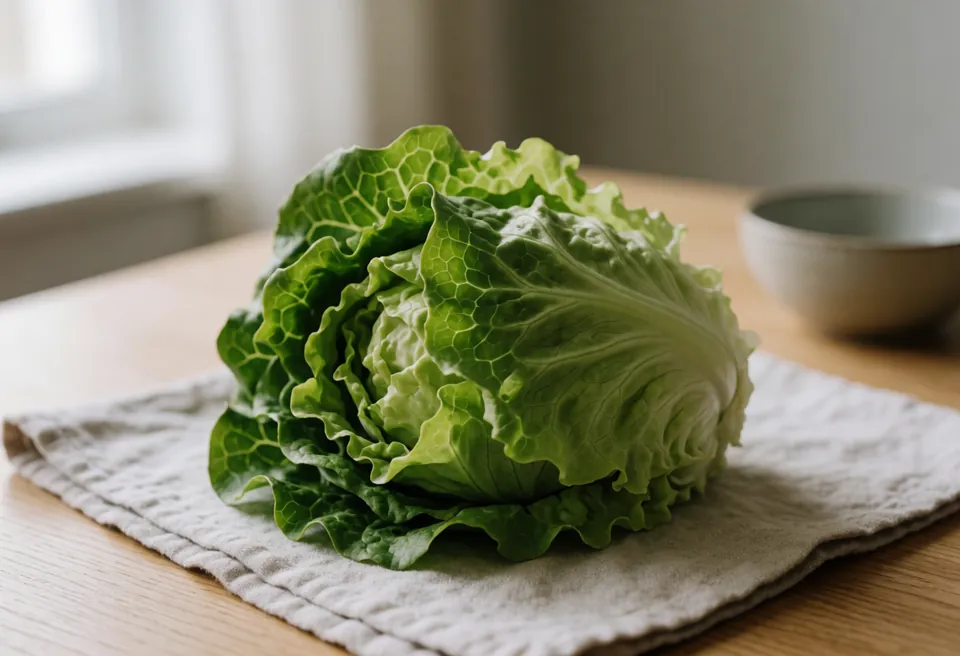
Leaf lettuce is a crisp, juicy green usually eaten raw. It forms the base of salads and is also used as a wrap or sandwich topping.
22 kcal per 100 g
Nutrition per 100 g
22 kcal
| Protein | 1.1 g |
|---|---|
| Fat | 0.2 g |
| Carbs | 4.1 g |
Source: USDA FoodData Central, 2026-09-21. Per 100 g raw (per USDA FDC).
Good to know: Lettuce
Lettuce is mostly water held inside crisp cells, and that water is exactly why it behaves the way it does in your kitchen. Cut it and leave it sitting in a warm bowl, and the cells start losing their grip — the leaf goes limp, because it loses water. Keep it cold, keep it whole, and it stays crisp much longer. You'll know it's still good if it snaps a little instead of bending.
Choosing it is a matter of your eyes and your hands, not formulas. Look for leaves that stand up on their own, no sagging. Press gently — a good leaf snaps a little, like fresh celery. The cut at the stem should look clean and pale, not brown and weeping. Smell it: fresh lettuce smells of nothing much but green and water; a sour or muddy smell means it's turning.
Now, some people say you should wash lettuce and chop it well in advance, to save time before guests arrive. No! Cut leaves lose their bounce and the edges start to darken, even in the fridge, if you leave them too long. That mistake gives you a sad, soggy salad instead of the crunch you paid for. Wash it, yes — but tear or cut it only right before it goes on the plate, dressing last of all.