
 AI photo
Green Salad with Pear and Parmesan Dressing
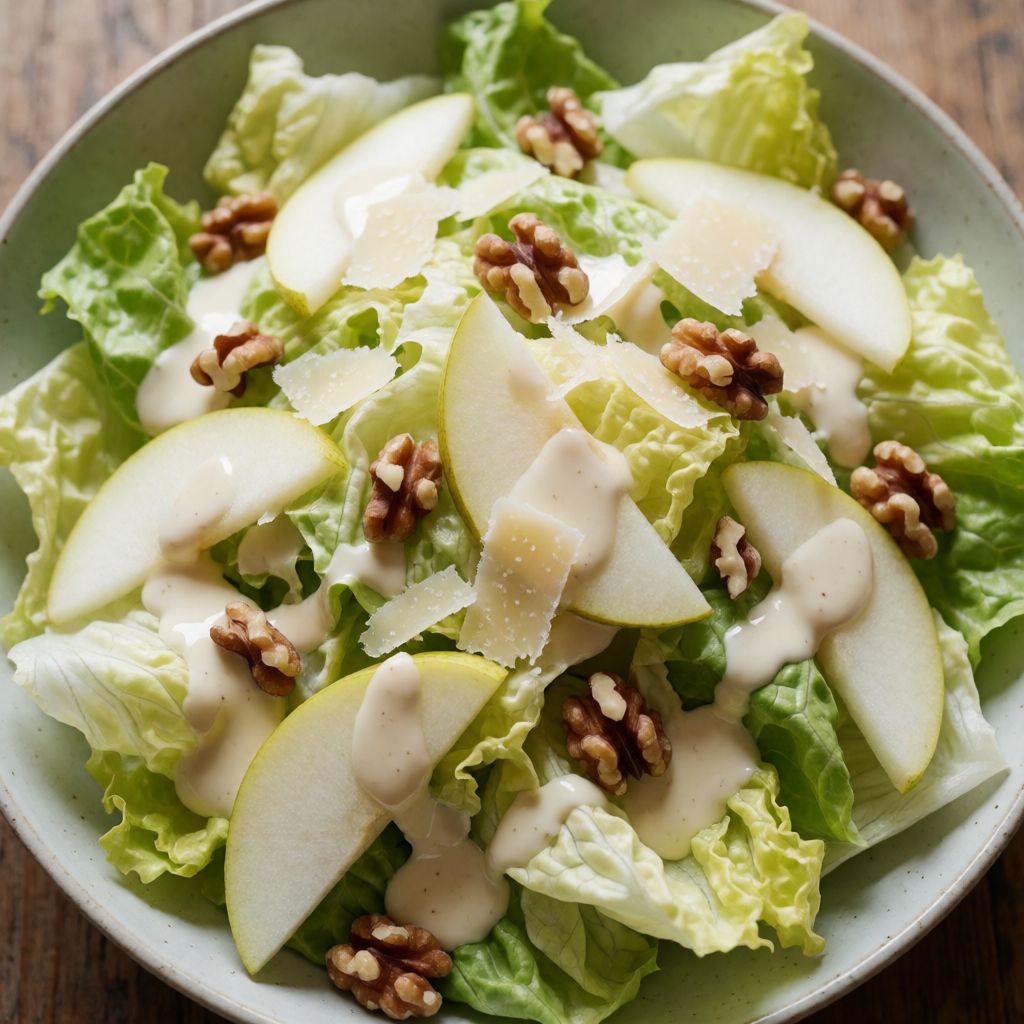
A fresh green salad with sliced pear, toasted walnuts and a creamy Parmesan dressing.
Labels are worked out automatically from the ingredients and can be wrong. Check the packaging if it matters to you.
Ingredients
- 200 g Lettuce
- 2 pcs Pear thinly sliced or diced
- 50 g Walnuts
- 25 g Parmesan shaved
- 100 ml Crème fraîche
- 50 g Parmesan freshly grated
- 1 tsp Pesto
- 1 tbsp Mayonnaise
- 0.5 pcs Lemon juice and zest, organic
- Salt to taste
- Black pepper freshly ground, to taste










Steps
Make the Parmesan dressing: mix the crème fraîche, Parmesan, pesto and mayonnaise. Season with salt, pepper, lemon zest and lemon juice.
Toast the walnuts in a pan over medium heat, just warming them through.
Toss half the salad with the dressing and arrange on a plate. Scatter the remaining salad, pear and walnuts on top.
This is a leaf salad carrying a cream-cheese dressing, not swimming in one. The whole thing stands or falls on two things: does the dressing cling to the leaf instead of pooling at the bottom of the bowl, and does the leaf still have a bite left when it reaches the fork. Everything else — the pear, the walnuts, the parmesan shavings — is there to interrupt that texture, not to fight it.
That's why only half the lettuce goes into the dressing. Toss everything and you get a uniform wet salad, pleasant for about four bites and then tedious. Toss half, scatter the rest dry on top with the pear and nuts, and you get both states in one plate — coated and bare, soft and crisp, side by side. It's a simple trick, and it's the whole point of step three.
The walnuts get a line that reads "medium heat" and that line lies a little if you take it as toasting-to-brown. Some say warm the nuts until they colour — no, because walnut meat is mostly oil, and its skin is thin and bitter; push past warm and that oil turns rancid-bitter before the nut looks done at all. You're not browning anything. You're waking the oil up. The cue is smell, not colour: when the pan starts smelling of walnut oil, stop.
The pear's job is to cut through the cream and cheese with something wet and faintly sweet, raw. For that it has to stay firm — a ripe, soft pear turns to mush against warm cream and disappears instead of contrasting. Bite it before you slice it; if it gives easily, it's past the point of being useful here, and you're better off eating it on its own and buying a firmer one for the bowl.
Look at the dressing as four jobs, not four ingredients. Crème fraîche brings fat and tang without eggs — it's cultured, so it's already slightly sour, which means you need less lemon than you'd think to wake it up. Mayonnaise brings the egg-emulsified cling that crème fraîche alone doesn't have; it's what makes the dressing sit on a leaf instead of running off it. Pesto is a shortcut — garlic, basil, pine nut, oil, already broken down and balanced, so you're not chopping three things to get one flavour. And the grated parmesan isn't there for more cheese flavour exactly — it's there for glutamate, the savoury pull that makes the whole dressing taste like more than the sum of cream and oil. Build it in that order — cream and cheese first, pesto and mayo folded in, zest and juice last — and let it sit a minute before you touch the leaves. The zest needs a moment for its oil to bleed into the fat; add the lemon and toss straight away and you taste rind, not citrus.
If you don't have crème fraîche — and not every British fridge keeps it — the test for a substitute is simple: does it have enough fat to carry flavour and enough acidity to need less lemon. Soured cream does both. Thick Greek yoghurt does the acidity but not the fat, so cut it with a spoon of double cream or it'll taste thin and chalky against the cheese.
Pesto is the same logic: any oil-based paste built on garlic and a strong herb will do the job a jarred basil pesto does. Homemade coriander or parsley pesto works, wild garlic in spring works, even a spoon of tapenade will pull the dressing in a different but equally sound direction. Just taste before you add salt separately — jarred pesto is often salted hard already, and parmesan on top of that is a second dose you don't need.
Lettuce is a structural choice, not a flavour one. You want a leaf with a rib — romaine, little gem, cos — something that holds its shape under a spoonful of cream instead of collapsing into a wet sheet the way butterhead or baby spinach will. Soft leaves wilt the moment salt and acid touch them, because salt draws water out of the cell walls by osmosis; a ribbed leaf has more structure to lose before it goes limp, which buys you the time between dressing and eating that this salad needs.
Walnuts should taste of nothing but walnut — if they taste faintly of old paint or cardboard, that's rancidity, not a seasoning problem, and no amount of pan-warming fixes it. Buy them loose where you can smell the bag, not sealed for months on a shelf.
This is a salad built for a kitchen with a jar of crème fraîche and a jar of pesto already in the fridge, which by now describes most flats in Britain — both became supermarket staples decades ago, imported habits that stayed. It earns its place next to a Sunday roast for exactly that reason: it's quick, and it's sharp enough — lemon, parmesan, raw leaf — to cut against gravy and roast potatoes instead of adding to the weight of the plate. Patience here isn't about the clock; it's about not rushing the dressing onto the leaf before the zest has had its minute, and not rushing the walnuts past warm into bitter.