
 AI photo
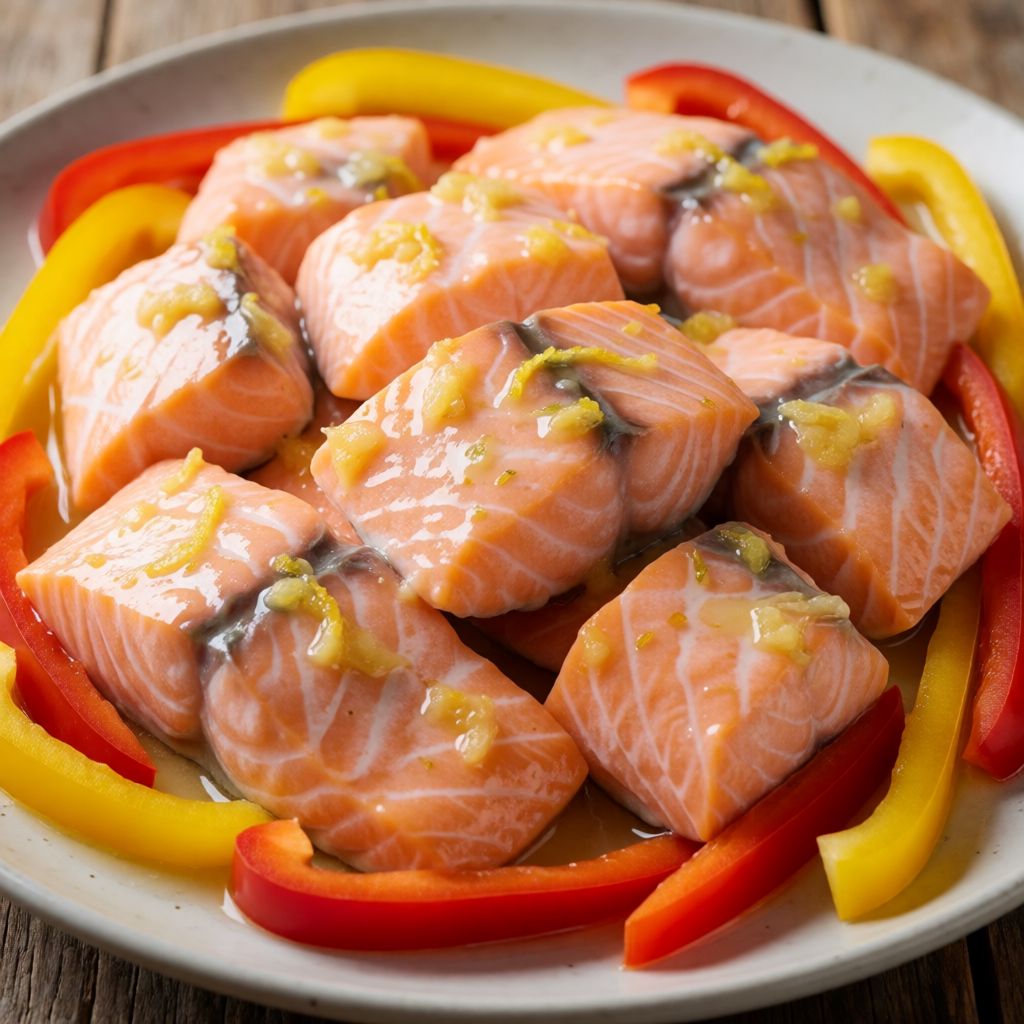
Citrus-Marinated Salmon
A fresh salmon marinated in citrus juice, ginger and soy sauce, served with lettuce and black olives.
Labels are worked out automatically from the ingredients and can be wrong. Check the packaging if it matters to you.
Ingredients
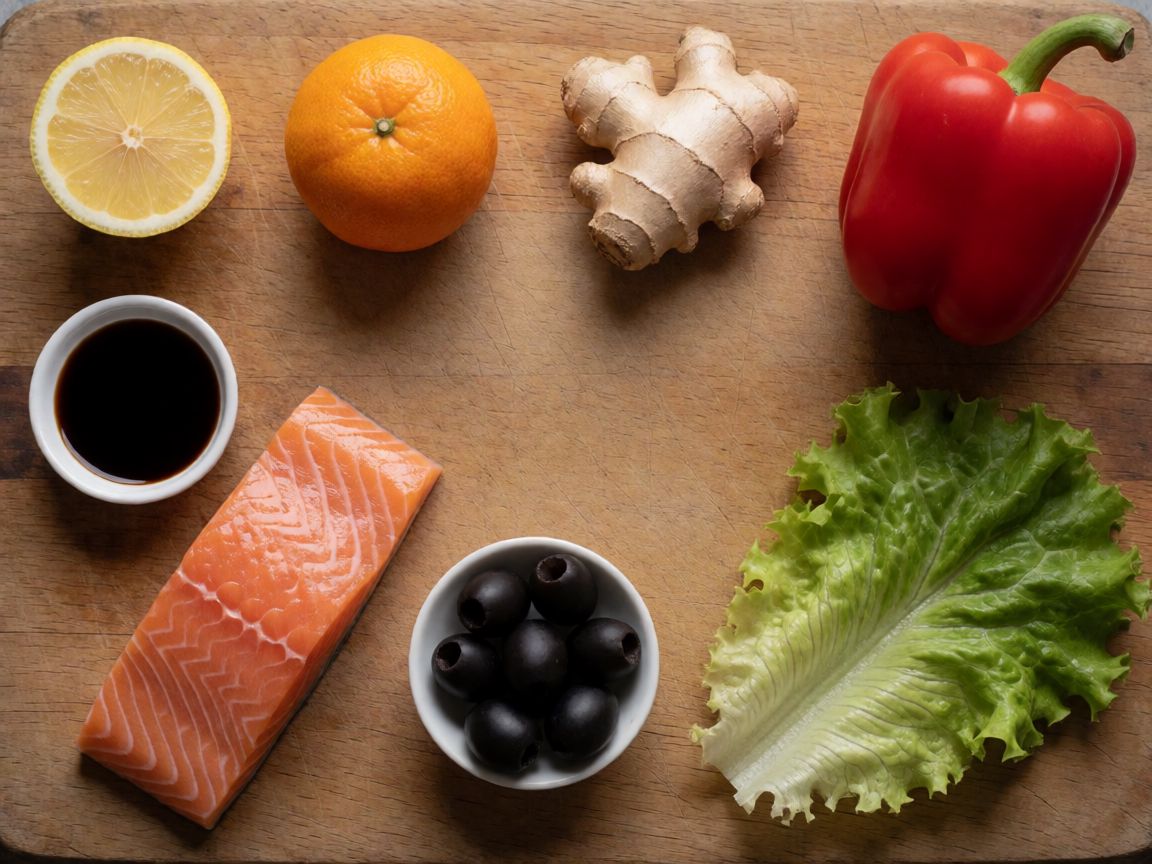
- 300 g Salmon
- 1 pcs Lemon
- 2 pcs Clementine
- 1 pcs Ginger grated
- Salt to taste
- Green peppercorns to taste
- Soy sauce to taste
- Black olives to taste
- Lettuce leaves to taste









Steps
Prepare a marinade from the citrus juice and grated ginger (a garlic press is handy for the ginger).
Add the salt, green peppercorns, soy sauce, and, if you like, a pinch of sugar for a light sweet-and-sour taste.
Place the salmon slices in the marinade and leave in the fridge for at least 1 hour.
60 minBefore serving, add the lettuce leaves and the black olives, sliced into rings.
This isn't a cooked dish, and it isn't quite a raw one either — it sits in the gap between the two. Citrus juice does the job heat usually does: it denatures the proteins in the salmon flesh, so the translucent orange-pink turns matte and the texture firms up. Slower than a pan, gentler than a grill, but the same chemistry. That's what "marinating" means here — not seasoning the fish, cooking it.
What decides whether it works is the thickness of your slices. Acid moves inward from the surface exactly the way heat does. Cut too thick, and after your hour in the fridge the edges are firm while the middle is still glassy and raw — that's not a marinating failure, it's a knife failure. Thin, even slices, close to the thickness you'd expect from smoked salmon, let the hour do a complete job end to end.
Some say citrus juice "cooks" raw fish safely, full stop. No — it changes texture and taste, not microbiology. Lemon doesn't kill parasites the way a proper deep freeze does. The safety step happens before the fish reaches your kitchen: you need salmon that's been frozen for raw eating, which any fishmonger selling fish "for raw consumption" has already done. The marinating hour is about the dish, not about safety.
That hour is a floor, not a target. Longer in the fridge pushes the flesh further toward a firm, fully "cooked" bite all the way through — some people like three or four hours for that. Judge it by looking at a cut piece: when the glassy pink-orange has turned an even, pale, matte colour right through, it's ready, whatever the clock says.
Salmon: ask specifically for fish sold or approved for raw eating — in a UK shop, "sashimi grade" or a straight question to the fishmonger about whether it's been frozen for raw consumption. This is the one place in the whole recipe where getting it wrong costs you more than flavour, so don't skip the question. A fattier cut, or a piece with visible marbling, holds up better here than a very lean one — fat stays supple as the acid works on it, where lean muscle can go rubbery once its proteins seize up without heat to regulate the process gently.
Lemon and clementine aren't doing the same job twice. Lemon supplies the sharp acid that actually changes the fish's texture — the workhorse. Clementine brings sugar and a rounder, gentler acidity so the dish doesn't taste like a vinegar bath. If you've only got lemon, use the pinch of sugar the recipe allows for — you're rebuilding the clementine's job with a blunter tool. Any orange stands in for clementine; it'll just be less sweet, so taste before you commit.
Ginger, grated fresh — a garlic press really is useful here, not a gadget for show — gives sharpness and a faint enzymatic edge that works with the citrus rather than against it. Dried ground ginger is a weak substitute: it tastes dusty and gives up none of the juice that actually carries flavour into the liquid.
Soy sauce gives you salt and savoury depth in one bottle, which is the whole reason to use it rather than salt alone. Taste with it already in before you reach for more salt. Any dark, naturally fermented soy sauce without added sugar works; fish sauce can stand in, used more sparingly, since it's sharper and more concentrated.
Green peppercorns are softer and more aromatic than dried black pepper, with none of the dusty bite pre-ground pepper has once it's sat in a tin a while. In a cold marinade, that staleness has nowhere to hide — there's no heat to cook it into the background. If you can't get green peppercorns, crush whole black ones lightly yourself rather than shaking a pepper tin over the bowl.
Olives and lettuce come in only at the end, after the fridge hour, and that's not an afterthought — they're there for colour, salt and crunch against the fish, not to be marinated themselves. Leave them out of the dish until serving; olives sitting in acid for an hour go soft and dump their own salt unevenly into everything around them. At 300 g of salmon for four, this reads as a starter or a light plate before something heavier follows — not a dish meant to fill a Sunday-roast-sized gap on its own.