
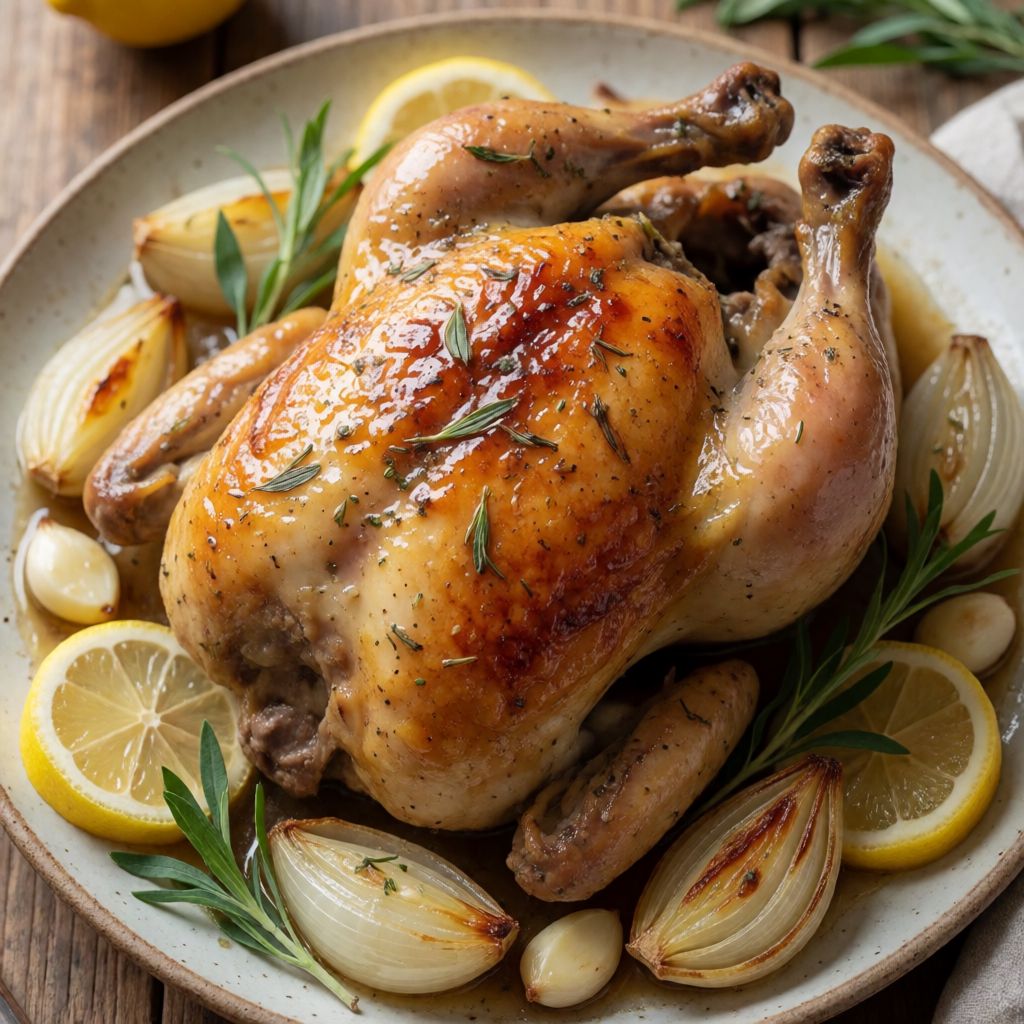
 AI photo
Pot-Roasted Chicken in a Clay Pot
A whole chicken slow-roasted in a clay pot with tarragon butter, lemon, onion and potatoes.
Labels are worked out automatically from the ingredients and can be wrong. Check the packaging if it matters to you.
Ingredients
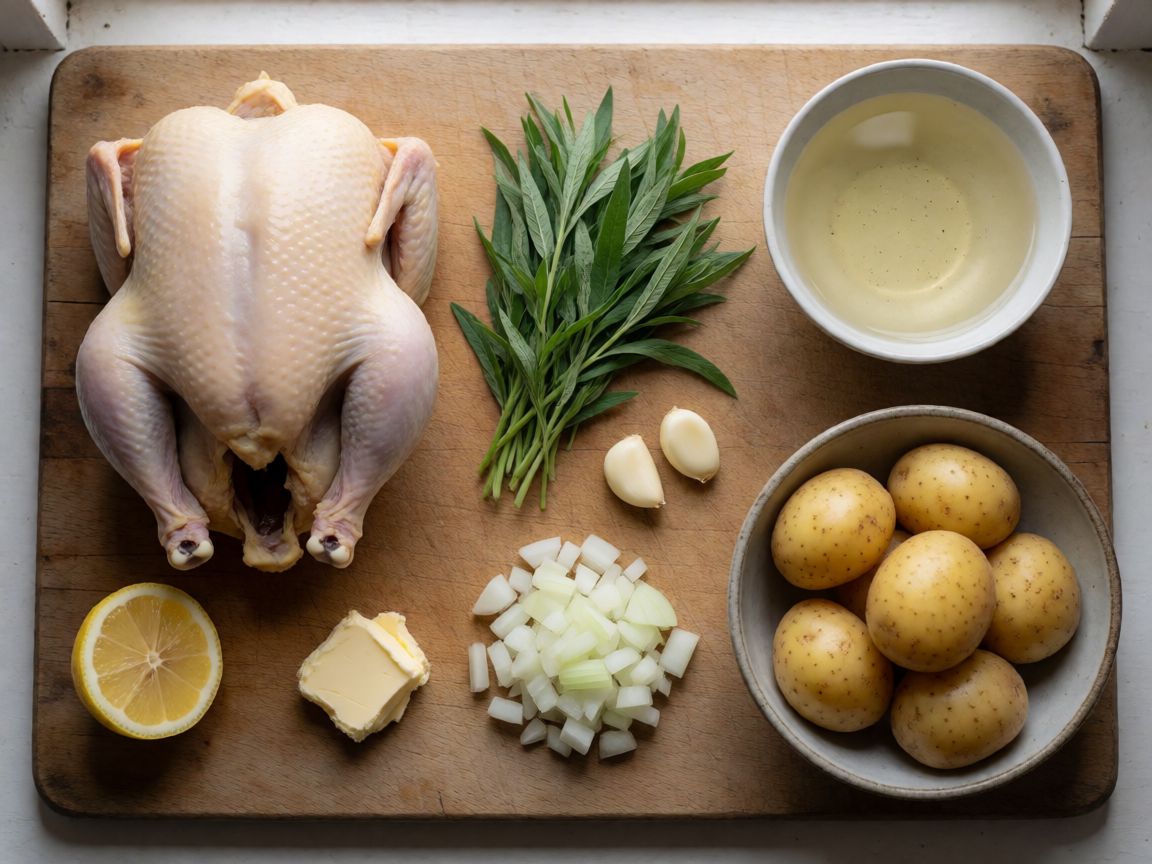
- 1 pcs Whole chicken
- 1 pcs Lemon skin on, cut into large pieces
- 1 bunch Tarragon fresh
- 55 g Butter
- 2 clove Garlic crushed
- 1 pcs Onion diced
- 150 ml White wine
- Salt
- Black pepper freshly ground
- 800 g Potatoes










Steps
Soak the clay pot (römertopf) in water for 15-20 minutes while you prepare the chicken.
18 minClean the chicken, pat dry with paper towel and rub the skin well with salt and pepper.
Mix the tarragon with the butter, garlic, salt and pepper.
Carefully loosen the skin over the breast along its whole length, without piercing through, and fill the pockets with the tarragon butter.
Season the inside of the chicken with salt and pepper and stuff with the onion, lemon and the remaining tarragon.
Truss the chicken with skewers and place it in a roasting dish or clay pot (alternatively a roasting bag or a heatproof dish).
Pour in the white wine, cover with the lid and place the chicken in a cold oven at 130°C for about 2 hours.
120 minAfter 1 1/2 hours add the potatoes, stir them into the juices in the dish and continue roasting, covered, for a further 30-45 minutes.
Remove the lid once the chicken's internal temperature reaches 68°C, stir the potatoes and roast for a further 15 minutes at 220°C, until the skin is crisp and the internal temperature reaches 75°C.
15 minLet the chicken rest for 15 minutes before carving and serving.
15 min
A clay-pot roast chicken built on steam, not fat. The römertopf is soaked in water first, and that's the whole trick: the unglazed clay drinks up water, then gives it back as steam once it's in the oven, basting the bird from inside its own sealed box. Skip the soak and you've just got an expensive, breakable casserole dish doing nothing a lid wouldn't do.
What decides whether this works is the cold-oven start. You put the chicken into an oven that hasn't been heated yet, then bring it up to 130°C slowly. That's not fussiness — it's how you let a thick clay wall and a whole bird warm through together without the outside racing ahead of the inside. A hot oven would shock the clay and dry the breast before the thigh caught up.
Tarragon under the skin rather than on top of it is doing real work too: the fat renders from the butter and carries the aniseed-sharp oil of the herb straight into the meat, basting the breast from the inside, which is the part that dries out first on any roast chicken. The onion, lemon and spare tarragon packed into the cavity aren't there to be eaten — they're a low, slow aromatic steam engine, humidifying the inside of the bird as it cooks.
Some say a whole roast chicken needs basting every twenty minutes or it dries out. No — because every time you open the oven and lift the lid, you let the heat and the moisture you've built up escape, and the clay pot's entire purpose is to stop you needing to do that at all. Trust the seal, not the spoon.
The chicken itself: buy the best bird you can reasonably afford, because in a dish this plain, with nothing to hide behind but butter and tarragon, a bland, wet, mass-reared bird tastes exactly like what it is. Pat it properly dry before salting — wet skin steams instead of browning, and that's the real reason a lot of home roast chicken comes out with pale, rubbery skin even after an hour in a hot oven. Salt on dry skin draws moisture out and seasons as it goes back in; salt on wet skin just dissolves and runs off.
The lemon, cut into large pieces with the skin left on, isn't for juice — it's bulk and acidity, there to perfume the cavity with steam and keep the onion from collapsing into mush too fast. Any firm, aromatic citrus does this job; a bitter orange or even a few bay leaves and a splash of vinegar would stand in if you've no lemon, though you'd lose that particular brightness.
Butter carries the tarragon because butter is roughly 80% fat and sets at room temperature, which means you can work it into a paste under the skin and it'll stay put rather than running off like oil would. Tarragon has a particular aniseed sharpness that's traditional with chicken in French-leaning cooking for exactly that reason — it cuts through the richness of the fat. If you can't get fresh tarragon, use a herb with its own distinct, non-generic flavour rather than something that just tastes "green" — chervil or a little fresh dill will do a different but comparable job. Dried tarragon, for what it's worth, has almost none of the fresh herb's aromatic oil left, so don't expect the same lift from it; use less than half the quantity and add it to the butter rather than trying to stuff it under skin.
White wine in the base isn't a sauce ingredient so much as a humidity top-up and a flavour base for the juices the potatoes will cook in later — the alcohol cooks off, the acidity stays, and it keeps the onion and garlic from just scorching dry on the bottom of the pot in that first hour. Any dry white with no noticeable sweetness will do; a dry cider or even water with a spoon of vinegar covers the job if wine's not to hand, though you lose some of the roundness.
Potatoes go in halfway, not at the start, because they'd otherwise sit in the liquid for two hours and turn to wet mash rather than holding their shape — waxy potatoes are worth seeking out here for exactly that reason, since floury ones break down faster in liquid. By the time they go in, the dish is already basting itself steadily, so they cook in chicken fat and wine rather than plain water, which is the entire point of adding them to the pot instead of roasting them separately.
On the no-römertopf situation, which is most UK kitchens: a heavy lidded casserole or a roasting bag does the same sealed-steam job, just without the clay's slow absorb-and-release of water, so you won't get quite the same gentle humidity, and you lose nothing by skipping the soaking step since there's no clay to soak. A thermometer is genuinely worth the few pounds it costs — judging a chicken's doneness by time alone, in an oven you don't fully trust, on a bird whose exact weight you don't know, is guesswork dressed up as a recipe. The 68°C and 75°C cues are given to you precisely so you don't have to guess, and the fifteen-minute rest afterwards is not optional either — it's the time the juices need to stop being scalding liquid and become part of the meat again, and carving straight out of the oven is how you lose half of them onto the board instead.