
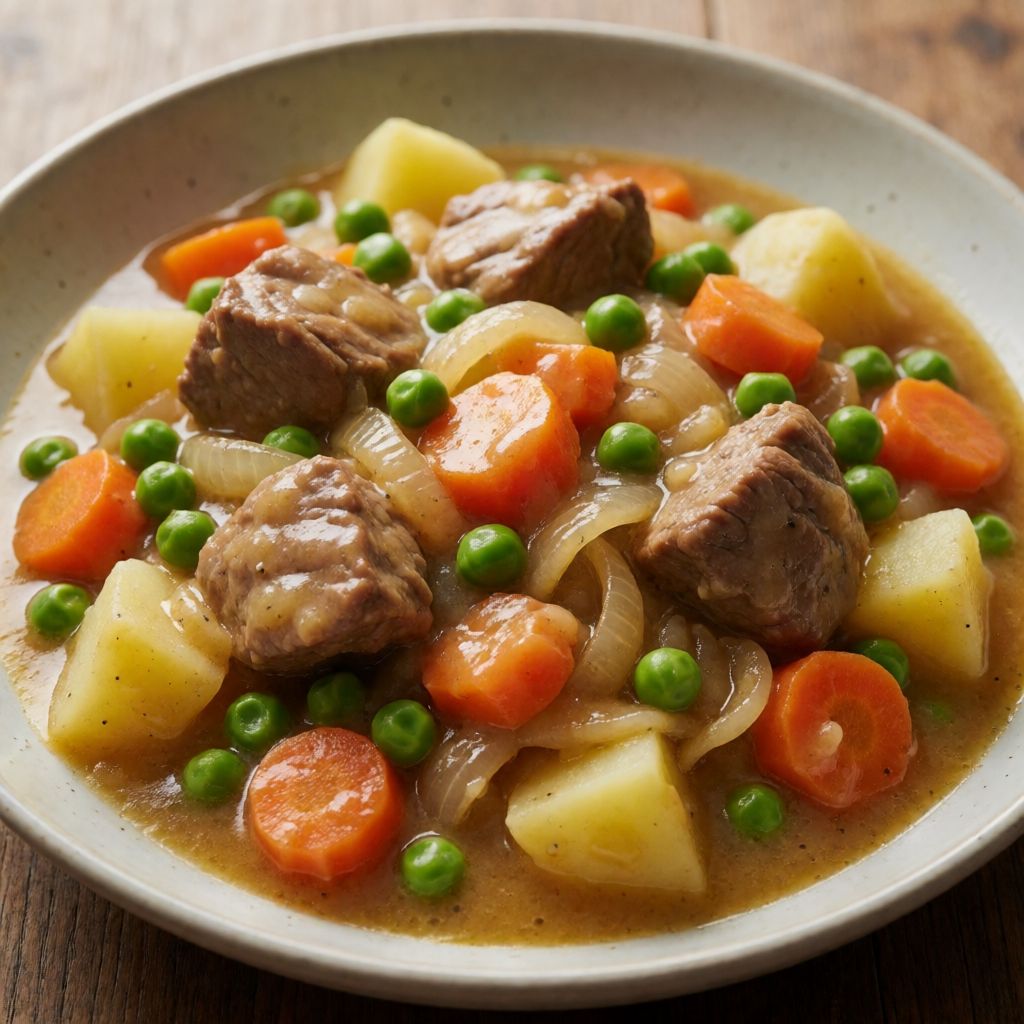
 AI photo
Chicken in Vegetable Sauce
A simple one-pan chicken braised with potatoes, carrots and peas in a light wine sauce.
Ingredients









Steps
Wash the potatoes thoroughly and peel them with a knife or peeler, then do the same with the carrots and onion.
Cut the vegetables into large chunks and place them in a wide, heavy-bottomed pan.
Add the chicken drumsticks and season with salt and black pepper to taste.
Season with chopped oregano and a few sprigs of rosemary.
Pour 125 ml of water and 125 ml of white wine into the pan, then cover with a lid.
Place over medium heat and cook for at least an hour.
60 minAbout halfway through cooking, stir the meat with the vegetables, adding a little more water if needed.
Add the peas, cover again and let the chicken finish cooking.
Remove the pan from the heat and transfer the dish to a nice serving plate.
Drizzle with olive oil and garnish with fresh rosemary.
Serve the chicken in sauce hot.
This is not a stew and not a roast — it's something in between, a braise that borrows the pot from one and the simplicity from the other. Drumsticks, potatoes, carrots and onion go into one wide pan with wine, water and nothing else fancy, and the lid does the real work: it turns that thin liquid into something that tastes like it simmered for half a day.
What decides whether it works is the pan, not the clock. You need something heavy on the bottom and wide enough that the drumsticks lie in one layer, half-submerged, not stacked three deep like in a stockpot. A narrow, deep pot concentrates heat under a small patch of food and does nothing for the rest — that's why a wok-shaped frying pan with a lid, or your widest casserole, beats a saucepan every time here. If your lid doesn't fit, a plate on top does the same job: trap the steam, let it fall back as liquid instead of escaping into your kitchen extractor.
The sauce is really just evaporated wine and water that's gone nowhere — the lid keeps it circulating back onto the meat and vegetables instead of vanishing as steam, and the starch rinsing off the potato chunks is what gives it body, not flour, not cream. That's the whole mechanism. No roux, no reduction, no stock cube standing in for flavour you didn't build.
Heat here is simple and deserves honesty: a British hob ring on medium, under a lid, should keep the liquid at a gentle, steady simmer — small bubbles breaking the surface here and there, not a rolling boil that would reduce your 250ml of wine-and-water to nothing before the chicken's cooked through. If you hear it rattling and see steam forcing the lid, drop the heat a notch; you're not braising, you're boiling dry.
Sixty minutes is the floor, not the finish line. The real test is the potato: a knife should slide into the biggest chunk with no resistance, no crunch at the centre. The carrot should bend before it snaps when you press a piece against the side of the pan. The chicken is done when the meat at the thickest part of the drumstick pulls slightly from the bone — not falling off, just loosening. If any of these say no, the clock is wrong, not you; put the lid back on and give it more time rather than more heat.
The chicken: drumsticks, bone-in, skin-on, because the bone feeds the sauce as it simmers and the skin's fat is part of what makes the dish taste like something besides boiled vegetables. Breast would dry out long before the potatoes are ready — wrong cut for a long wet cook.
The potatoes carry the dish's body. Use a waxy-leaning all-rounder (a Maris Piper or King Edward from any UK shop works fine) cut into large chunks — large so they hold their shape through an hour of simmering rather than collapsing into mash. Cut small, and you'll have potato soup by the time the chicken's ready.
The carrots and onion are aromatics first, vegetable course second — the onion sweetens and half-dissolves into the liquid, the carrot holds its shape and its bite. Peas go in late, near the end, because they only need a few minutes of heat to turn from raw-green to tender-green; drop them in with everything else at the start and you'll get grey mush by the time the potatoes catch up.
Wine and water in equal parts is a decision about acidity, not luxury — the wine's acid helps break down the vegetables and brightens what would otherwise be a flat, fatty braise. If you've no white wine open, a splash of dry cider or even a spoon of white wine vinegar stirred into extra water gets you most of the way there; what you're replacing is "something sour and thin," not "wine" specifically.
Oregano and rosemary are there for smell as much as taste — rosemary especially releases slowly under a lid, so don't chop it to dust; whole sprigs, fished out or left in, do the job without turning bitter the way finely minced rosemary can after an hour of simmering.
Olive oil at the end, drizzled raw, is the one ingredient that never touches heat — any oil with a clean, round flavour and no smell of its own competing with the herbs would do, but olive oil is the obvious one in a kitchen that already has it open for everything else. Patience is the other ingredient nobody writes on the shopping list, and it's the one this dish can't do without — you're trading an hour of mostly leaving it alone for a sauce that tastes built, not just warmed.