
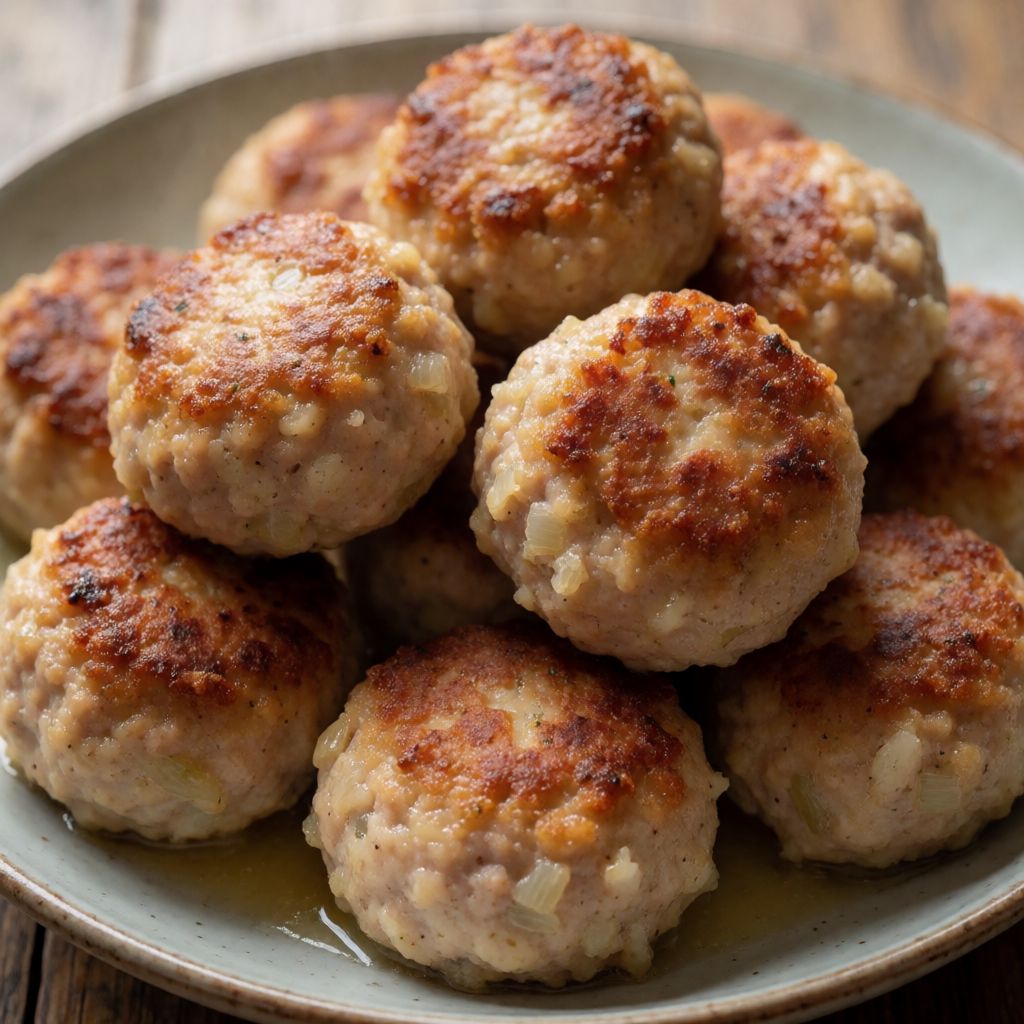
 AI photo
Chicken Meatballs
Juicy chicken meatballs, mixed with onion and egg, then pan-fried until golden and cooked through.
Labels are worked out automatically from the ingredients and can be wrong. Check the packaging if it matters to you.
Ingredients
- 400 g Chicken mince
- 1 pcs Onion finely grated
- 1 pcs Egg
- 3 tbsp Plain flour
- 3 tbsp Milk
- 1 tsp Salt
- 1 pinch Black pepper freshly ground, to taste
- 2 tbsp Olive oil for frying
- 1 tbsp Butter for frying









Steps
Put the chicken mince, onion, egg, flour and milk in a bowl, add the salt and pepper, and mix well until you have a smooth, firm mixture.
10 minCover and let the mixture rest in the fridge for 30 minutes.
30 minHeat a frying pan with the olive oil, add the butter and let it melt until the foaming stops.
2 minShape the mixture into meatballs with a spoon and fry them in the pan for 5-6 minutes on each side until golden and cooked through.
12 min
These are not the chewy, bouncy meatballs you get from beef or pork mince, held together by their own fat. Chicken mince, especially from the breast, has barely any fat in it at all, and lean meat squeezed into a ball and thrown into a hot pan has one instinct: to dry out before it browns. Everything in the first half of this recipe exists to stop that.
Grated onion, egg, flour and milk aren't background flavour, they're the fix. The flour, loosened in milk, makes a loose paste that swells around the meat as it rests — think of it as a sponge mixed into the mince rather than sitting beside it, holding water in place so it stays inside the meatball instead of hissing out into the pan as steam. The grated onion does two jobs at once: it adds its own juice to that moisture reserve, and because it's grated rather than chopped, it disappears into the mixture instead of frying separately and catching at the edges.
What decides whether this works is mostly invisible until it's too late — the half hour in the fridge, the point where the butter stops foaming, and the colour and give of the meatball once you turn it. Skip the rest and you're frying wet, slack mince that won't hold a shape; rush the pan and you get meatballs browned outside, raw and pink at the centre, which with chicken isn't a texture quibble but a real problem.
Some say you need breadcrumbs to bind a meatball — no, you need something that drinks up liquid and swells, and flour whisked into milk does exactly that, just without the crust of a soaked slice of bread. It's the same trick in different clothes.
Chicken mince sold in most UK supermarkets comes from breast, because that's the cut people want left whole and the trimmings get minced — lean, pale, and exactly the mince that needs the most help here. If you can find mince labelled thigh, or mix your own in a food processor, use that instead: thigh carries real fat under the skin, and that fat does half this recipe's job for you before the flour ever gets involved. With breast mince, don't try to cut corners on the egg-flour-milk mixture — it isn't a flavour addition here, it's load-bearing.
Salt earns its keep twice over. Once for taste, obviously. But stirred into raw mince, salt also dissolves the fibrous proteins on the surface of the meat — the same ones that make a good sausage bouncy — and that's what actually lets the mixture hold together as a ball rather than fall apart in the pan. The ten minutes of mixing until the mince turns smooth and firm isn't busywork, it's you working that salt into every strand of meat. Mix it limply and the meatballs won't need breadcrumbs to fall apart — they'll manage it on their own.
Fry in butter and oil together, not butter alone, for a real reason: butter is full of milk solids, and milk solids scorch and blacken at a heat oil shrugs off. Mixed with oil, that scorching point moves up, and you still get the nutty, faintly browned smell that oil on its own can never give you. The foam dying down in the pan is your cue that the water in the butter has cooked off and the fat is hot enough to fry rather than steam the meatballs — drop them in while it's still foaming and they'll sweat instead of browning. Any oil with no smell of its own will do here — rapeseed is the obvious choice in a British kitchen, since it's probably already in the cupboard, though a flavourless sunflower or vegetable oil behaves exactly the same.
Onion grated rather than diced isn't fussiness for its own sake. A diced onion fried inside a meatball stays half-raw and crunchy at the centre, where twelve minutes of heat never quite reaches it, while grated onion is already broken down enough to cook through and simply hand over its sweetness and moisture, with nothing left to bite into.
There's no kazan here, and you don't need one — a wide frying pan on a domestic hob handles this fine, because you're not building flavour over hours the way you would for a Sunday roast, you're searing quick little balls of meat on an ordinary weekday. The patience this recipe asks for is the thirty minutes in the fridge, not the frying — I've shortcut that rest more than once early on, and every time the meatballs loosened and spread flat the moment they hit the pan instead of holding their shape. Treat the rest as an ingredient, not a pause.