
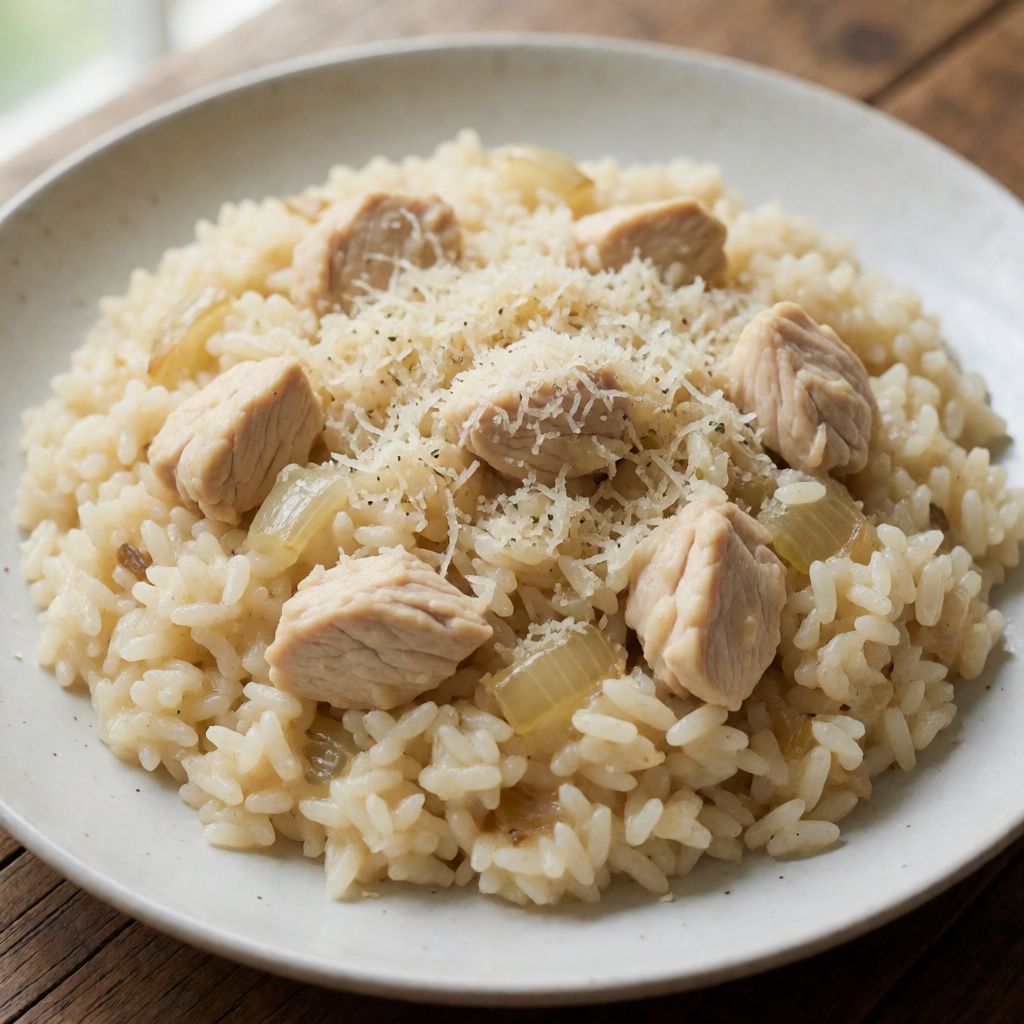
 AI photo
Chicken Rice Pilaf
A quick chicken and rice pilaf simmered with white wine and vegetable stock, ready in under half an hour.
Labels are worked out automatically from the ingredients and can be wrong. Check the packaging if it matters to you.
Ingredients
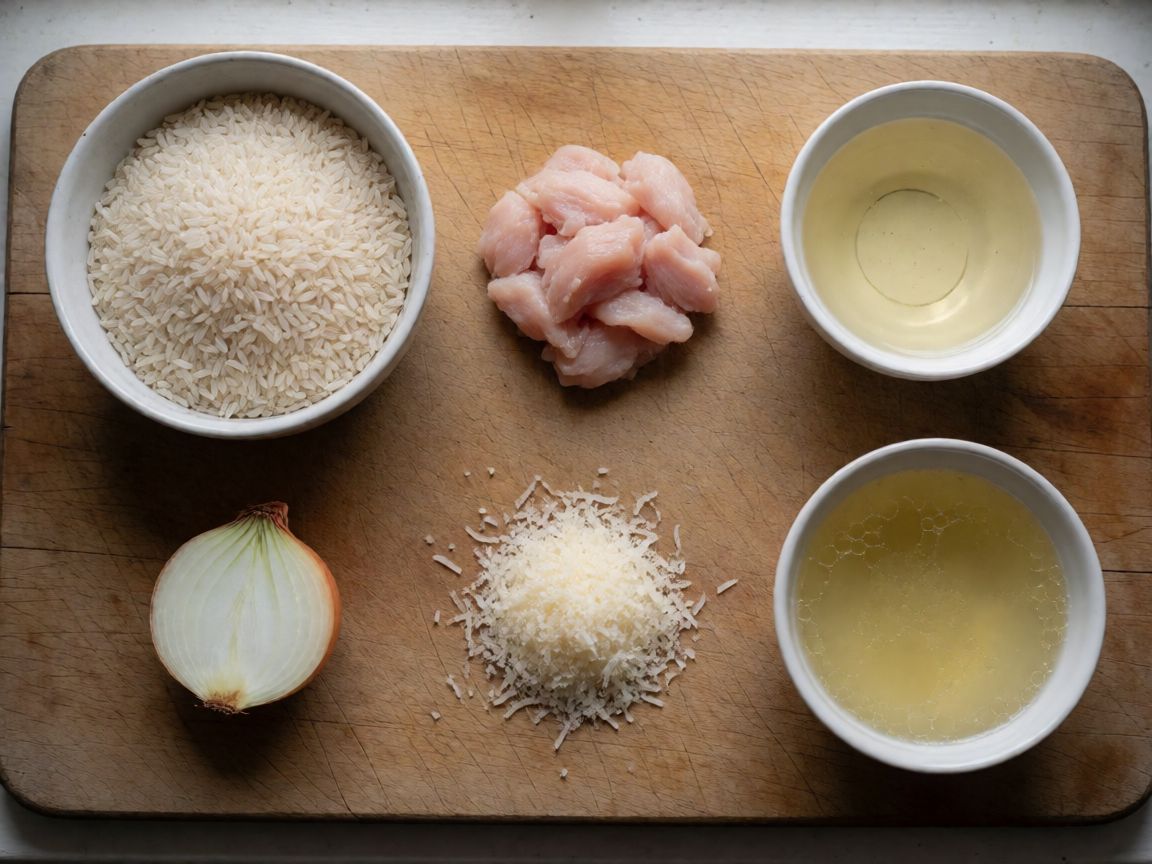
- 150 g Rice
- 100 g Boneless chicken
- 0.5 pcs Onion
- 8 tbsp White wine
- Vegetable stock to taste
- Parmesan to taste
- Vegetable oil to taste







Steps
Cut the chicken into strips or small cubes.
Fry the onion in a little oil; once it turns golden, add the rice.
Pour in the white wine and cook, stirring constantly.
2 minGradually add the vegetable stock, ladle by ladle.
About 7-8 minutes before the end, add the chicken pieces and cook until done - the chicken is ready at an internal temperature of 74°C.
Serve immediately, sprinkled with parmesan if you like.
Call it by what it actually does, not by what the label says: this isn't pilaf, whatever the name on the card. In pilaf the whole point is grains that stay apart, each one coated in fat and left alone. Here the point is the opposite — you rub the starch out of the rice on purpose until the liquid around it turns into a sauce. That's risotto method wearing a pilaf name, and knowing that tells you how to cook it, because the two methods want opposite things from your spoon.
What decides whether it works is contact: spoon against grain, grain against grain, over and over, with the stock arriving in instalments instead of all at once. Starch doesn't release itself — friction does it. Walk away for five minutes to answer the door and the grains on the bottom catch while the ones on top stay chalky and hard in the middle. A pan doesn't forgive absence the way a slow oven does; this dish asks you to stand there.
Some say any rice does for a rice dish. No — because basmati and easy-cook long grain are bred and milled to shed almost no surface starch, that's their whole selling point, fluffy and separate. Put that rice through this method and you get wet grains swimming in thin stock, never a sauce. You need rice built to lose its starch — arborio, carnaroli, or at a pinch pudding rice, same mechanism, coarser result.
Rice first, because it's the one ingredient you can't talk yourself around. Arborio or carnaroli is milled with the starchy layer deliberately left rough on the grain's surface — that roughness is what rubs off into the stock and thickens it. Basmati or any easy-cook long grain is milled the other way, polished smooth precisely so it won't do that, which makes it excellent for a roast-dinner side and useless here. If your shop has neither risotto rice, pudding rice is a genuine stand-in — it's the same starch-shedding principle used for a sweeter end, and it'll behave the same way in a savoury pan, just a touch softer-edged.
The chicken wants to be boneless and cut thin or small for one reason: even, fast cooking. A thick lump needs longer at the centre than the surface can survive without drying — cut it down and the whole piece finishes in roughly the same few minutes. The temperature a food book gives you (74°C, or the UK's own 70°C for two minutes) is the point where heat does the killing instantly rather than over time; don't let the exact figure become a ritual, it's a safety floor, and the colour-and-spring test gets you there just as reliably in a home kitchen without a probe.
Oil here should have no voice of its own — sunflower, rapeseed, anything neutral — because every flavour you put in the pan after it ends up inside the rice, concentrated. That's also why the onion stops at golden and goes no further: push it to deep brown and you're not adding colour, you're adding bitterness, and unlike a dish where a few dark onion bits are one bite among many, here that bitterness gets stirred through every single grain.
The wine isn't for flavour alone, it's doing a job: it lifts the browned bits stuck to the pan from the onion and oil, and the hard two-minute bubble is there to cook off the raw sting of the alcohol, leaving behind acidity and aroma without the burn. Use something dry — a dry white, or dry vermouth if that's what's open. If there's no wine in the flat, don't reach for something sweet; a splash of vinegar or lemon juice stirred into a bit of extra stock does the same acid job, thinner and sharper, which is the only property that actually matters here.
Stock goes in ladle by ladle because the rice needs to sit just barely covered, simmering, the whole way through — dump it all in and the grains boil rather than simmer, cooking unevenly and losing you any control over texture. On a gas ring this moves briskly; on a glass-top or induction hob, which runs gentler and slower to respond, you'll be ladling less often — go by how fast the liquid vanishes, not by a clock. Use the widest pan in the cupboard rather than a tall narrow saucepan: width is contact area, and contact area is what lets you actually stir every grain instead of just the ones near the spoon.
Parmesan goes in last and off the heat, for a plain mechanical reason — cheese stirred into something still near the boil can split, fat separating from protein into a grainy mess instead of melting smooth. Pull the pan off the burner, then stir it through for the last shine and salt. And count the standing-at-the-stove time as part of the ingredient list, not an inconvenience around it — it's the one thing this dish actually charges you for, and there's no substitute for it.