
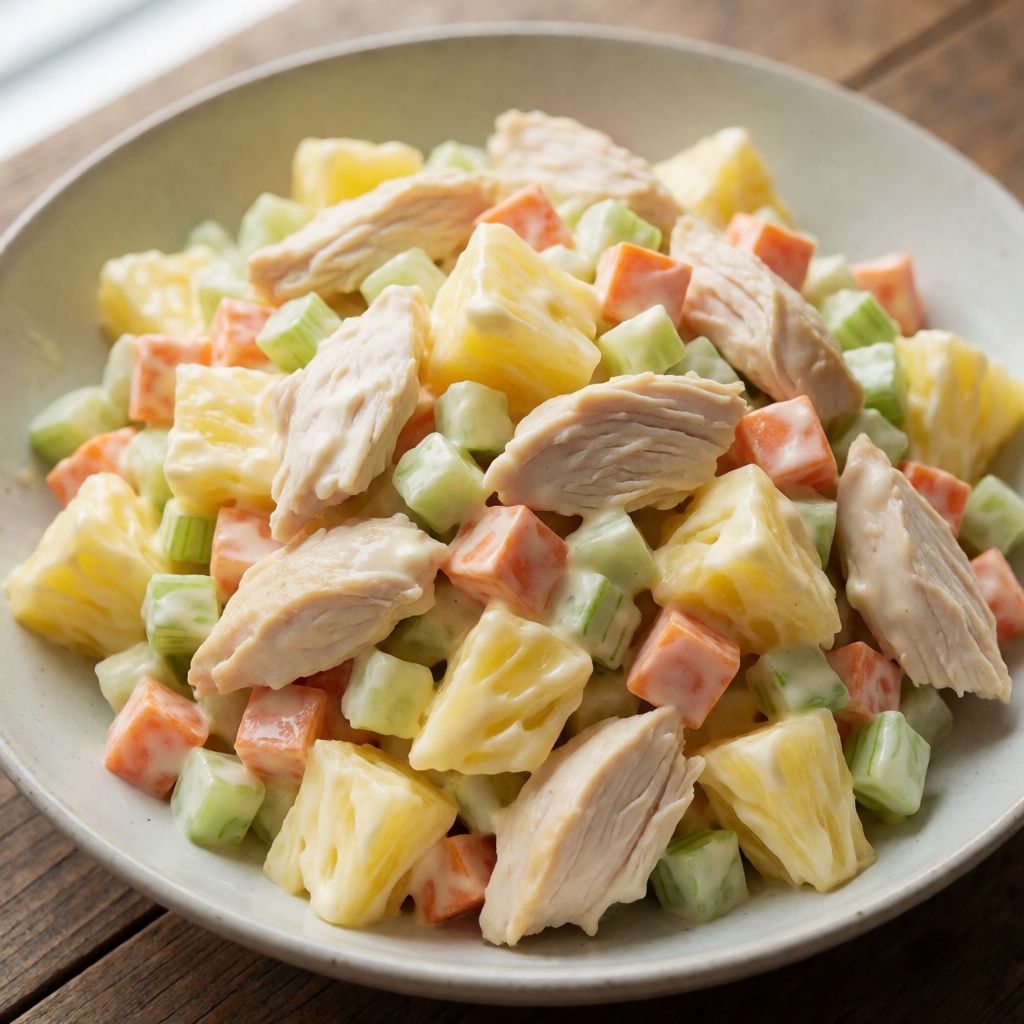
 AI photo
Chicken Salad with Pineapple and Homemade Mayonnaise
A creamy salad of poached chicken thigh, pineapple and celery, finished with a homemade mayonnaise and Greek yoghurt dressing.
Labels are worked out automatically from the ingredients and can be wrong. Check the packaging if it matters to you.
Ingredients
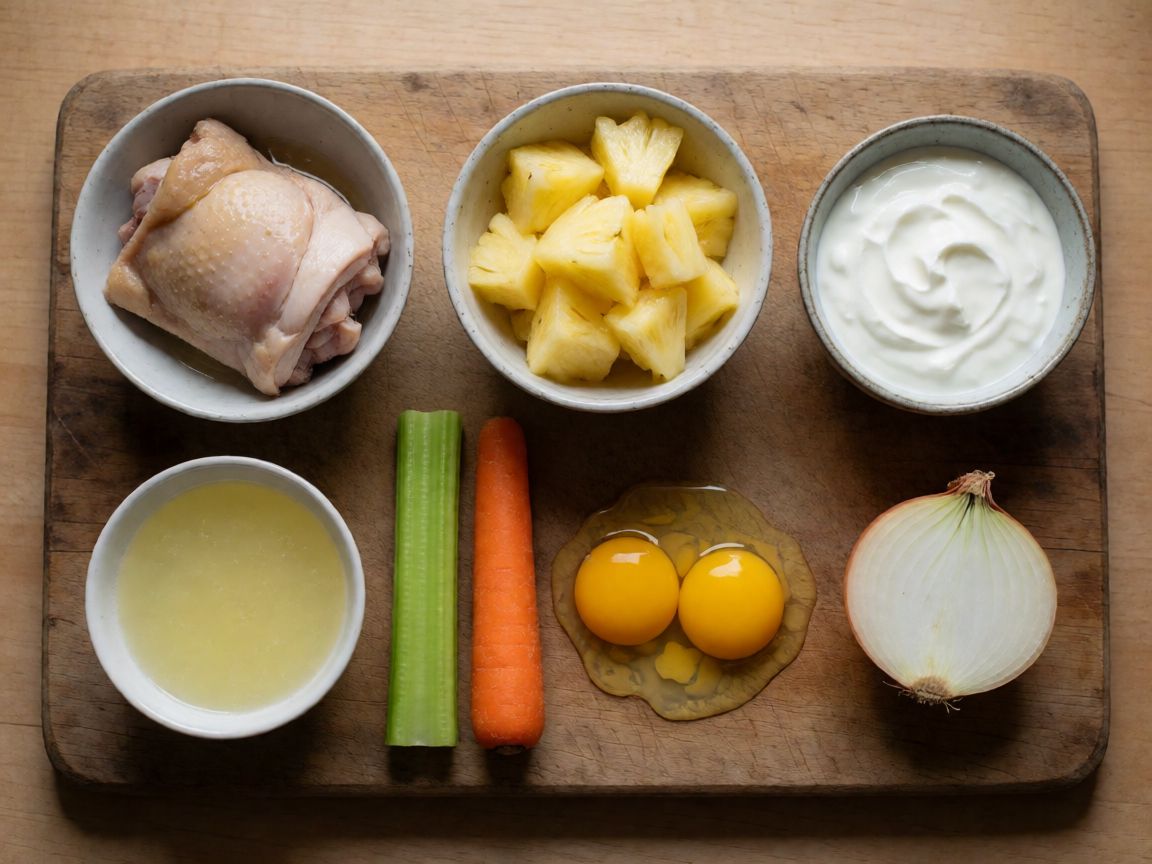
- 300 g Chicken thigh
- 250 g Pineapple
- 100 g Greek yoghurt
- 250 ml Sunflower oil
- 1 pcs Celery stick
- 1 pcs Carrot
- 2 pcs Egg yolks
- 100 ml Lemon juice
- 1/2 pcs Onion
- White wine to taste
- Black pepper to taste
- Salt to taste












Steps
Wash the celery stick and carrot, peel the carrot with a vegetable peeler, and peel the onion.
Pour 3 litres of water into a pan, add the celery, carrot, onion, black pepper, white wine and salt, and bring to the boil.
Add the chicken thighs and cook for about 20 minutes, checking that they are done. Done: internal temperature 74°C.
20 minLeave the chicken thighs to cool in the stock.
Pour 50ml of lemon juice into a bowl and add two egg yolks at room temperature.
With the mixer on medium speed, pour in the oil in a thin stream, then add the remaining 50ml of lemon juice and a further 50ml of oil.
Put the homemade mayonnaise in the fridge.
Remove the bones from the chicken and cut into thin strips; cut the pineapple into cubes.
In a large bowl, combine the chicken, pineapple and celery.
Add the Greek yoghurt to the mayonnaise and pour this dressing over the salad, mixing well.
Add salt and pepper to taste and refrigerate for 2 hours.
120 minServe well chilled.
This isn't really a "pineapple salad," it's a poaching lesson wearing a fruit salad's clothes. Everything that decides whether it works happens before the pineapple ever gets near the bowl: how gently the thigh meets the water, and whether your mayonnaise actually holds together. Get those two things right and the rest is just cutting and waiting.
Chicken thigh goes into a pan of water that's already carrying celery, carrot, onion, wine and pepper — not plain water, because plain water pulls flavour out of the meat and gives nothing back. The stock is a trade: it seasons the chicken while the chicken seasons it. Some say thigh is "the cheap cut you settle for" — no, because thigh has fat running through the muscle, and that fat is what keeps the meat juicy through a 20-minute simmer that would turn a dry breast to string. The real target isn't the clock, it's 74°C inside the meat — a thermometer, if you have one, tells you more truth than any timer on the box.
Then comes the part people skip and shouldn't: cooling the chicken *in* its stock, not on a plate. A hot bird dropped straight into cold air tightens and weeps juice everywhere; left in the warm broth, it keeps drinking in liquid and flavour as it comes down to room temperature. That's patience doing the work heat already started.
Chicken thigh, bone-in if you can get it — the bone adds a little gelatine to the stock, and gelatine is what makes a cold stock feel rounder rather than watery. Boneless works too, you just lose that extra depth. Don't reach for breast "because it's leaner and healthier" — leaner here just means tougher once chilled, since breast has almost no fat to buffer against overcooking and goes chalky in a salad that sits in the fridge.
Pineapple should be fresh if you can manage it — fresh pineapple carries bromelain, an enzyme that actually tenderises any protein it touches, which is a small bonus here since the chicken is already cooked and just gets a gentle sweetness instead of being broken down. Tinned pineapple is a fair substitute for convenience, just drain it properly — that syrup will turn your mayonnaise dressing watery and sweet in a way lemon juice alone won't fix.
The celery and carrot in the poaching liquid aren't there to be eaten later, they're aromatics doing a job and then stepping aside — though the celery stick that goes into the final salad is a separate, raw one for crunch. Carrot peeled with a vegetable peeler rather than hacked with a knife matters for one reason: thinner, even peeling means it cooks into the stock evenly and releases its sweetness at the same rate, rather than one thick chunk staying raw-tasting while thin bits turn mushy.
Egg yolks at room temperature for the mayonnaise — cold yolks from the fridge are stiffer and emulsify more reluctantly, so you fight the mixer longer and risk it splitting before it ever comes together. Lemon juice is both acid and flavour: it stabilises the emulsion by thinning the yolk's structure so oil droplets can disperse through it, and it's also what stops the whole thing tasting like a bowl of warm fat. Any neutral oil works — "any oil with no smell of its own" is the rule, so sunflower, grapeseed or a mild rapeseed all do the job; olive oil will fight you with its own strong taste and can also make the emulsion grainier because of its heavier texture.
Greek yoghurt folded into the mayonnaise isn't decoration, it's dilution with intent — straight mayonnaise on cold chicken is heavy and a bit one-note, the yoghurt's tang lightens it and keeps the dressing from clinging in a thick, greasy layer. If you're short on patience or a stick blender, a good shop-bought mayonnaise loosened with yoghurt gets you most of the way there, though you lose the cleaner, lighter set that comes from making it yourself.
The two hours in the fridge at the end isn't padding on the recipe card — it's the dressing finding its way into the chicken and the pineapple's sweetness settling against the salt and pepper instead of sitting on top of it. Skip it and you're eating separate ingredients in the same bowl, not a dish. On a British Sunday, this is the thing you make the day the roast was poached rather than fried — a quiet use for chicken thighs that would otherwise just go in a pot of stock and be forgotten.