
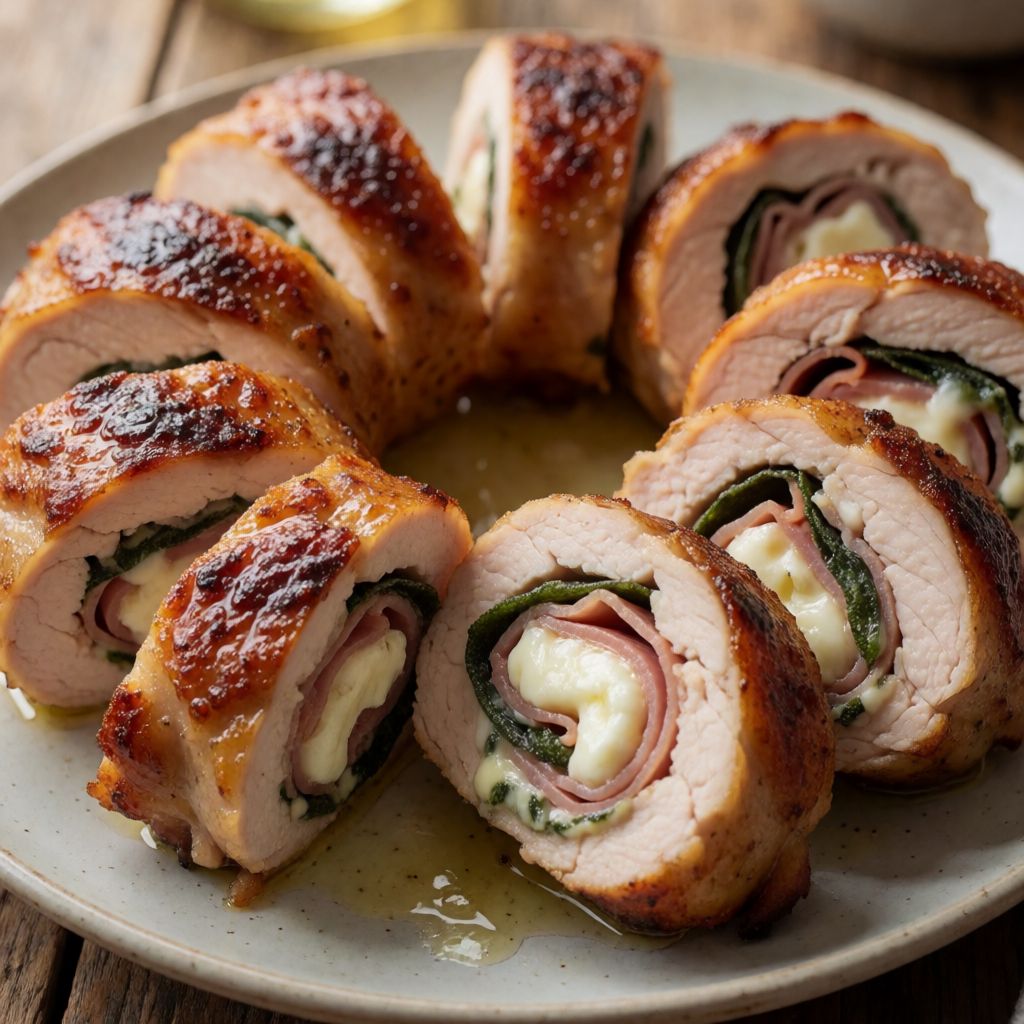
 AI photo
Chicken Rolls with Sage, Parma Ham and Mozzarella
Chicken breast rolled with sage, Parma ham and mozzarella, then pan-fried until golden and cooked through.
Labels are worked out automatically from the ingredients and can be wrong. Check the packaging if it matters to you.
Ingredients
- 4 pcs Chicken breast
- 4 pcs Parma ham
- 50 g Blue cheese optional, can be left out
- 125 g Mozzarella fresh, cut into 4 slices
- 8 pcs Fresh sage leaves
- 1 tbsp Olive oil for frying
- Salt
- Black pepper freshly ground







Steps
Lightly flatten or pound the chicken fillets.
On each chicken fillet, place a slice of Parma ham, a little blue cheese, two slices of fresh mozzarella and 2 sage leaves, then season with salt and pepper.
Roll up each fillet and secure with a toothpick, a small skewer or kitchen string.
Fry in olive oil in a pan on all sides for about 15 minutes, or until the chicken is cooked through.
15 min
This is saltimbocca's cousin, dressed for a British fridge: a chicken breast rolled around ham, cheese and sage so the bland bit of the bird gets fed by the salty, fatty bits wrapped around it. Nothing here is decoration. The ham's salt and fat render inward as it cooks and season the chicken from the inside, where salt sprinkled on the outside of a thick fillet never quite reaches in time. The cheese melts and glues the parcel together while giving you a soft, savoury centre instead of dry white meat. The sage is there to cut the fat — it's resinous, it survives heat, parsley would just wilt and vanish.
What decides whether this works isn't the filling, it's the roll. Pound or flatten the fillet first — not for tenderness, breast doesn't need that, but to even out the thickness. A chicken breast is thick at one end and thin at the other; left as it is, the thin end is dry rag by the time the thick end has cooked through. Flatten it and the whole roll cooks at one rate, which is the entire point of rolling it in the first place.
The second thing that decides it is whether the roll stays shut. If it springs open in the pan, the cheese runs out into the oil instead of staying inside to do its job, and you're left frying a flat, leaking fillet instead of a parcel. A toothpick or a loop of string costs you ten seconds and saves the whole dish — don't skip it because it feels fussy.
Start with the chicken itself. Breast, not thigh, because breast is the only cut flat and even enough to roll — thigh is good meat but it's an odd shape with connective tissue running through it, wrong tool for this job. Buy fillets of roughly even size if you can; four breasts for four people is the whole arithmetic of this dish, one roll, one plate, no carving at the table like a Sunday roast. If your fillets are small, trim the filling to match — an overstuffed roll just splits.
Parma ham is doing two things: salting the chicken from inside and basting it with fat as that fat renders in the heat of the pan. The criterion for substitution is simple — any thin, salt-cured, fat-marbled ham. Prosciutto crudo, Serrano, even a good streaky bacon rasher at a push, though bacon is smoked and wetter and will shift the flavour toward a fry-up rather than an Italian one. What won't work is a thick cooked ham slice — it has no fat to render and no real cure, so it just sits there as filler.
Mozzarella's job is to melt into something soft and a little stretchy that holds the roll together and keeps the centre from drying out. Use fresh mozzarella, in brine, sliced yourself — the pre-shredded bags sold for pizza are dried out and designed to brown crisp, not melt soft, and in a rolled fillet they'll go rubbery and separate from their oil instead of binding anything. The optional blue cheese is there purely for contrast: mozzarella is mild, blue cheese is sharp, and a little sharpness stops the whole thing tasting like warm milk. Leave it out and you lose nothing structural, just that edge. If you want a substitute with the same sharp bite, a mature cheddar — which, unlike mozzarella, you'll have in the fridge already — does the same job, though it melts oilier rather than creamy.
Sage has to be fresh, not the dried crumbled stuff from a jar that's mostly bitter dust by the time it's a year old. Fresh sage has oils strong enough to come through fat and ham without being flattened by them — it's the same reason it turns up with pork and duck in British cooking, it's built to stand up to rich meat. If you've genuinely got none, don't reach for basil or parsley — they're too delicate and will just disappear. Thyme is the nearer relative, though it won't taste the same.
For the oil, you want nothing with a flavour of its own competing with the ham and sage — olive oil works, but so does rapeseed oil, which is cheaper, local in the UK, and handles the heat of browning without smoking early. You're not deep-frying, just building colour on a wide pan over a hob that, unlike a kazan over open flame, heats unevenly and holds no real residual heat once you turn the gas or the ring down — so don't walk away from it. Turn the rolls patiently, side by side, giving each face time to go from pale to properly golden before you move it on. That patience is the only thing standing between you and a roll that's brown on one side and anaemic on the rest.