
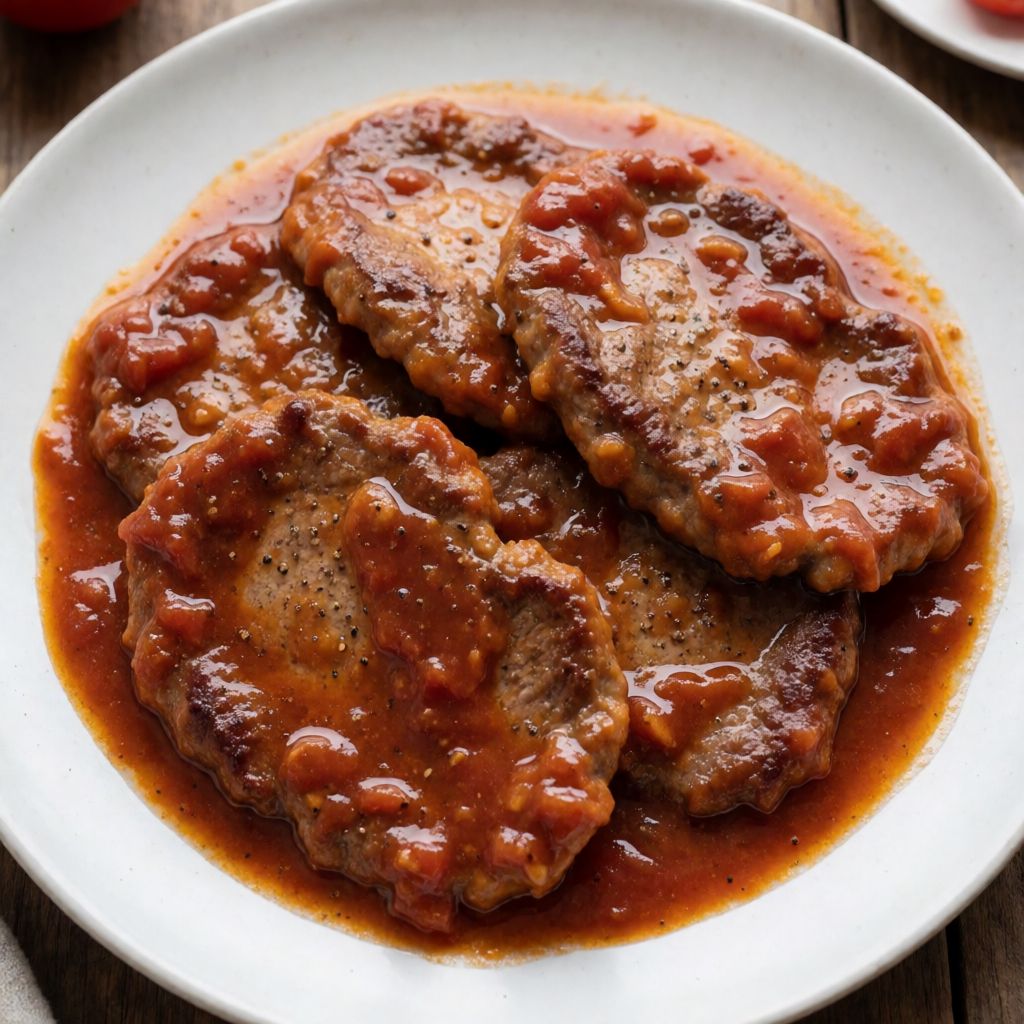
 AI photo
Scaloppine alla Pizzaiola
Thin veal escalopes simmered in a tomato sauce with oregano and white wine, finished with melted mozzarella.
Labels are worked out automatically from the ingredients and can be wrong. Check the packaging if it matters to you.
Ingredients
- 300-350 g Veal escalope thinly sliced
- 300 g Tomato passata
- 75 g Butter
- 8 tbsp White wine
- Salt to taste
- Black pepper to taste
- Oregano to taste
- Mozzarella to taste








Steps
In a non-stick frying pan, melt the butter and season lightly with salt and pepper.
Flatten the meat slices with a meat mallet until thin and tender, then coat both sides in flour.
Fry the slices on both sides until golden, then transfer to a plate and keep warm.
Pour the white wine into the same pan used for the meat and let it evaporate.
Add the tomato passata, season with oregano and cook for 10 minutes.
10 minReturn the fried meat slices to the pan and simmer in the sauce for a few minutes on each side.
Top each scaloppine with a few pieces of mozzarella, cover the pan with a lid and keep on low heat until the mozzarella melts.
Serve the scaloppine alla pizzaiola immediately, while hot.
This is a trattoria-speed dish, not a Sunday roast. Pizzaiola means "in the style of the pizza-maker" — the same fast tomato sauce that goes on a pizza base, except here it holds together a piece of meat instead of dough. It exists because a Neapolitan kitchen in a hurry needed to turn a thin, cheap cut into dinner for two in under half an hour, using what was already on the stove: hot fat, a splash of wine, tomato. No simmering for hours, no stock reduced down to a spoonful. Speed is the whole point, and speed is also where it goes wrong.
Veal is the traditional choice because it pounds thin without falling apart — young meat, soft fibre, forgiving under a mallet. If veal isn't to hand or to taste, look for the same thing in another animal: a lean, boneless cut with fine grain that won't shred when beaten — turkey breast or pork loin both work, chicken breast at a pinch, though it dries faster in the pan so give it slightly less time frying. What you're choosing for is the structure, not the species.
The flour isn't on the ingredient list here but it's in the method, and it matters more than its quiet mention suggests. A light dusting on the meat does two things: it helps the surface brown evenly rather than just steaming in its own moisture, and it leaves a trace of starch behind in the pan that thickens the sauce very slightly once the tomato goes in. Skip it and the meat still cooks, but the browning is patchier and the sauce stays thinner and more watery. Any plain flour does this; nothing exotic required.
Butter here is doing a fat's job and a flavour's job at once — it carries heat to the meat and it's part of the taste of the finished dish, which oil, being neutral, isn't. The thing to watch is the foam: butter foams as its water content cooks off, and once that foam starts to subside and the butter smells faintly nutty rather than just melted, it's hot enough for the meat and close to its ceiling — past that point it burns, turns bitter, and you start again. If you'd rather not push butter that far, any oil with no smell of its own — sunflower, a light olive oil, not a heavily flavoured extra virgin — will fry the meat cleanly; just add a knob of butter at the end for the taste butter alone gives.
The wine's job is to lift the browned bits stuck to the pan after the meat comes out — that fond is concentrated flavour, and wine's acidity and heat dissolve it back into the sauce. A dry white is traditional because its sharpness cuts through the fat and tomato; a sweet wine would just add sugar you don't want. No wine in the house, no drama: a splash of water with a dash of vinegar or lemon does the same deglazing job, just without the aroma wine adds.
Passata is tomato that's already been cooked, strained, and smoothed — buying it saves you the hour of peeling and seeding raw tomatoes yourself, which is exactly the economics behind this dish existing as a quick one at all. Choose a passata that pours slowly rather than splashes like juice — the thinner ones need longer to reduce and can leave the sauce watery even after your ten minutes. If all you have is tinned chopped tomatoes, blitz them smooth first; the dish wants a sauce, not chunks.
For the mozzarella, fior di latte (cow's milk mozzarella) behaves better here than the buffalo kind — buffalo mozzarella holds more water and weeps more as it melts, which thins your sauce right when you want it to cling. Oregano is the one spice that earns its place against tomato's acidity without fighting it; dried is actually preferable to fresh here, since dried oregano's flavour is more concentrated and suits a sauce that's only cooking for minutes, not hours, to draw it out.