
 AI photo
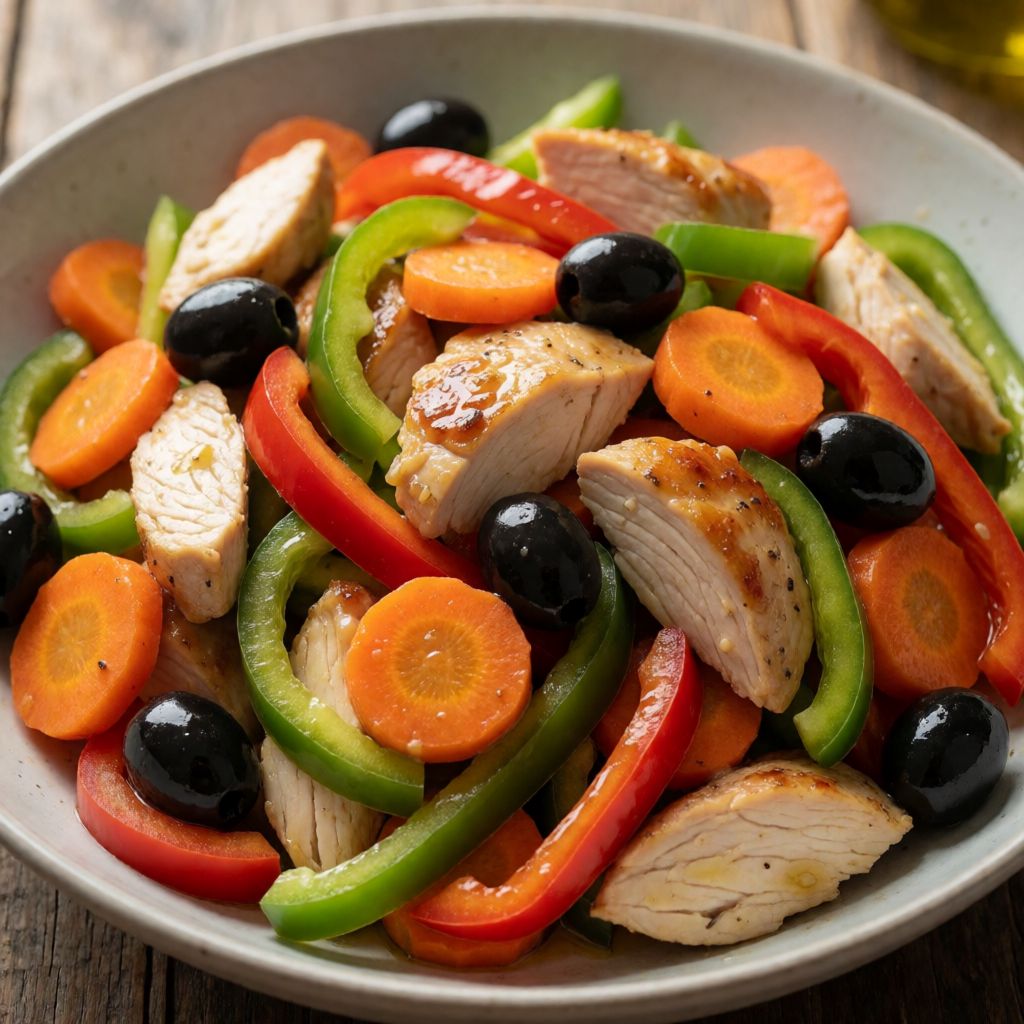
Chicken and Vegetable Salad
A fresh chicken and vegetable salad with peppers, green beans, carrot and potato, dressed with olive oil and lemon.
Ingredients
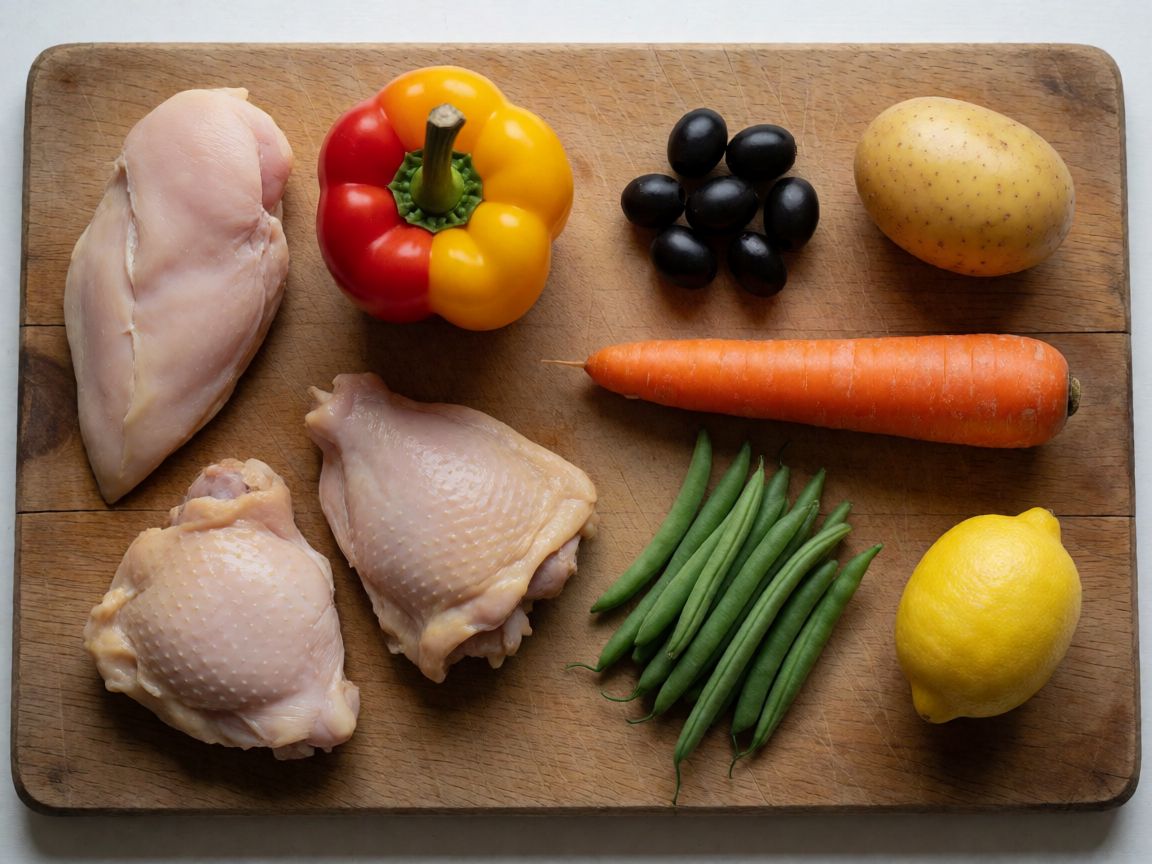
- 1 pcs Chicken breast
- 2 pcs Chicken thigh
- 1 pcs Bell pepper
- Black olives to taste
- Olive oil to taste
- 1 pcs Carrot
- 200 g Green beans
- 1 pcs Potato
- 1 pcs Lemon
- 1 tbsp Apple cider vinegar
- Salt to taste
- Black pepper to taste












Steps
Poach the chicken breast and thighs in water with apple cider vinegar and black pepper, until the chicken reaches 74°C in the centre.
20 minCool the cooked chicken and cut the meat into medium-sized pieces.
Cut the bell pepper into thin strips and place in a salad bowl together with the chicken, green beans, olives and diced potato.
Season with salt, add black pepper, and dress with olive oil and lemon juice.
Chill in the refrigerator and serve cold.
This is a cold, composed salad — poached chicken, raw and barely-cooked vegetables, held together by oil and acid rather than a thick dressing. It's not a stew gone cold or a soup with less water; the chicken is cooked once, gently, and the vegetables keep their crunch because nothing here is meant to go soft.
What decides whether it works is the chicken, and specifically the fact that breast and thigh are different meats wearing the same bird. Thigh has fat and connective tissue running through it; breast has almost none. Put both in the same pot to the same clock and the breast will be cooked through, then overcooked, while the thigh is still finding its feet. The 74°C in the method isn't bureaucracy — it's the point where the breast stops being raw and before it starts being rope. Pull pieces out as they reach it rather than trusting one timer for two different textures.
Myth worth killing here: some say vinegar in the poaching water toughens the meat. No — in the small amount used, it does the opposite. A little acid in near-simmering water sets the outer layer of protein fast, the same way vinegar firms an egg white in poaching water, and that fast-set surface holds the juice in rather than letting it bleed into the pot. What people call 'vinegar toughening' is almost always just overcooking wearing a disguise.
Chicken: breast and thigh together give you a contrast of lean and rich in the finished bowl, which is the whole point — don't swap in two breasts thinking you're being virtuous, you'll lose the fat that carries flavour. If you can get thigh on the bone, even better, the bone feeds the poaching water and the skin peels off clean once cooked, leftover flavour for no extra work.
Potato: this is where most people's salad turns to glue. A floury potato — the kind sold for roasting, common on a British shelf — collapses into starchy mush once boiled and cooled, and that starch smears into the dressing and kills the acid's edge. You want a waxy, salad-type potato (Charlotte, Jersey Royal, anything sold as 'new') that holds a clean cube after cooling. Test it with a knife, not a clock — it should slide in without resistance, the same bend-not-snap logic you'd use on a carrot.
Which brings up the carrot: it's on your ingredient list but the method never gives it a job. If you're using it, treat it exactly like the potato — briefly boiled, kept just short of soft, cooled before you cut it, so it still has some resistance when you bite rather than going baby-food soft in the bowl.
Green beans: 200g raw is a lot of raw grassiness and a stringy bite if you drop them in uncooked, as the method's phrasing might lead you to do. They want a brief cook to turn bright and lose the raw snap, then straight into cold water to stop. The reason for the cold shock isn't fussiness — hold green vegetables warm too long, especially near acid, and the chlorophyll that makes them green breaks down and they go the dull khaki colour of a bean that's been sitting in a buffet tray. Cook briefly, cool fast, keep the green.
Olive oil and lemon: the oil here is doing two jobs at once, binding the salad and bringing its own flavour, since there's nothing else seasoning it but salt, pepper and acid. Any oil with no smell of its own will bind the salad fine — rapeseed, sunflower — but you lose the second job, so it's worth using real olive oil if you have it and saving the neutral oils for recipes that are busier. Vinegar and lemon aren't interchangeable here even though both are acid: the vinegar goes in while the meat is cooking and does a protein job, the lemon goes in raw at the end and does a brightness job, cutting through the fat of oil and chicken skin. Using one for both leaves the dish either flat or one-note sharp.
Olives: 'to taste' is doing real work in this ingredient list, because cheap tinned black olives are mostly there for colour and give you almost no brine, while oil-cured or proper brined ones carry real salt and bitterness that lets you go easier on the salt pot. If all you've got is the bland tinned kind, salt a touch more to make up for what they're not giving you. And if the chicken came off Sunday's roast rather than a fresh poach, this whole dish still holds — cold roast meat plus oil, acid and crunch is the same economy logic as any leftover salad, nothing exotic about it, just a kitchen not wanting to waste what's already cooked.