
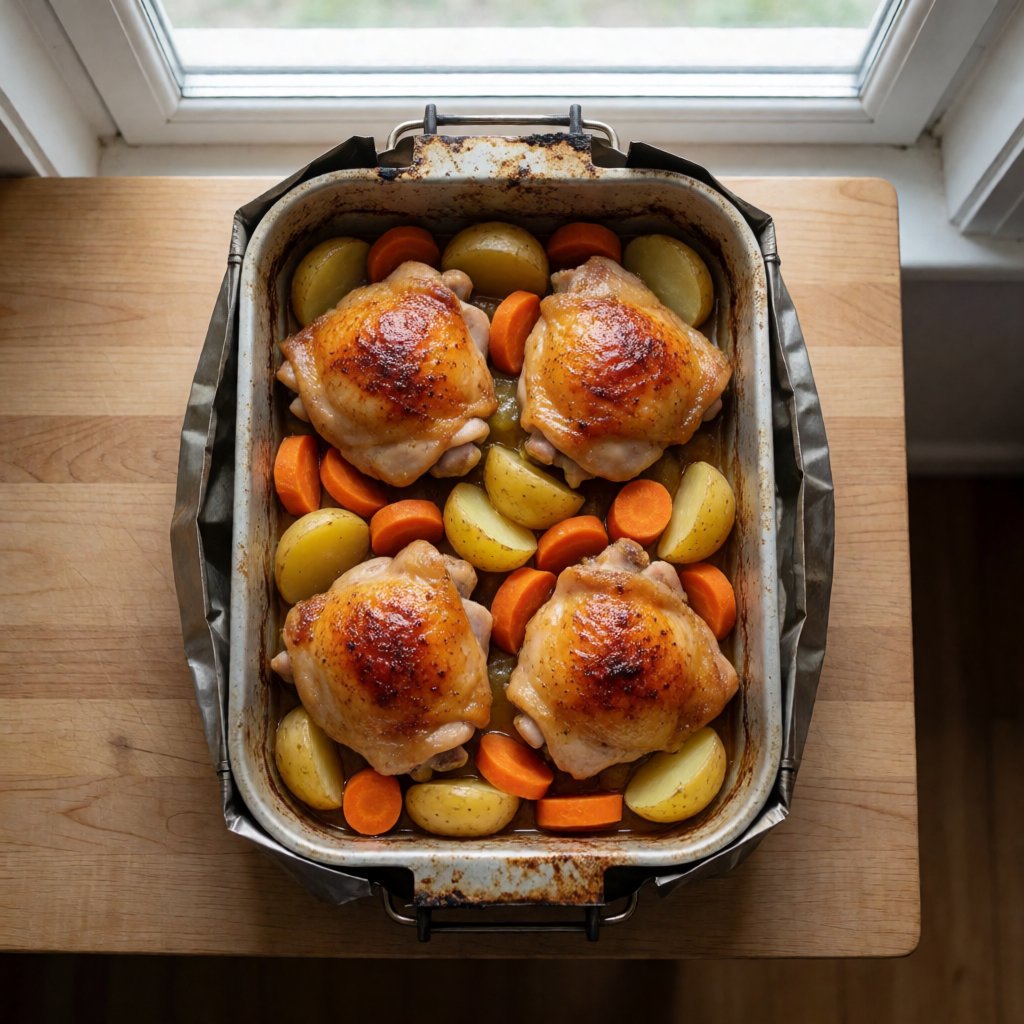
 AI photo
Chicken with Vegetables in a Roasting Bag
A simple one-bag roast of chicken thighs with potatoes, carrot and onion, all cooked together in the oven.
Ingredients
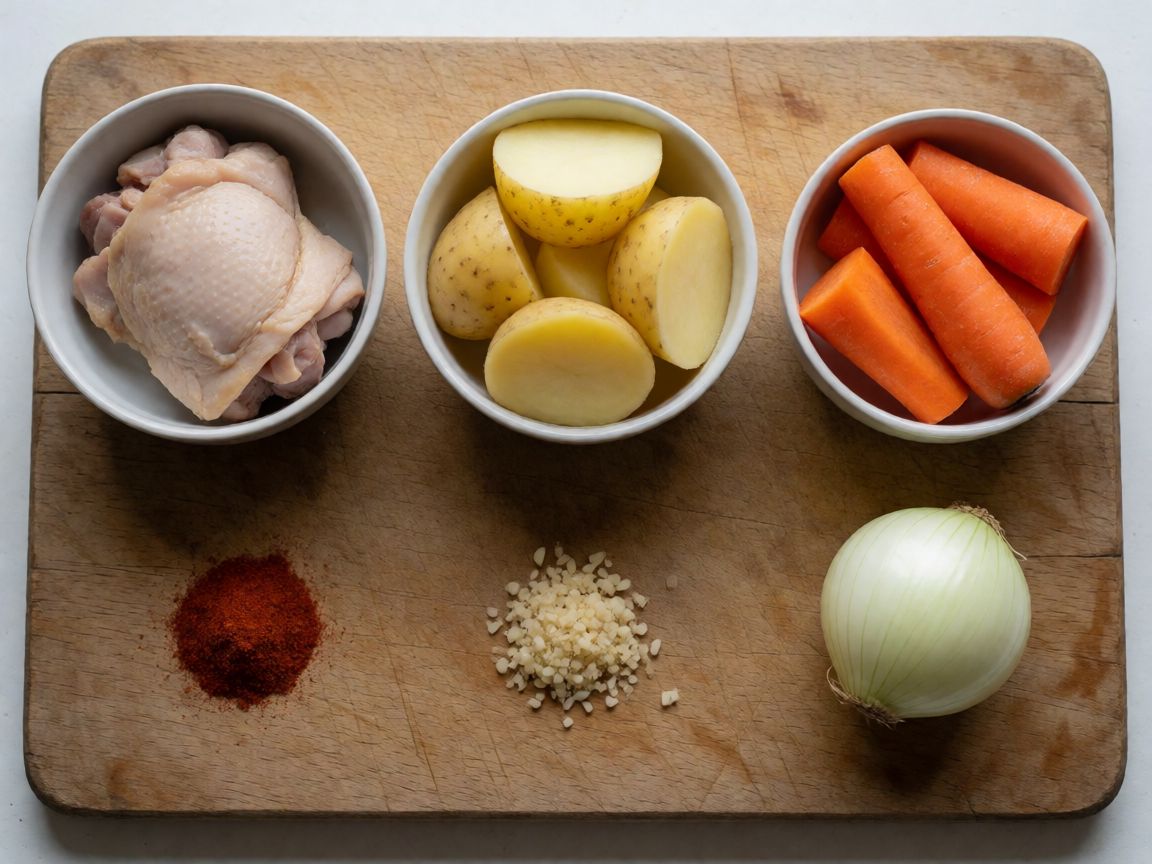
- 500 g Chicken Thighs bone-in
- 300 g Potatoes cut into large chunks
- 1 pcs Carrot cut into large chunks
- 1 pcs Onion cut into large chunks
- 1 tbsp Sunflower Oil
- 1 pinch Paprika to taste
- 1 clove Garlic to taste
- 1 pinch Salt to taste








Steps
Cut the vegetables into large chunks and mix with the chicken thighs, oil and spices.
Place everything in a roasting bag, tie it and make 2–3 small holes.
Put the bag on a baking tray in the oven at 200°C for 50 minutes, until the meat near the bone reaches 74°C.
50 minRemove the tray from the oven and carefully cut open the bag.
This is a braise wearing a roast's clothes. Tie the chicken and vegetables into a bag and what you've built is a sealed pouch of steam — the oven air may sit at 200°C, but inside the bag, surrounded by rendering fat and vegetable water, nothing can get hotter than boiling point. That's the whole trick: dry heat outside, wet heat inside, and the bag is the membrane between the two.
What decides whether it works isn't the clock, it's two things. First, the temperature near the bone — 74°C, because bone-in thigh meat close to the joint is the slowest part to cook and the part where undercooked chicken actually bites you. Fifty minutes is your floor, not your answer; a probe thermometer near that bone is the only honest answer. Second, the bag itself has to breathe without collapsing — two or three small holes let the steam escape just enough that the bag doesn't balloon and split on the tray, but not so much that the vegetables dry out instead of basting in their own juice.
Some say a roasting bag gives you a proper roast — no, because a roast needs a dry surface for the skin to brown and crisp, and a bag never lets the surface go dry. What you get instead is meat that falls off the bone and vegetables that taste of the chicken fat they sat in — genuinely good, just a different mechanism, closer to a pot braise than a Sunday joint. If you want crackling skin, this isn't your method; take the chicken out of the bag for the last ten minutes under the grill instead.
Chicken thighs, bone-in, are not a substitution-neutral choice here — the bone is doing a job. It conducts heat slower than the surrounding flesh, so the meat right against it is always the last to reach temperature and the first place to check with a probe. It also holds marrow and connective tissue that needs time, not just heat, to break down into gelatin — that's the patience ingredient in this recipe, and there's no shortcut for it. Boneless breast in the same bag would be dry and done in half the time; it's simply a different dish.
Potatoes and carrots in large chunks: cut small, they'd collapse into the braising liquid before the chicken is safe near the bone. Cut large, they keep a shape and a bite while still taking on the fat and juice running off the meat — which is the actual point of cooking them together rather than separately. If you've only got old, soft carrots, go slightly smaller; if your potatoes are waxy and firm, you can go a touch larger.
Sunflower oil here is doing one job: it stops the meat and vegetables catching on the plastic and helps spread the spices, nothing more romantic than that. The real criterion is an oil with no smell of its own — you don't want anything perfuming a dish that's about to spend fifty minutes concentrating its own aromas in a sealed bag. Sunflower, groundnut, any neutral vegetable oil does the job; olive oil, with its own strong character, would fight the chicken fat rather than carry it.
Garlic and paprika are there for background, not performance — in a dry pan, garlic would need watching so it doesn't scorch bitter; sealed in a bag at steam temperature, it can't burn, it just softens and sweetens over the hour. That's one advantage of the method worth noting honestly: it's forgiving of garlic and spice in a way a frying pan isn't. Salt, as ever, goes in before sealing so it has the whole cooking time to travel into the meat, not just sit on the surface.
The roasting bag itself is worth a word of history, because it isn't a gimmick — it's a cheap, disposable stand-in for the sealed clay pot or kazan that braises have always used, adapted for a kitchen with no lidded cast iron and no time to tend a pot on the hob. It gives you the sealed, moist environment of a slow braise with none of the babysitting — you load it, you shut the oven door, you come back in under an hour. That's exactly why it suits a flat with one oven and a Sunday's worth of other things to do; it is, in its own plastic way, descended from the same instinct as a stew left to its own devices under a heavy lid.
When it comes out, let it sit a minute or two before you cut the bag open — the steam inside is genuinely hot and will catch you across the knuckles if you rush it, and the resting also lets the juices settle back into the meat rather than running straight onto the tray.
·