
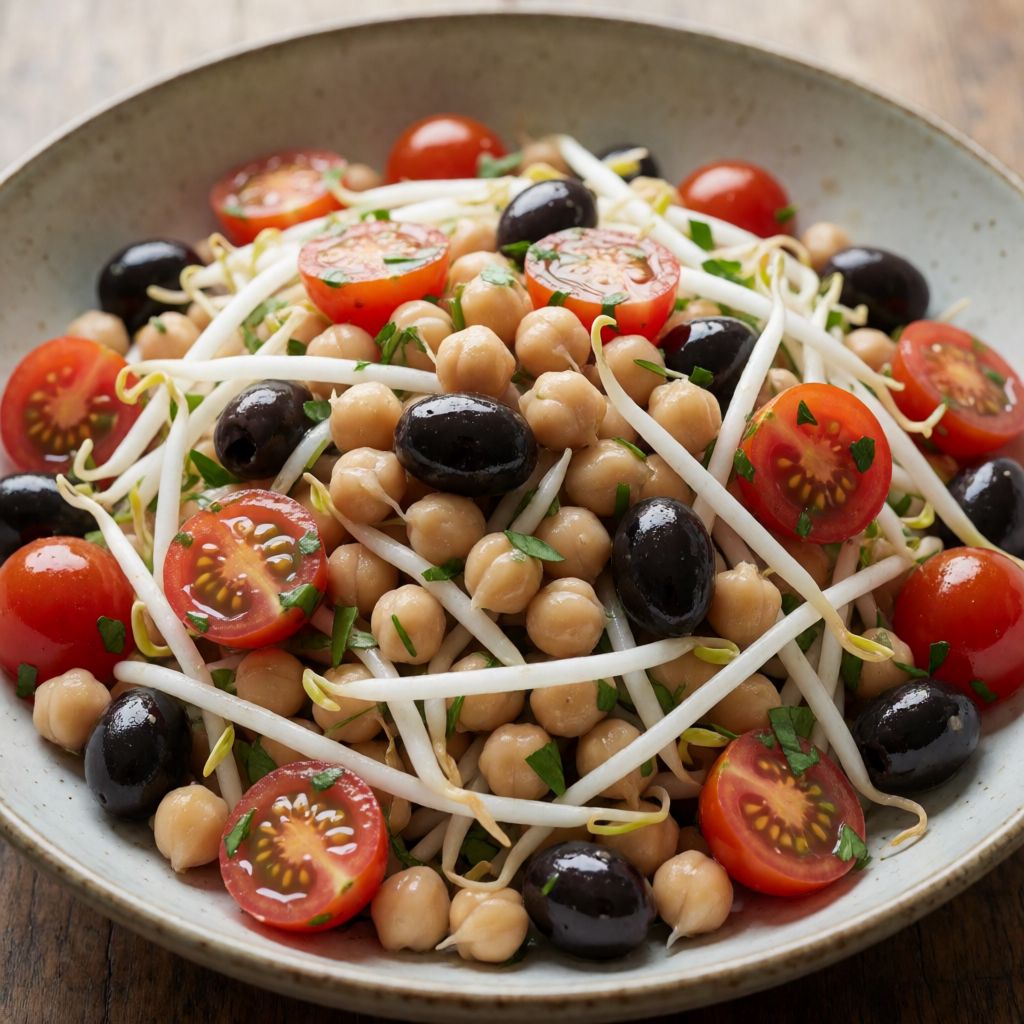
 AI photo
Chickpea, Olive and Cherry Tomato Salad
A fresh salad of chickpeas, cherry tomatoes and black olives, finished with parsley, basil and a drizzle of olive oil.
Labels are worked out automatically from the ingredients and can be wrong. Check the packaging if it matters to you.
Ingredients
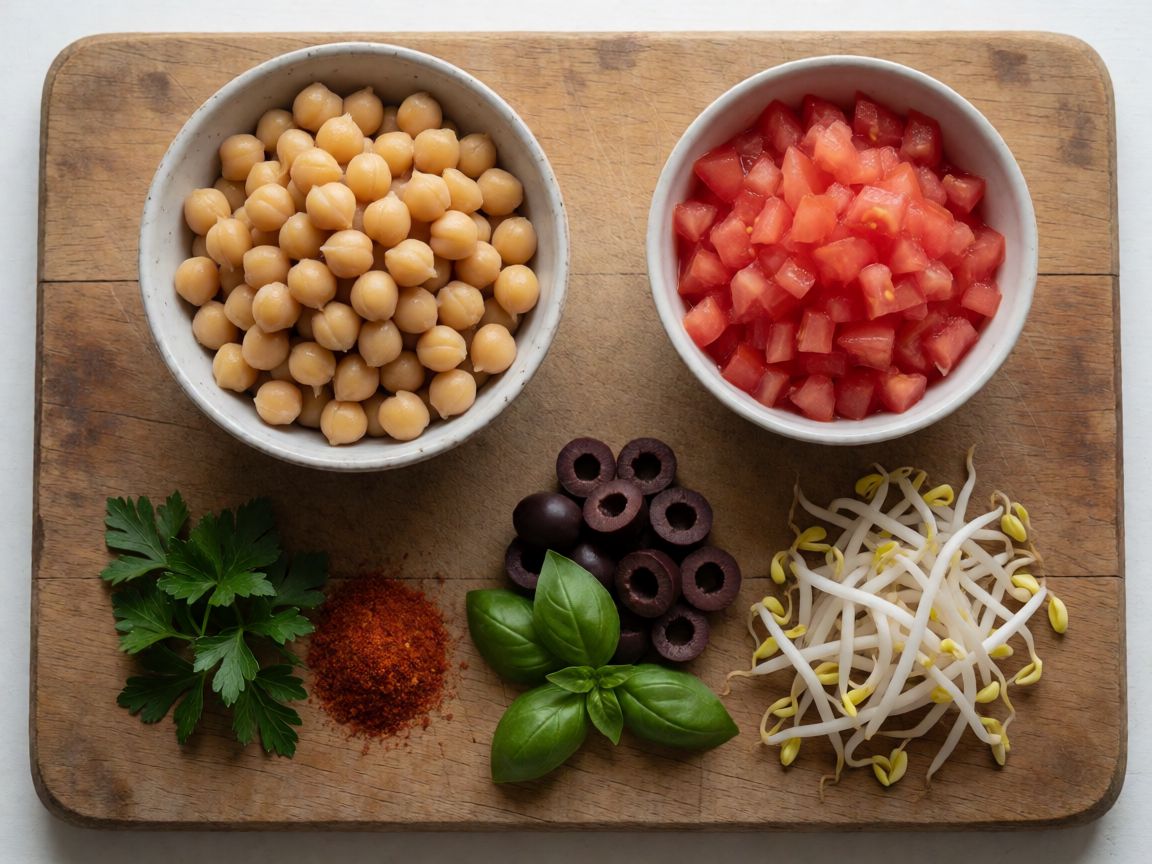
- 600 g Chickpeas cooked
- 200 g Cherry tomatoes
- 80 g Pitted black olives
- 40 g Beansprouts
- Parsley to taste
- Basil to taste
- Olive oil to taste
- Salt to taste
- Chilli powder to taste



Steps
If using tinned chickpeas, drain and rinse them well under running water; if you've cooked your own chickpeas, you can skip this step.
Put the chickpeas in a salad bowl and add the pitted black olives and the beansprouts.
Rinse the cherry tomatoes - ripe but still firm - and cut them into quarters.
Add the tomatoes to the salad and toss everything together with a spoon.
Season with a pinch of salt and chilli powder to taste.
Drizzle with olive oil and scatter over the chopped parsley and torn basil leaves for extra flavour.
This isn't a cooked dish — it's an assembled one, and that changes the whole logic of it. The chickpeas are already done, the tomatoes, olives and sprouts go in raw. There's no heat here to forgive a bad ingredient or hide a mistimed step. Everything you put in the bowl has to taste good on its own first.
Texture is the engine, not layers of flavour built up in a pan. Soft chickpea, a tomato that gives a little snap when you bite it, salt-dense chew from the olive, raw crunch from the sprout. Lose one of those and it stops being a salad and turns into chickpea mush with garnish on top.
Some say you rinse tinned chickpeas just to cut the sodium. No — rinse them because the canning liquid, that cloudy stuff called aquafaba, carries a flat, slightly metallic taste and a thin starchy film that coats your tongue and mutes everything added after it. Run them under the tap until the water goes clear and the chickpea tastes of itself again, not of the inside of a tin.
And even a cold dish needs patience. Give it five, ten minutes under the oil and salt before anyone picks up a fork, so the dressing and the tomato's own juice have time to find each other. Any longer than that and the sprout gives up its crunch and the tomato dissolves into its own puddle.
600g cooked chickpeas is roughly two 400g tins, drained — buy a third if your tins run light, since the drained weight on the label is generous. Or start from 200g dried, soaked overnight, simmered until one gives when pressed between two fingers rather than when a clock says so. Dried chickpeas cost you an evening but hold their shape better and taste cleaner without a rinse. Tinned cost you nothing but ten minutes, provided you give them that ten minutes under the tap.
Cherry tomatoes: ripe but still firm means it yields a little under your thumb and doesn't bleed. A tomato that's gone soft will bleed into the chickpeas and turn the bowl soupy — the exact failure the "firm" instruction is there to stop. Smell the stalk end before you buy; if there's no tomato smell there, it was picked too early and chilled too long, which happens a lot in a British supermarket in January, and no amount of salt fixes that. If you're stuck with flavourless tomatoes, a handful of diced cucumber alongside gives you back some of the crunch and juice, though it isn't the same thing.
Olives: brine-cured or oil-cured, either is fine, but drain them properly — oil-cured ones in particular carry extra oil on the skin that will throw off how much dressing you actually need. Skip the ones stuffed with pimento or anchovy paste; the added sweetness or fish fights with everything else in the bowl instead of sitting alongside it.
Beansprouts are the most perishable thing here by a long way — buy them the day you're making the salad, not the day before. They should look white and snap cleanly. Brown, slimy tips mean age and bruising, not a flaw in the vegetable itself, so just pick fresher ones next time rather than writing off beansprouts altogether.
Tear the basil by hand rather than cutting it — a knife blade bruises the cut edge and speeds up browning, tearing does less damage and releases the oil in the leaf right as you're serving. Chop the parsley however you like; it's sturdier and doesn't sulk the way basil does.
The olive oil here is a raw dressing, not a cooking medium, so use one with actual character — fruity, a bit peppery at the back of the throat — not a refined "light" oil that's had its flavour stripped out for frying, which is work you're not asking it to do. If there's nothing decent in the cupboard, any cold-pressed oil with a flavour of its own will carry the salad — rapeseed oil is cheap and local in the UK and does the job honestly, just nuttier than olive rather than fruity. Salt and chilli go on after everything's tossed together, never onto cut tomatoes sitting and waiting — salt pulls water out of cut vegetable by osmosis, plain and simple, and salting early just means a wetter bowl and blander chickpeas sitting in tomato water instead of dressing.