
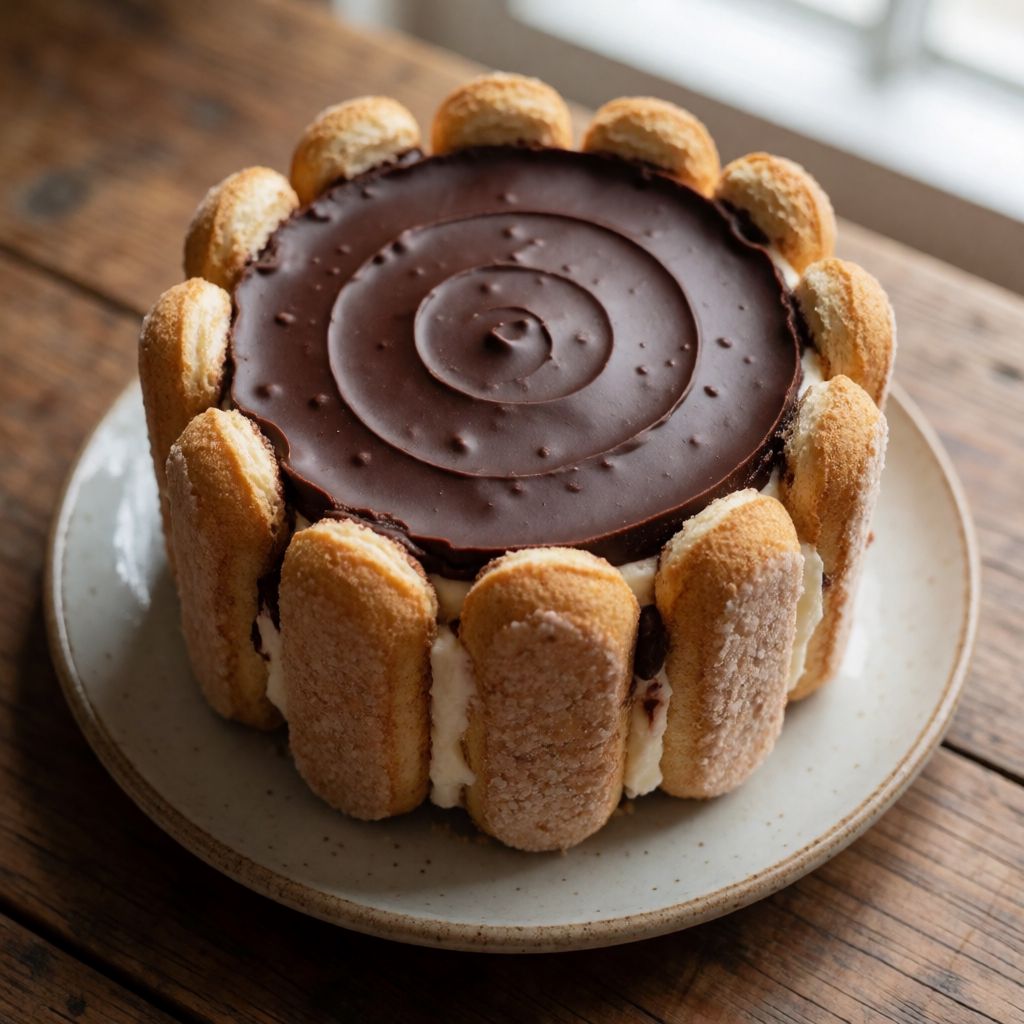
 AI photo
Chocolate Charlotte
A rich no-bake chocolate charlotte with sponge finger biscuits and a silky ganache cream, chilled until set.
Labels are worked out automatically from the ingredients and can be wrong. Check the packaging if it matters to you.
Ingredients
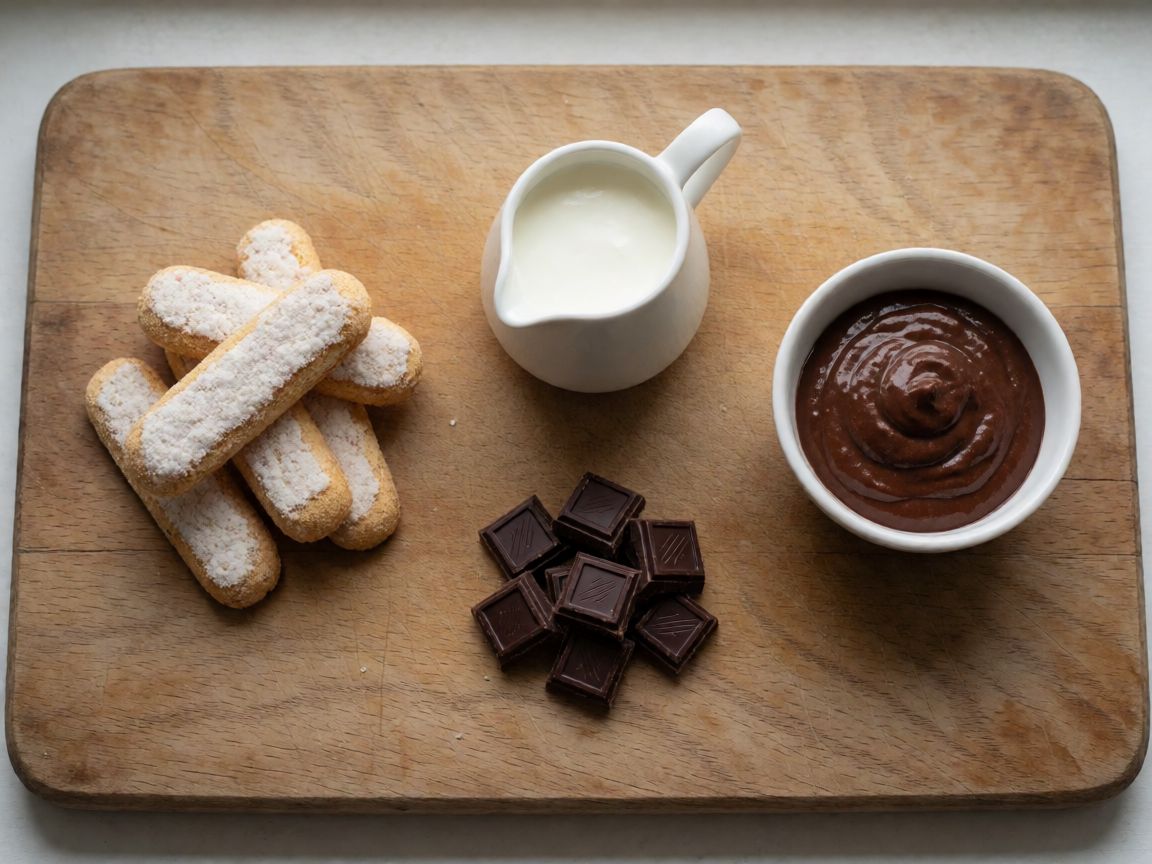
- 300 g sponge finger biscuits
- 1 l double cream
- 300 g dark chocolate
- chocolate sprinkles to taste



Steps
Heat 500 ml of the cream in a small saucepan; as soon as it starts to boil, add the dark chocolate and melt it, stirring.
Stir the ganache until smooth, pour into a container and leave to cool to room temperature.
Line the base of a springform tin with cling film and arrange a layer of sponge finger biscuits on the bottom, dipping them in milk first.
Trim the ends off the remaining sponge fingers so they stand upright, then line them around the inside edge of the tin.
Put the tin in the fridge.
20 minWhip 500 ml of cream with a mixer until light and fluffy, then gently fold it into the cooled ganache, using a bottom-to-top motion.
Pour the filling over the biscuits and smooth the surface with the back of a spoon.
Put the cake in the fridge.
180 minOpen the tin, remove the ring and move the cake onto a serving plate.
Sprinkle the surface with chocolate sprinkles, decorate with berries, and tie with a ribbon.
This is not a baked cake at all — the oven never gets switched on. What you're building is a chocolate mousse held inside a fence of sponge fingers, the whole thing set not by heat but by cold and by the fat in the chocolate itself. The '60 min cook' in the recipe is a small lie of habit — there's no cooking there, it's chilling, and chilling is a different kind of patience: you can't rush it by turning a knob up.
What decides whether this works is temperature at two specific moments, not skill. First: the ganache has to come down to room temperature before you fold in the whipped cream. Pour warm ganache straight onto whipped cream and the heat collapses the air you just worked to put in — the mousse goes dense, and worse, it weeps liquid on the plate the next day. Second: the biscuits get a quick dip in milk, not a swim. A sponge finger is built to drink liquid fast; three seconds softens the crust so it bonds to the filling, ten seconds and it's porridge with no wall left to hold anything in.
Some say a charlotte must have a custard base, like the old Charlotte Russe with its crème anglaise and gelatine. No — the name here describes the shape, not the filling. Any dessert with sponge standing round the rim like a soldier's collar earned the name once the mould for custard desserts got borrowed for whatever was poured inside it. Yours just happens to be filled with something far less fussy than egg custard, and that's not a shortcut, it's just a different dessert wearing the same coat.
Sponge finger biscuits are built the way they are — dry, ribbed, slightly stale-feeling even fresh — because they're engineered to take on liquid without falling apart, which is exactly the job here. The ribbing isn't decoration either: it gives the dip something to grip so the biscuit doesn't slide once it's wet. If what's in your cupboard is the softer British 'sponge finger' biscuit rather than the firmer Italian savoiardi, dip it even faster — it has less structure to lose.
The double cream does two unrelated jobs and that's worth knowing, because it explains why you use 500 ml one way and 500 ml another. The first 500 ml goes in hot, as a solvent — its only task is to carry enough heat to melt the chocolate smoothly, so bring it just to the first bubbles and no further, since cream that's properly boiling can scorch and split on contact with sugar and cocoa solids. The second 500 ml goes in cold and whipped, where its job is air, not heat. Double cream earns its place here because its fat content, close to 48%, is high enough to hold that air once it's folded into something as heavy as ganache. A thinner cream — single cream, or the lower-fat cream sold as 'whipping cream' in some countries — won't hold the same structure and the mousse will slump; you'd need to prop it up with a little gelatine to compensate, which changes the texture and, frankly, the honesty of the dish.
Dark chocolate is where the whole cake actually gets its set — not from any additive, but from cocoa butter, which is a fat that goes properly hard in the fridge the way cream never does on its own. This is why the percentage on the bar matters more than the brand: something around 60–70% cocoa gives you enough of that fat to firm the mousse to a cuttable slice after three hours cold. Drop to milk chocolate and you've diluted the cocoa butter with milk solids and sugar — the filling will taste sweeter, feel softer, and may not hold a clean slice at all without help. If dark chocolate at that strength isn't what you have, the honest substitution is simply 'the highest cocoa-solid chocolate without added flavouring' — a couverture, a baking bar, whatever's local, as long as it isn't competing with vanilla or orange oil for your attention.
The milk for dipping is doing almost nothing chemically — any milk works, dairy or not, because its only function is to wet the biscuit surface. Don't reach for anything fancier than what's in the fridge for your tea.
The chocolate sprinkles and berries at the end are pure decoration with one small exception: if you use berries, their acidity actually earns its place, cutting through a filling that is otherwise all fat and sugar with nothing to argue against it. Without a springform tin, a deep cake tin lined generously with cling film does the same job — the film is standing in for a proper mould wall, and it's an honest trade for a kitchen that doesn't keep a kazan's worth of specialist tins. What you can't substitute is the waiting: three hours in the fridge isn't a suggestion, it's the actual mechanism by which this becomes a cake instead of a bowl of chocolate soup with biscuits floating in it.