
 AI photo
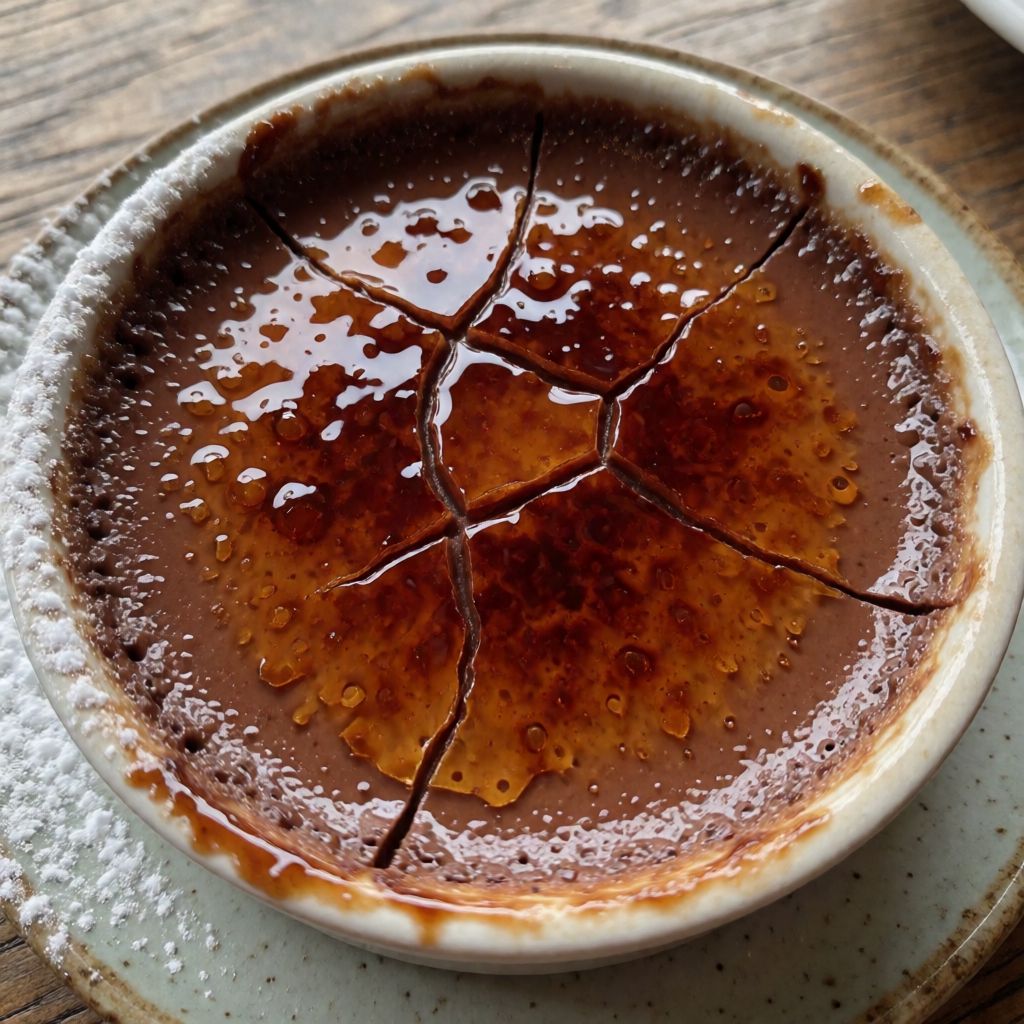
Chocolate Crème Brûlée
A rich chocolate crème brûlée with a crisp caramelised sugar topping, gently infused with cinnamon.
Labels are worked out automatically from the ingredients and can be wrong. Check the packaging if it matters to you.
Ingredients
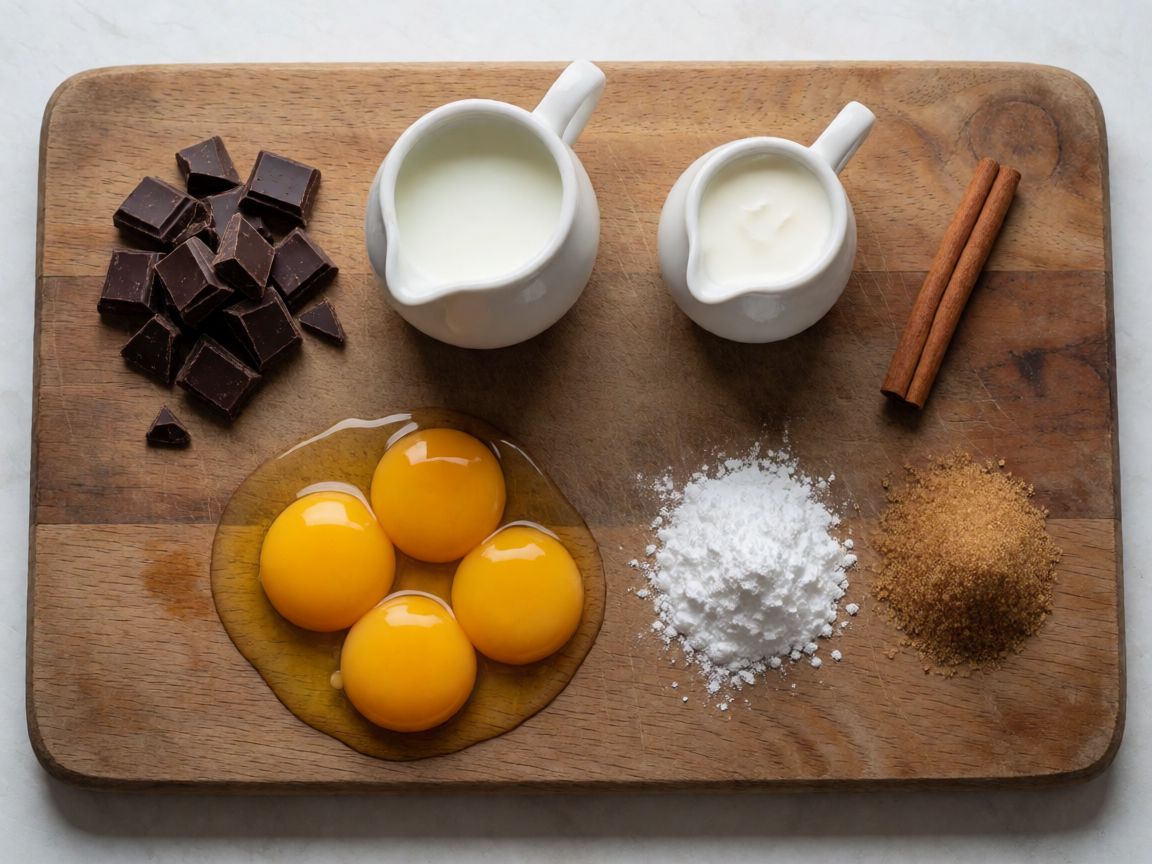
- 300 g Dark Chocolate
- 300 ml Milk
- 300 ml Double Cream
- 1 pcs Cinnamon Stick 5–6 cm
- 4 pcs Egg Yolks
- 50 g Icing Sugar
- 3 tbsp Soft Brown Sugar







Steps
Finely chop the dark chocolate and melt it in a bain-marie (double boiler).
Pour the milk into a saucepan, add the cinnamon stick and bring to the boil.
Remove from the heat, cover and leave the cinnamon stick to infuse in the milk.
30 minStrain the milk and pour it over the melted chocolate, stir well, then add the cream.
In a separate bowl, whisk the egg yolks with the icing sugar, then add to the chocolate-milk mixture.
Pour the mixture into ramekins and place them in an oven preheated to 180°C, in a water bath.
30 minRemove from the oven and place the ramekins in the refrigerator.
Leave to rest for at least 12 hours.
720 minSprinkle the surface with soft brown sugar and caramelise it with a kitchen blowtorch.
This is not a baked custard that happens to have chocolate in it — it's a chocolate ganache stretched out with egg yolk and carried by a water bath, so it sets by the same rule every custard sets by: yolk proteins uncoiling and knitting together somewhere between 70°C and 85°C. Below that, it's soup. Above it, you've made sweetened chocolate scrambled eggs, and no amount of sugar crust fixes that. Everything in this recipe exists to keep you on the right side of that line.
The bain-marie for the chocolate at the start and the water bath for the ramekins at the end are the same trick done twice. Direct heat on chocolate or on a yolk-cream mixture is too blunt an instrument for a domestic hob or oven — it scorches one spot while the rest is still cold. Water around the vessel means the contents can never get hotter than the water itself, which never boils in this context. That's your insurance against curdling, not decoration.
What actually decides whether this works is the part people skip: the twelve-hour rest. Some think the custard is done when it comes out of the oven looking set — no, because what you're seeing then is a custard held together by heat, still loose at a molecular level. It firms properly only in the cold, slowly, as the cocoa butter in the chocolate re-solidifies and the egg proteins finish settling into their final structure. Rush this and you get a pudding that slumps when you crack the sugar instead of holding its shape under a spoon. Patience here isn't a virtue, it's an ingredient with its own line in the method.
Start with the chocolate, because the whole dessert is really a ganache wearing a custard's clothes. You want something in the 60–70% cocoa solids range — below that it melts into something closer to sweet milk and the dessert loses its backbone; above it, the bitterness fights the cream and you need more sugar to balance, which throws the set off. Bournville or a supermarket 70% bar both work fine. Melting it in a bowl over barely simmering water, not touching the water, isn't fussiness — chocolate seizes into a grainy paste the instant a drop of condensation gets into it, and direct heat on the pan burns the cocoa solids on the bottom before the rest has even softened.
Milk and cream together, not cream alone, because you need the fat content of double cream (36%+) for richness and the water content of milk to keep the whole thing pourable and to let the cinnamon actually infuse — spices release their aromatic oils better into a thinner liquid, which is why you boil the milk, not the cream, with the stick in it. Use a whole cinnamon stick, not ground: ground cinnamon clouds the liquid and leaves grit in the final custard, which you'll feel on your tongue and regret. If you've no cinnamon, a strip of orange peel or a split vanilla pod does the same infusing job — anything with aromatic oil that releases into hot milk over half an hour.
Egg yolks are your only setting agent here — there's no gelatine, no cornflour, nothing to catch you if the heat runs away. Four yolks for this volume of liquid is roughly the ratio that sets a baked custard without turning it dense; more yolks and you get something closer to a firm flan, fewer and it never fully holds. Whisk them with icing sugar rather than caster — icing sugar dissolves on contact because it's already powder-fine, so you get a smooth, glossy mixture straight away instead of having to whisk out graininess, which matters because you shouldn't overwork egg yolks once sugar's in — too much air beaten into them and you get bubbles baked into the surface instead of a flat glassy top.
The water bath in your oven doesn't need special kit — a roasting tin half-filled with hot tap water, ramekins sat in it, is the whole apparatus. 180°C is the oven's setting, not the custard's temperature; the water around the ramekins is what actually controls the heat the custard sees, and it will never reach boiling in the time this bakes. Doneness here isn't a clock reading — it's a wobble. The edges should look matte and set, the very centre should still tremble faintly when you nudge the dish, like the skin on a bowl of just-cooled soup. Pull it before that and it's raw in the middle; leave it until the centre's stopped moving and you've already overshot, because it keeps firming in the residual heat on the way out.
Last, the crust — soft brown sugar rather than white, because the molasses in it caramelises faster and at a lower point, giving you an even, deep-amber shell before the custard underneath has time to warm through. A blowtorch does this properly: a hot, close, moving flame that caramelises a millimetre of sugar in seconds while the cold custard beneath barely notices. Some reach for the grill instead — no, because a grill heats the whole ramekin from above for the time it takes the sugar to brown, and by then you've started melting the custard you spent twelve hours setting. People often credit this whole genre of burnt-cream pudding to the French alone, but the English have their Cambridge burnt cream and the Catalans their crema catalana, both older arguments than anyone's pride about it — it's simply what you get anywhere people had cream, eggs, sugar, and a hot iron to press onto a surface before blowtorches existed. The torch is just the modern, better-controlled version of that same old trick.