
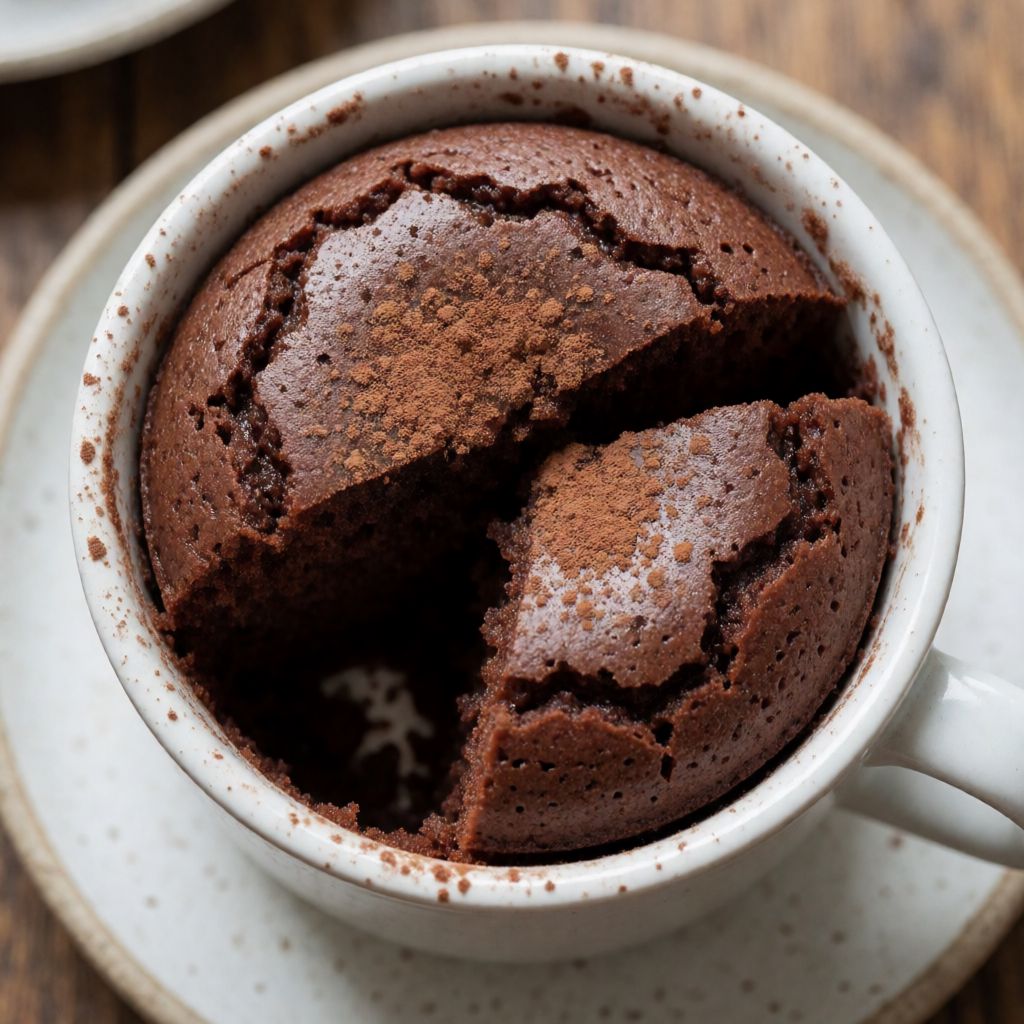
 AI photo
5-Minute Chocolate Cake
A quick, no-fuss chocolate cake you can mix in minutes and bake until wonderfully moist.
Labels are worked out automatically from the ingredients and can be wrong. Check the packaging if it matters to you.
Ingredients
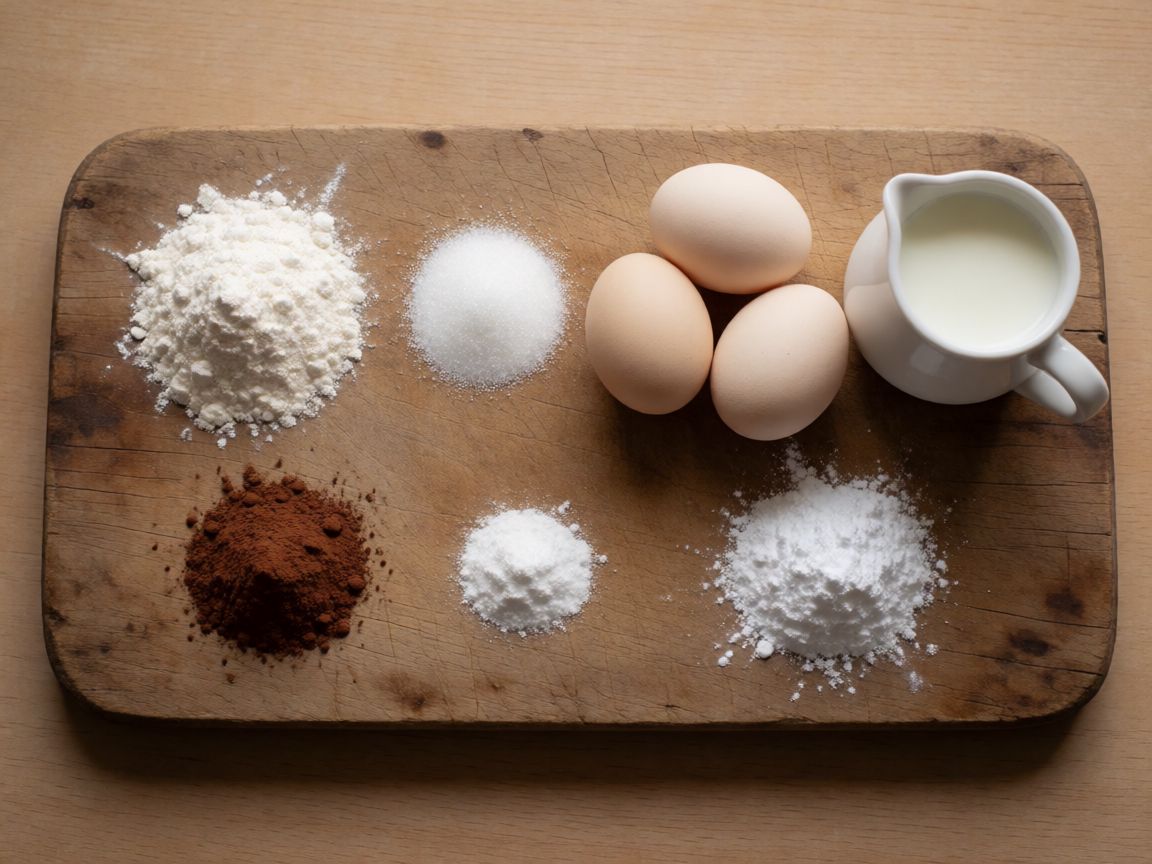
- 200 g Plain flour
- 200 g Caster sugar
- 3 pcs Eggs
- 200 ml Milk
- 100 ml Vegetable oil
- 50 g Cocoa powder
- 8 g Baking powder
- 10 g Icing sugar to taste, for dusting







Steps
Sift the flour and combine in a bowl with the sugar, baking powder and cocoa powder.
Crack the eggs and whisk with an electric mixer, adding the milk and oil.
Whisk until light and foamy, then pour into the bowl with the dry ingredients.
Mix until no lumps remain, then pour the batter into a 22 cm tin.
Bake in a fan oven preheated to 180°C for about 30 minutes.
30 minServe dusted with icing sugar.
This is the lazy cousin of a proper sponge – you don't cream butter and sugar for ten minutes with an arm cramp coming on, you whisk eggs with milk and oil, tip in the dry stuff, and you're done. Six people, one bowl, one washing-up job. Good for a Tuesday, good after the Sunday roast when nobody has energy left for pastry.
The name says "5-Minute" and that's where people get the wrong idea. Some say the whole cake is ready in five minutes — no, because the oven doesn't negotiate. Five minutes is the mixing. Thirty-plus is the baking, and that number is a floor, not a ceiling: your oven, your tin, your particular eggs will decide the real figure.
What actually makes or breaks this cake isn't the recipe card, it's one habit: how long you whisk the eggs with the milk and oil before they meet the flour. There's no butter here to cream air into, so that whisking step is doing the job butter normally does — it's the only place air gets beaten into this batter before the baking powder takes over in the oven. Rush it, and you get a cake that's merely cocoa-flavoured bread.
The second habit, going the other way: once the dry ingredients are in, stop. Flour develops gluten the moment it's wet and stirred, and gluten wants structure, tight and chewy. A sponge wants the opposite — loose enough that carbon dioxide from the baking powder can push the crumb apart freely. Mix past "no lumps" and you're fighting your own leavening.
Plain flour, not self-raising — and this matters, because the lift here comes entirely from the 8g of baking powder you're adding separately. Self-raising flour already carries its own raising agent; stack another one on top and you get a cake that rises fast, over-domes, then sinks in the middle as the structure can't hold the gas it made too quickly. One leavening system, one job done properly.
The eggs want to be at room temperature if you can manage it — cold eggs resist foaming, and you're relying on that whisk to trap air you've got no other way of getting in. Three eggs, milk, oil, whisked until the mixture is pale and holds a ribbon for a second when you lift the whisk: that's "light and foamy", not a guess, something you can see.
Oil instead of butter isn't a shortcut that costs you flavour, it's a different mechanism entirely. Butter is solid at room temperature and has to be beaten to cream air into it — that's the whole reason creaming exists. Oil is already liquid, carries no air of its own, and gives you a softer, slightly denser crumb that stays moist longer because it doesn't firm up as it cools the way butter does. The rule for substituting it: any oil with no smell of its own — sunflower, a light rapeseed, a neutral vegetable oil. Extra virgin olive oil will work structurally but it'll tell everyone it's there, which isn't what this cake is for.
Milk brings the fat and the liquid that lets the starch in the flour do its job in the oven — gelatinise, set, hold the crumb together. Whole milk gives the richest result; semi-skimmed is fine; a plain plant milk works too, so long as it isn't one with a strong flavour of its own, same rule as the oil.
Cocoa powder — natural or Dutch-processed, either is fine here, because the baking powder doesn't need cocoa's acidity to work the way bicarbonate of soda would. Dutch-processed gives you a darker, mellower result; natural cocoa a sharper, slightly more bitter one. Sift it with the flour for the same reason you sift the flour at all: cocoa clumps worse than flour does, and an unsifted lump sits in the finished cake as a bitter dry pocket nobody enjoys finding.
In the oven, 180°C fan is doing three things at once: setting the egg protein so the structure holds, gelatinising the starch so the crumb isn't gummy, and browning the surface sugars into that slightly toasted top. A fan oven circulates the heat evenly, which is exactly why the tin should go in the middle and why you shouldn't need to rotate it. If your oven doesn't have a fan, you're looking at a slightly longer bake and a less even top — no bad thing, just know it going in. Don't trust the clock alone: press the centre lightly, if it springs back rather than leaving a dent, and a skewer comes out without wet batter clinging to it, it's done. Opening the door in the first twenty minutes to check is the one thing patience exists to stop you doing — a blast of cold air before the structure has set and the whole thing can sink in the middle, and no amount of icing sugar fixes that.