
 AI photo
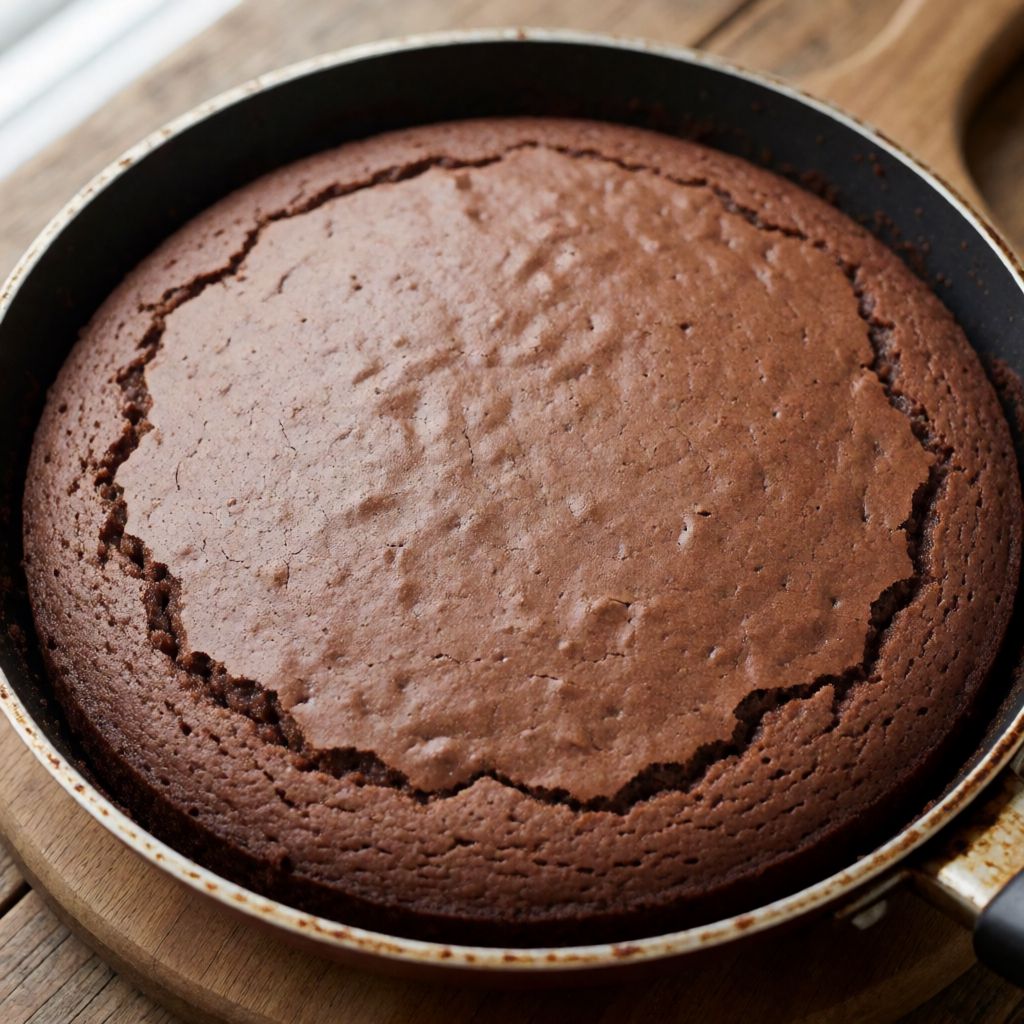
Chocolate Cake in a Frying Pan
A simple chocolate cake cooked entirely on the stovetop in a covered frying pan, no oven needed.
Labels are worked out automatically from the ingredients and can be wrong. Check the packaging if it matters to you.
Ingredients
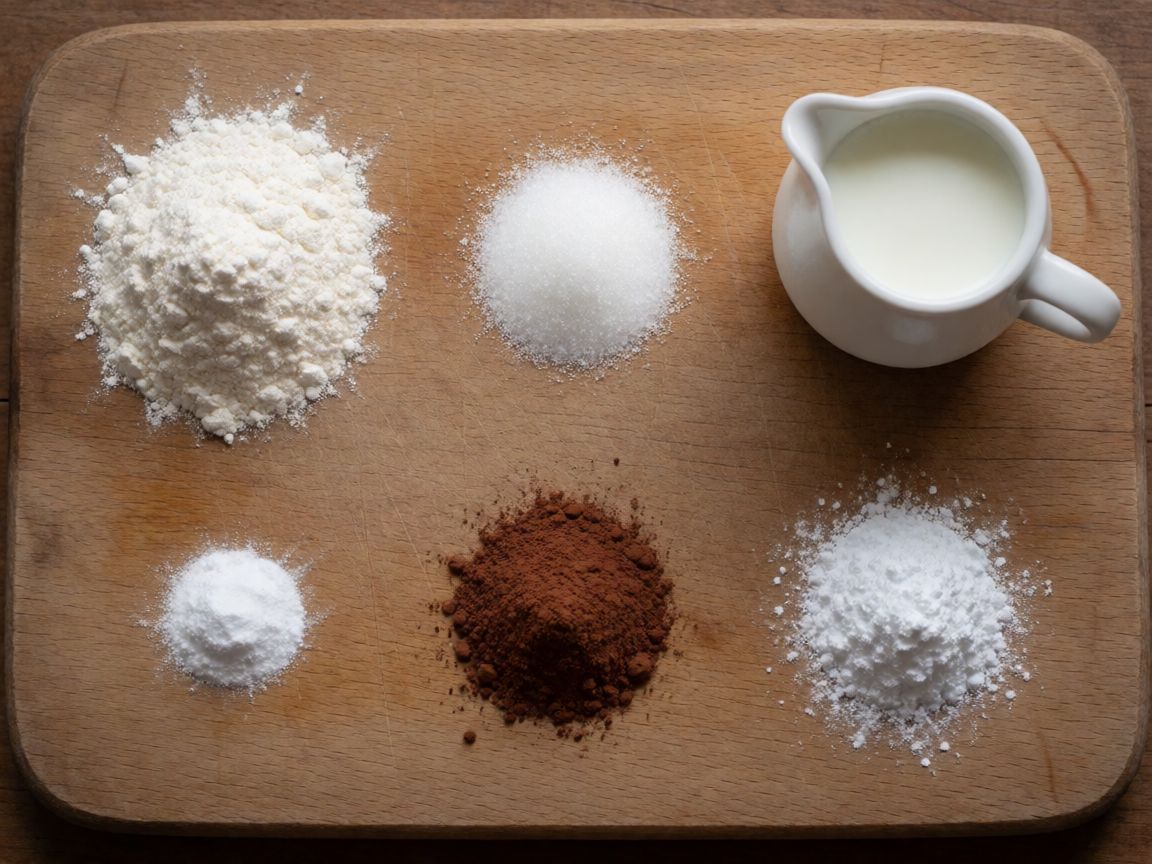
- 200 g Plain Flour
- 80 g Caster Sugar
- 250 ml Milk
- 15 g Baking Powder
- 25 g Cocoa Powder
- 50 g Vegetable Oil
- 1 pinch Icing Sugar to taste, for dusting





Steps
Sift the dry ingredients (flour, baking powder, cocoa powder) into a large bowl.
Combine the sugar, flour and milk, then add the baking powder and cocoa powder, pouring in the vegetable oil at the end.
Using a mixer in short bursts, beat the batter until smooth.
Grease the base and sides of a 22 cm frying pan with vegetable oil.
Pour the batter into the pan, spread evenly, cover with a lid and cook over the lowest heat.
30 minTurn the cake over using the lid and cook on the other side.
10 minTransfer to a plate, let cool and, if you like, dust with icing sugar or cocoa powder.
This is a cake that never meets an oven. It's baked the way people have always baked when they didn't own one, or when the one they had was busy with something else — a Sunday roast, say, taking up every inch of it for three hours while you still want something sweet with your tea. So the frying pan becomes the oven, and the lid becomes the missing top heat.
What decides whether it works is simple: an oven heats from every direction at once — top, sides, the air itself. A frying pan on a ring heats from one direction only, the base. Crank the heat to compensate and you char the bottom long before the middle has set; the heat has no way to travel upward fast enough through a thick batter. So you go low, and you wait, and you let the heat migrate up through the batter slowly, the way warmth moves through a wall rather than through a draught. The lid isn't there to keep the kitchen tidy — it traps the steam rising off the batter and sends it back down, which is the closest thing to top heat you'll get without a second element.
Some say you can't bake a cake without an oven. No — because an oven is just a box that surrounds food with hot air from all sides. A lid does a smaller, slower version of the same trick, and the flip in step 6 does the rest: it puts the still-pale, still-soft top face down against the hot metal, so it gets its own turn at direct heat instead of waiting forever for steam to finish it.
Flour is just structure, nothing clever — plain flour, 200g, gives the crumb something to hold onto. The baking powder is doing unusually heavy lifting here: 15g is a lot for 200g of flour, almost double what a quick-bread recipe normally asks for. That's because there's no egg in this batter to help with lift or structure, and because the rise has to survive a long, gentle, covered cook rather than a short blast of oven heat that sets a crumb fast. The chemical leavening has to work slowly and still hold the cake up by the time you flip it, so it's given more fuel than usual.
Sugar — 80g caster — is for sweetness, yes, but also tenderness: sugar competes with the flour for water, which keeps the crumb from turning tough. Caster dissolves into the milk fastest because the grains are small; granulated would work too, just give it a moment longer to vanish into the batter before you decide something's wrong.
Milk carries the hydration and gives a softer, slightly richer crumb than water would, through its natural sugars and fat helping the surface brown and the middle stay tender. If you're out of milk, any liquid with enough body will do — oat or soya milk works fine, since nothing here depends on milk specifically, this isn't a delicate sponge relying on milk proteins for anything structural. Water will still give you a cake, just a leaner, less forgiving one.
Cocoa powder is flavour and colour, nothing more — 25g of plain unsweetened cocoa. If you reach for drinking chocolate instead because that's what's in the cupboard, remember it already carries sugar, so ease back on the 80g or the cake tips sweet.
Vegetable oil, 50g, is why this cake stays soft after it cools, which matters more here than in an oven bake because a pan cake loses moisture to steam rather than to dry air, and you want that moisture working for the crumb, not against it. The rule for swapping it is a criterion, not a brand: any oil with no smell of its own — sunflower, rapeseed, a light olive oil, not the extra virgin kind that tastes of itself. Butter would add flavour but it solidifies again as the cake cools, which firms the crumb up in a way oil, staying liquid, doesn't.
The beating in short bursts matters more than it looks — this is real flour, not a pre-mixed self-raising cake flour, so overbeating develops gluten the way it would in bread, and a cake batter beaten too hard turns chewy instead of soft. Short bursts, just enough to smooth the lumps, keep it tender.
If your frying pan has no lid, the system you've got at home — a large plate turned upside down over the pan, or a clean tea towel laid over that — does the same job: it just has to trap rising steam, not seal like a jar. A wider pan than 22cm gives you a thinner cake that sets through faster and more evenly, because the heat has less distance to climb; narrower and deeper, and you risk a raw middle under a cooked crust, which is the real cause of a sunken centre people often blame on the baking powder when the fault is really the shape of the vessel.